What TV doesn't, print can't; we deliver.
What TV doesn't, print can't; we deliver.
What TV doesn't, print can't; we deliver.
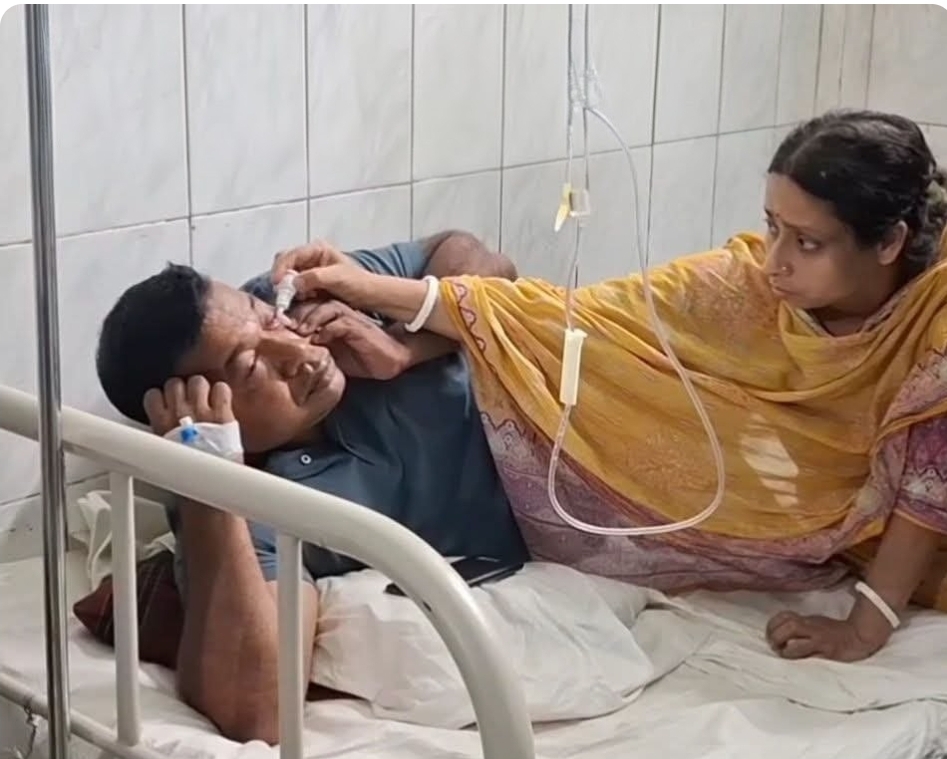
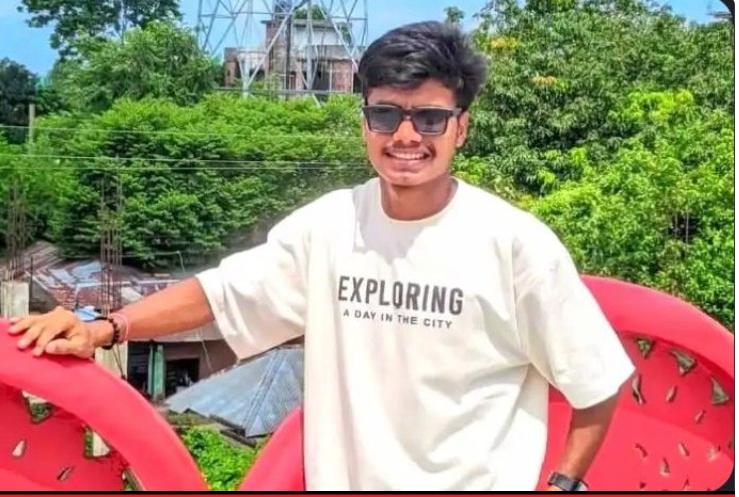
A school headmaster who says he spent months living under threats and intimidation was allegedly beaten outside his own workplace on Sunday morning despite informing local authorities in advance that he planned to return to duty.
Sujit Karmakar, headmaster of Damudya Pilot Girls’ High School in Shariatpur, was attacked at the school’s main gate as he attempted to enter the campus, according to eyewitnesses, police sources and his own account. He was later hospitalized with multiple injuries.
Videos showing the assault have spread rapidly across social media, fueling outrage and raising difficult questions about the safety of educators, the treatment of religious minorities and the ability of authorities to protect individuals who report credible threats against them.
For Karmakar, Sunday’s violence was the culmination of a years-long campaign designed to remove him from his position.
According to local sources, Karmakar has served as headmaster of Damudya Pilot Girls’ High School since 2013. Roughly two years ago, tensions emerged between him and a local group that subsequently leveled a series of allegations against him, including accusations involving female students.
Karmakar vehemently rejects those allegations, describing them as fabricated and politically motivated. He claims the accusations formed part of a coordinated effort to destroy his reputation, force him out of office and isolate him within the community.
Following Bangladesh’s political changes in 2024, additional written complaints were reportedly submitted against him to local authorities. Karmakar alleges that the pressure campaign intensified during this period and that he had to stop reporting to duty on grounds of personal safety.
More significantly, he alleges that he was targeted because of his Hindu faith. Karmakar maintains that his religious identity made him particularly vulnerable amid local political tensions. His claim has added a potentially troubling dimension to a case already attracting widespread public attention.
According to witnesses, Karmakar arrived at the school on Sunday morning in an auto-rickshaw. Moments before reaching the campus, several young men allegedly blocked his path and prevented him from entering.
Witnesses say Karmakar was physically attacked near the school’s entrance before being forcibly placed into the auto-rickshaw and subjected to further abuse. Videos circulating online appear to capture portions of the incident and have intensified calls for accountability.
The attack is particularly significant because Karmakar says authorities were informed beforehand of the risks surrounding his return. Speaking from his hospital bed, he said he had notified both the Upazila Nirbahi Officer (UNO) and the Officer-in-Charge (OC) of Damudya Police Station before traveling to the school.
“Despite informing the authorities in advance, I was attacked as soon as I arrived,” Karmakar said.
Following the attack, Karmakar initially sought treatment at Damudya Upazila Health Complex before transferring to Shariatpur Sadar Hospital, citing concerns for his safety.
Dr. Farhana Daisy, an emergency physician at the hospital, confirmed that Karmakar sustained multiple injuries. Medical examinations revealed trauma to various parts of his body, including visible swelling and bruising to the face.
He remains under treatment.
Damudya Police Station Officer-in-Charge Mohammad Jahangir Alam acknowledged reports of the assault but said no formal written complaint had yet been submitted.
“We have received allegations that a headmaster was assaulted. Once a formal complaint is filed, an investigation will be conducted and necessary legal action will be taken,” he said.
Damudya Upazila Nirbahi Officer and School Management Committee President Salauddin Ayyubi confirmed that Karmakar had been absent from the school for an extended period and had reported being attacked upon his return.
According to Ayyubi, police were dispatched to the area after authorities received information about the incident.
For many observers, however, the central issue extends beyond a single assault.
At the heart of the controversy are allegations that a school principal was subjected to years of threats, public accusations and social pressure before ultimately being attacked while attempting to return to work. Equally serious are his claims that the allegations against him were fabricated and that he was singled out because of his religious identity.
As public scrutiny intensifies, pressure is mounting on authorities to conduct a thorough and impartial investigation not only into the assault itself, but also into the events that preceded it.
For Karmakar, the questions are deeply personal. For investigators, they may prove unavoidable.
Who organized the attack? Were prior threats ignored? Were false allegations used as a weapon to force a school headmaster from his post? And was religious identity a factor?
Until those questions are answered, the incident is likely to remain a troubling symbol of the vulnerabilities faced by educators and minorities when local conflicts escalate into violence.