What TV doesn't, print can't; we deliver.
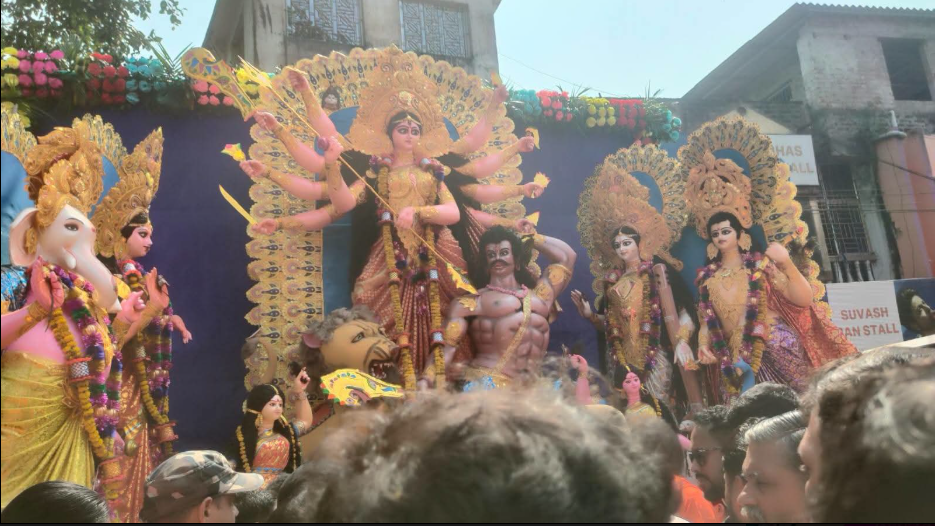
PHULBANI, EAST MIDNAPORE, WEST BENGAL — In a village approximately ten kilometres from Contai (Kanthi), a Durga Puja celebration has become the focus of a remarkable local story. After decades of reported restrictions on its festivities, Phulbani witnessed a Durga Puja celebrated with renewed enthusiasm, culminating in the return of the idol immersion procession after 31 years.
Durga Puja has been a longstanding tradition in this predominantly Hindu village, organised by the Amra K’jon Sangha. Yet, according to local accounts, the celebrations had faced restrictions over the years amid objections from sections of the surrounding Muslim-majority villages. Restrictions reportedly affected loudspeaker volumes and musical performances, while permission for an immersion procession remained elusive.
The situation was so contentious that organisers had previously approached the Calcutta High Court for permission to hold the puja. The immersion of the Durga idol also became a source of difficulty. On some occasions, the idol was reportedly immersed in a nearby pond; accounts also circulate that it was once buried instead of being immersed through the customary religious ritual.
For devotees, these were not merely logistical inconveniences. They represented years of uncertainty surrounding the public observance of an important religious tradition. The ability to organise a festival, accompany the goddess through the village and perform immersion according to customary rites had become a matter of deep significance.
This year, however, Phulbani witnessed a markedly different celebration. The puja was organised with considerable enthusiasm and, according to the organisers’ account, without the restrictions that had characterised previous years. The inauguration was conducted by veteran East Midnapore political figure Sisir Adhikari. Shantanu Sinha, president of Hindu Samhati, was also present.
The change marks a significant moment for a community that has sought to preserve its religious traditions despite longstanding difficulties.
The defining moment came on the day of immersion.
For the first time in 31 years, a Durga idol immersion procession moved through Phulbani. The administration reportedly raised objections initially but subsequently granted permission for the procession to proceed.
Sumita Sinha, MLA from North Contai, attended the procession as devotees accompanied the idol for immersion in accordance with traditional religious rites.
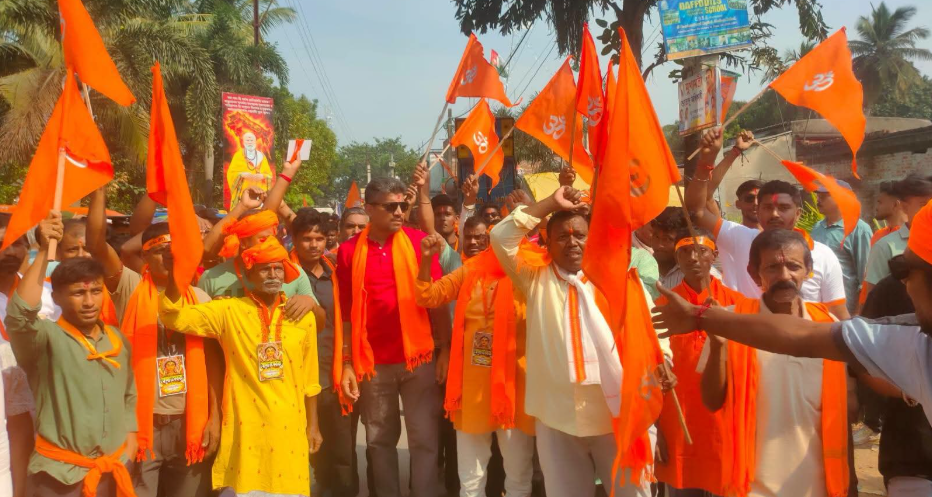
As the procession unfolded, the village witnessed a public celebration that had reportedly been absent for more than three decades. The festivities concluded with the familiar, hopeful invocation that echoes across Bengal every autumn: “Aschhe bochhor, abar hobe” — “Next year, Pratima Niranjan will happen again.”
The significance of Phulbani extends beyond a single festival. The freedom to observe religious traditions peacefully, without arbitrary restrictions or discriminatory treatment, is a fundamental principle that public authorities must uphold. No community should have to depend on political changes or prolonged legal battles to exercise rights guaranteed to every citizen.
At the same time, religious freedom must be protected through impartial law enforcement, equal treatment and respect for the rights of all communities. Allegations of past restrictions deserve serious scrutiny, and responsibility should be established on the basis of evidence rather than collective blame.
For Phulbani’s devotees, this year’s celebration has nevertheless delivered a powerful message: traditions can endure even when their public expression becomes difficult.
After 31 years, the immersion procession returned. And as the chants of “Aschhe bochhor, abar hobe” rang through the village, they carried not only the promise of another Durga Puja, but also the hope that the freedom to celebrate will never again be treated as a privilege to be granted or withdrawn.