What TV doesn't, print can't; we deliver.
What TV doesn't, print can't; we deliver.
What TV doesn't, print can't; we deliver.

In 2017, Srijita Chatterjee, a young woman from Kishanganj, believed she was stepping into a future shaped by love and choice. What followed instead, according to her testimony, was the systematic dismantling of her faith, her bodily autonomy and her dignity ending in abandonment and social exile.
Srijita’s account is not one of a relationship that merely failed. According to her allegations, it is a case of deliberate deception, coerced religious conversion, and extreme sexual violence, carried out under the cover of romance and marriage.
Srijita says she met Ismail Hossain of Hyderabad on Facebook. From the outset, he identified himself as Hindu. Trust developed gradually, deepened by emotional dependence and assurances of marriage. Convinced that she was building a shared life, she left her home.
Only after she had crossed what she describes as a point of no return did the truth emerge that the man she trusted was Muslim.
Marriage, she says, did not bring security. Instead, it became the primary instrument of control. According to Shrijita, Ismail’s family refused to accept her as a Hindu woman. They clearly stated that conversion was the price of acceptance.
Isolated and under pressure, she complied. She recited the kalma, signed affidavits and was renamed Fatema Khatoon. With the change of name came enforced hijab, restrictions on her movement and the gradual erasure of her former self.
What followed, Srijita alleges, was sustained physical and psychological abuse. She says she was beaten, restrained, and repeatedly threatened. Within one year and eight months of marriage, her life had collapsed into what she describes as a state of constant fear.
Her most disturbing allegations concern sexual violence. Srijita claims her husband forced her to engage in sexual acts with his friends, both inside the home and outside, against her will. She alleges she was treated not as a partner but as property—her consent irrelevant, her humanity ignored.
Any resistance, she says, was met with assault. She further alleges that a pregnancy was forcibly terminated.
These are grave claims. If substantiated, they extend beyond domestic violence to what legal experts would recognise as sexual exploitation and trafficking within marriage—a form of abuse that remains largely invisible and rarely prosecuted.
Eventually, Srijita says she was handed a divorce letter. When she attempted to return to her parental home, she encountered yet another rejection. Her family, she says, refused to accept her back.
Today, she lives alone in Khalpara, Siliguri, surviving on a modest income from work at a beauty parlour. She has no husband, no family support, no legal closure—and no restitution.
Only her voice remains.
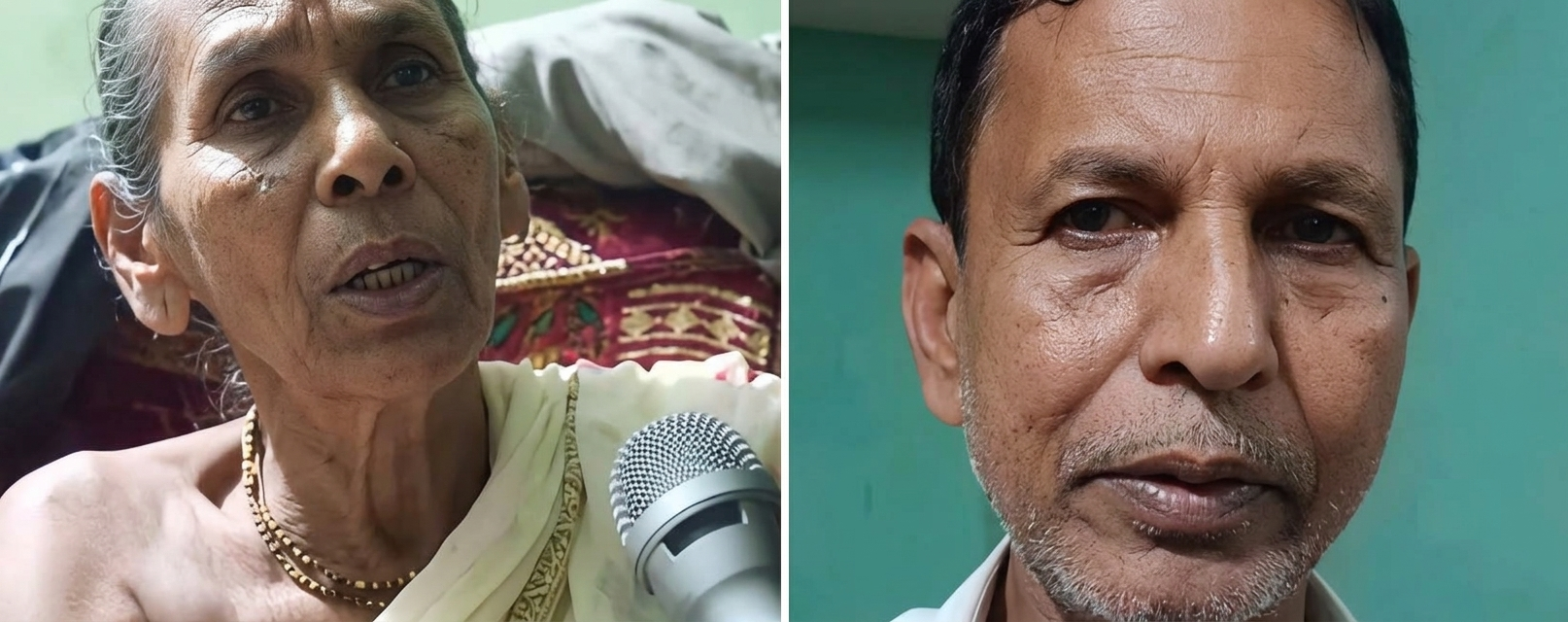
Speaking to Hindus News, Srijita said through tears:
“Changing my religion and my name was the biggest mistake of my life. When I see photos of myself as a Hindu woman, it breaks me. I want other Sanatani girls to see my fate and be cautious. [1]”

Her words are not a slogan or a provocation. They are the reflection of someone who lost her home, her faith, her motherhood, and her sense of safety while believing she was choosing love.
Srijita’s testimony raises questions society often prefers not to confront.
What protections exist when identity is concealed in intimate relationships?
How many such cases remain invisible because women are silenced by shame, fear, or abandonment?
Why does the burden of “adjustment” and “sacrifice” fall so disproportionately on women and why does it so often end in isolation?
This is not about collective blame. It is about recognising patterns of coercion, taking women’s testimonies seriously and refusing to romanticise deception in the name of social convenience.
Srijita Chatterjee, now officially known as Fatema Khatoon, did not merely lose a marriage. She lost her name, her faith, her bodily autonomy, and her place in the world.
Her story deserves more than fleeting outrage. It demands accountability, legal scrutiny, and the courage to listen, before more lives are quietly erased in the silence that follows disbelief.