What TV doesn't, print can't; we deliver.
What TV doesn't, print can't; we deliver.
What TV doesn't, print can't; we deliver.
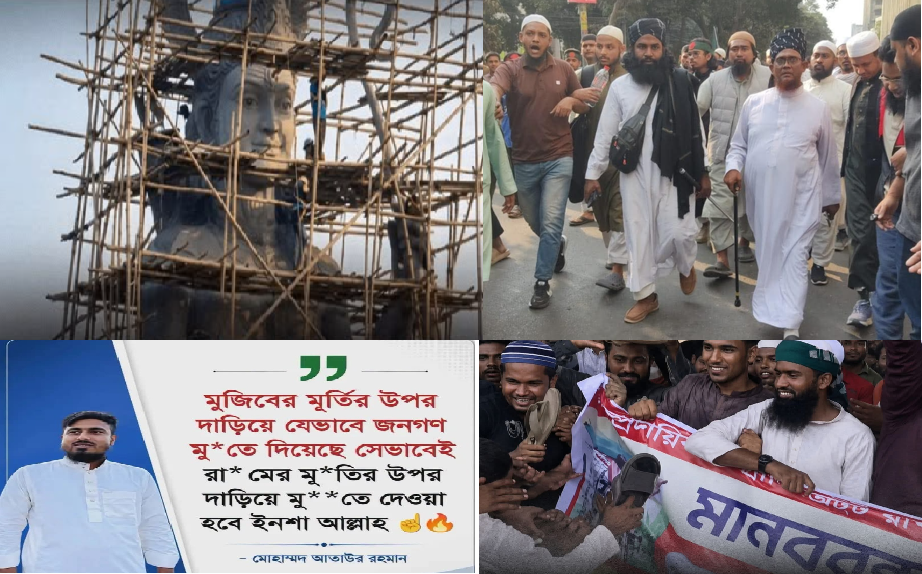
The custodians of one of Bangladesh’s most prominent Hindu religious institutions announced an indefinite suspension of the construction of what was planned to be the largest murti of Bhagwan Shri Ram in the country at the Sri Sri Radha Govinda and Kali Temple in Madhya Ramchandrapur of Palashbari Upazila under Gaibandha District.
The declaration was made during a formal press conference held within the temple complex itself. According to temple representatives, the project was suspended for the purpose of “maintaining communal harmony” and “in the interest of the nation and society.” It was intended to be a central feature of the temple’s ongoing expansion and renovation, alongside the existing 53-foot murti of Shri Krishna. Concluding the statement, a senior member of the temple committee remarked:
“In future, if we feel the need, we will call you, take the suggestions of all stakeholders and resume the work.”
Whether that day will ever come remains uncertain.
The suspension of the project is significant not merely because it concerns the construction of a religious monument. It is significant because of where it was to be built.
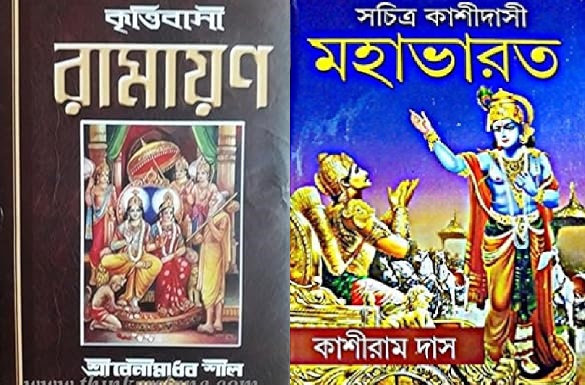
Gaibandha occupies a unique place within the civilisational memory of the Indian Subcontinent. Regional chronicles, sacred geography, folklore and literary traditions written across centuries like the Gai-Bandha Upakhyan (The Legend of King Birat’s Cows), the Karatoya Mahatmya, the Krittivasi Ramayan, Kasiram Das’s Mahabharat and local traditions surrounding Gogri and Biratnagar have associated the wider region with the ancient Matsya Kingdom of King Virata, one of the principal settings of the Mahabharata. For generations, these traditions have woven Gaibandha into the larger tapestry of Dharmic Itihasa, connecting its landscape to epics that continue to shape the spiritual consciousness of over a billion people.
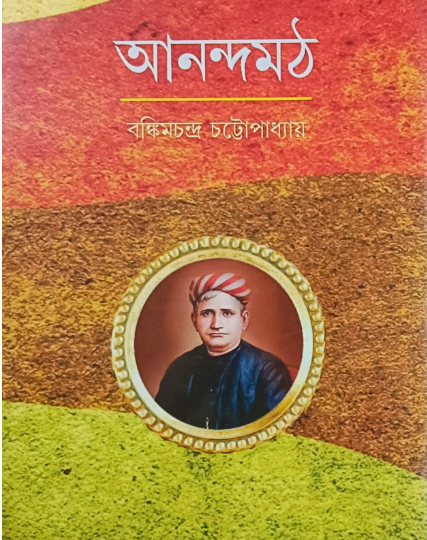
Yet the significance of this land is not confined to antiquity. The greater Rangpur region, encompassing present-day Gaibandha, Kurigram and Bogra, was one of the principal theatres of the eighteenth-century Sanyasi-Fakir resistance. It was the homeland of the legendary Bhabani Pathak, whose name would later be immortalised in Bankim Chandra Chattopadhyay’s Anandamath. The legacy of that struggle would echo far beyond the region itself, inspiring Vande Mataram, a hymn that became an enduring symbol of anti-colonial nationalism and later the National Song of India.
The cry of devotion to the Motherland that echoed through the pages of Anandamath drew inspiration from a resistance movement whose roots lay in these very plains, rivers, and forests.
Thus, the site chosen for the proposed Shri Ram murti stood at the intersection of history, faith, memory and identity. It was envisioned not merely as a religious installation, but as a cultural landmark capable of attracting pilgrims from across the world, stimulating local economic activity, strengthening heritage tourism and affirming the continued presence of an ancient community whose roots in the region predate modern political borders by millennia.
For many observers, therefore, the decision to indefinitely halt construction raises questions that extend far beyond a single temple project. It touches upon broader concerns regarding cultural expression, religious confidence, heritage preservation and the place of minority communities within the public life of contemporary Bangladesh.
The issue at stake is not only whether a statue will be built.
The deeper question is whether a community can publicly celebrate its history, honour its sacred traditions and preserve its civilisational inheritance without apprehension in a land where their traditions have flourished for millenia.
It is against this backdrop that the events surrounding the proposed Shri Ram murti at Madhya Ramchandrapur must be understood.
The decision to suspend construction did not emerge in a vacuum.
For nearly two years, work on the proposed Shri Ram murti and the wider renovation of the Madhya Ramchandrapur temple complex proceeded without any significant public controversy. Construction began in 2024, and throughout this period there were no major reports of opposition from either Hindu or Muslim residents of the surrounding area.
That changed abruptly in the first week of June 2026.
Within days, a local temple construction project became the subject of speeches, social media campaigns, public demonstrations, and demands for state intervention. At the centre of the controversy were calls for the demolition of the under-construction murti and allegations that the project threatened communal harmony, national security, and the sovereignty of Bangladesh.
The first major public call for the destruction of the murti appeared on 5 June. The leader of the Insaf Kayemkari Chhatra Sramik Janata organisation publicly demanded that the structure be demolished.
According to widely circulated recordings, he declared:
“An idol of Ram is being built in Palashbari. Destroy it with a bulldozer. The government should demolish the idol. If the government does not do it, then the common people will destroy it. It is the duty of Muslims to help the government. The temple in Bangladesh must be demolished.”
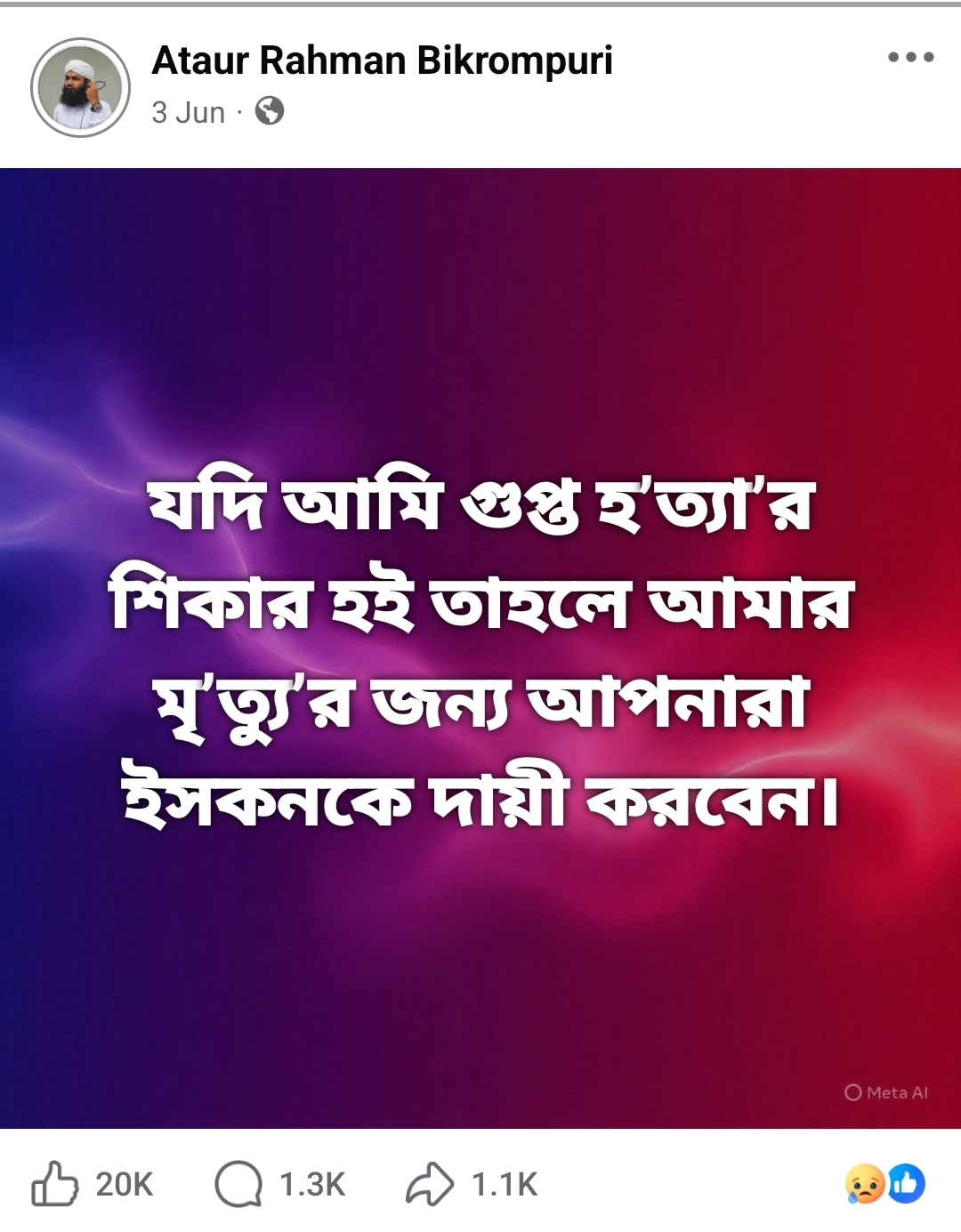
At roughly the same time, Ataur Rahman Bikrompuri, Amir of Azadi Andolon Bangladesh, intensified his public commentary on the issue. Bikrompuri had previously been arrested in November 2025 in connection with the mob attack on the offices of leading Bangladeshi newspapers. On 3 June, he published a social media post stating that if he were killed, responsibility should be attributed to ISKCON.
By 6 June, opposition to the project had expanded beyond individual statements. Religious institutions and preachers, including Darul Uloom Mueenul Islam in Hathazari and Bikrompuri himself, began promoting claims that the temple renovation project and the construction of the Ram murti formed part of a foreign-backed conspiracy linked to India. Public demands for the demolition of the murti increasingly appeared alongside references to communal harmony, national security and foreign influence.
Bikrompuri argued that the construction of the murti represented the introduction of a foreign political idea into a strategically sensitive region near the Siliguri Corridor and the Tin Bigha Corridor.
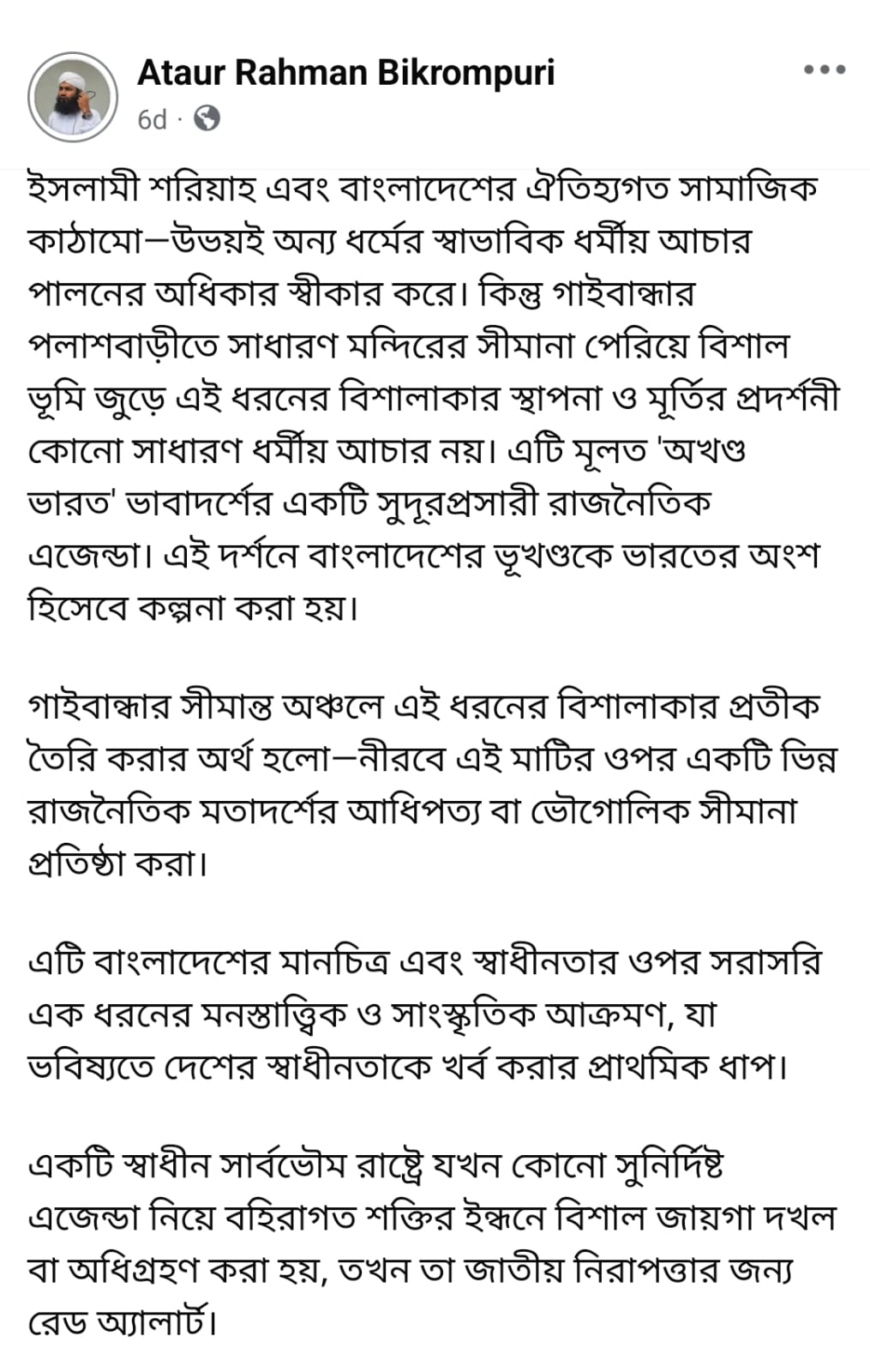
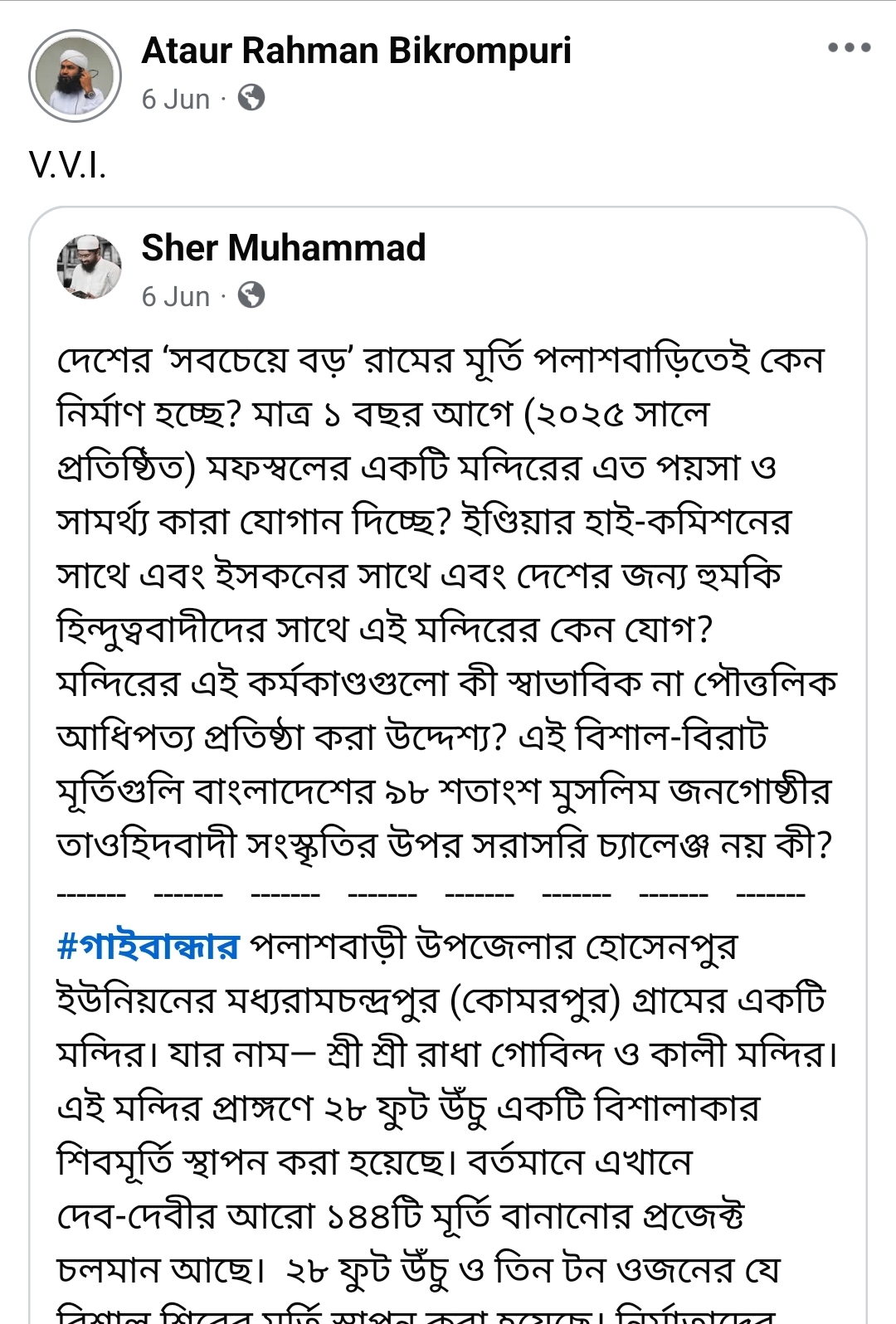
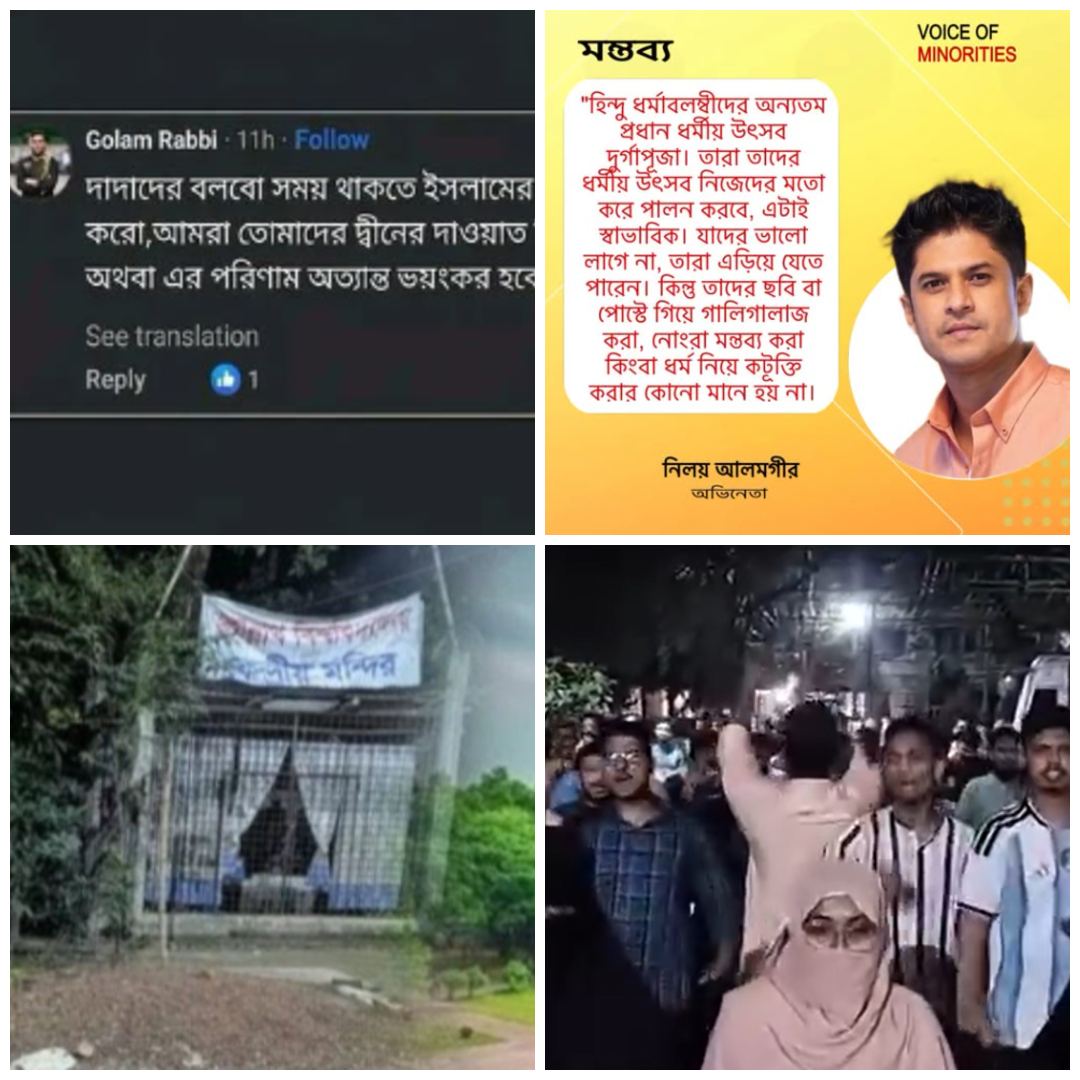
The campaign rapidly spread across social media. Posts targeting Hindu religious symbols, Hindu beliefs, Shri Ram, and the under-construction murti circulated widely across Facebook and other platforms. Among the most active online platforms was the Facebook group Islamic Bangladesh, which had more than one hundred thousand followers and was publicly endorsed by Bikrompuri.

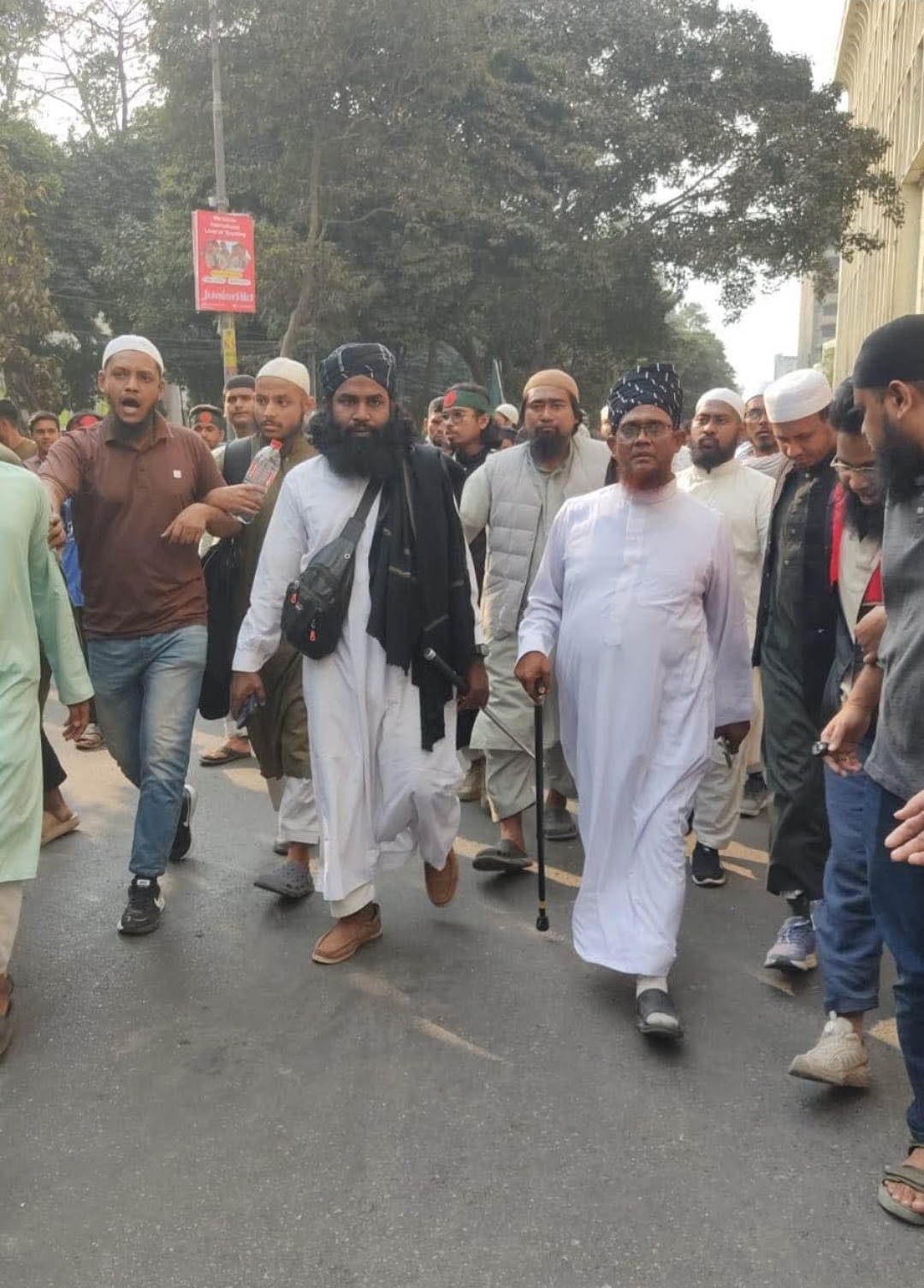
On 7 June, Bikrompuri participated in a foot march alongside Jashimuddin Rahmani, the spiritual leader of Ansarullah Bangla Team. During the march, organisers portrayed the temple renovation project as a threat to national security and demanded both the demolition of the murti and an investigation into the finances of the temple committee, alleging the receipt of illicit foreign funding.
Similar demands soon appeared elsewhere.
Similar demands soon appeared elsewhere.
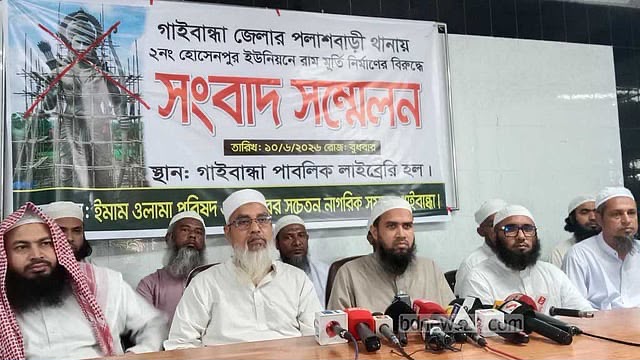
The Imam Ulema Parishad subsequently organised a press conference at the Gaibandha Public Library Hall on June 10th, where it advanced a series of demands that included dismantling the Ram murti and investigating the financial sources of the temple project, particularly with regard to alleged foreign support.
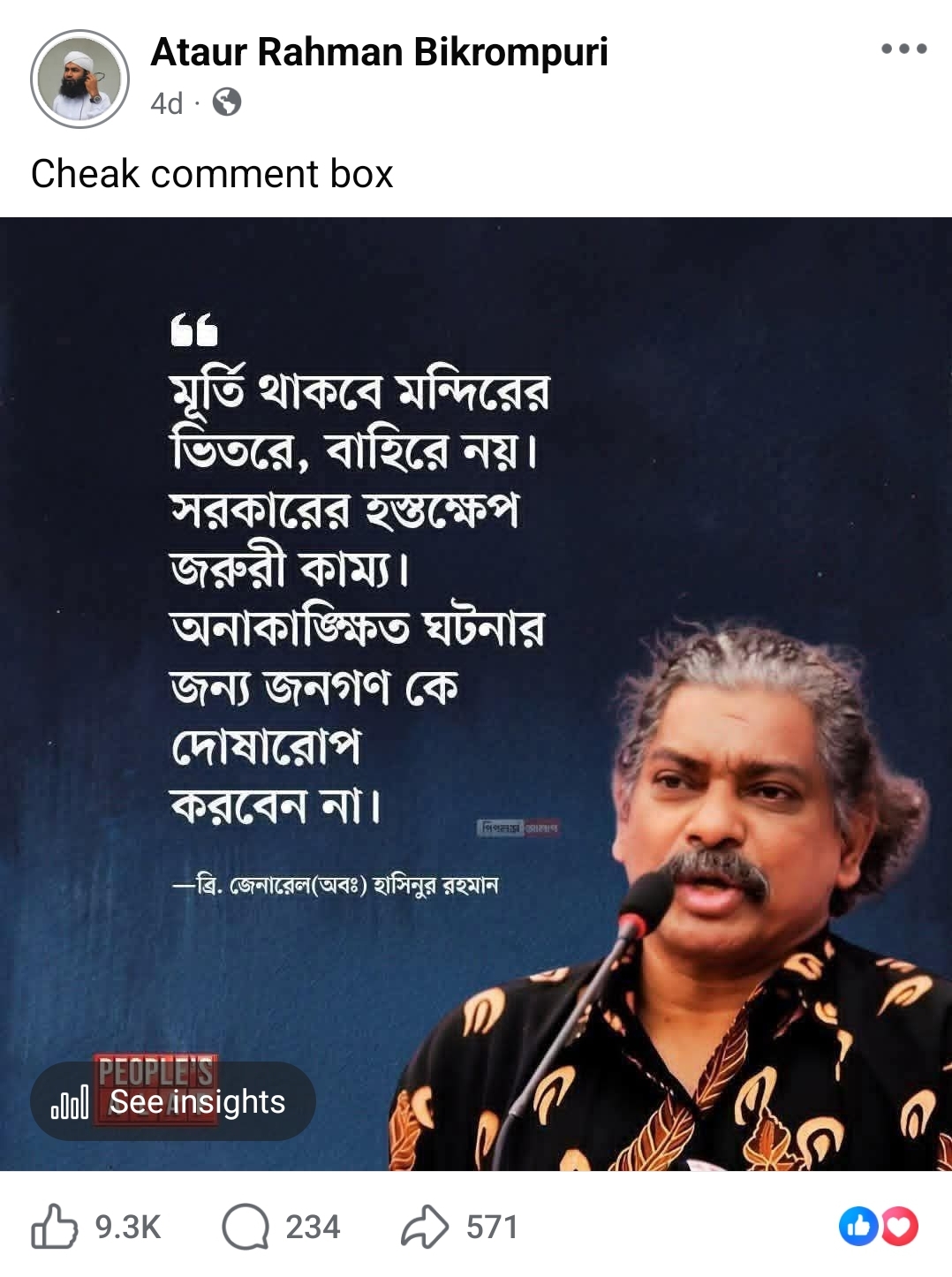
Calls for intervention were no longer confined to religious activists. Retired Brigadier General Hasinur Rahman publicly urged government authorities to halt construction and warned officials not to blame the public should any “untoward incident” occur.
On 8 June, social media personality Mohammad Ataur Rahman reportedly stated that people would urinate on the statue of Shri Ram just as they had urinated on statues of Sheikh Mujibur Rahman. The remarks circulated widely online and attracted significant attention.

By the second week of June, the controversy had moved decisively from the digital sphere to the streets.
Large demonstrations were organised in both Dhaka and Gaibandha. During one such protest in Gaibandha on 12th June, video footage circulated online showing demonstrators striking an image of Shri Ram with shoes, slippers, and sticks.
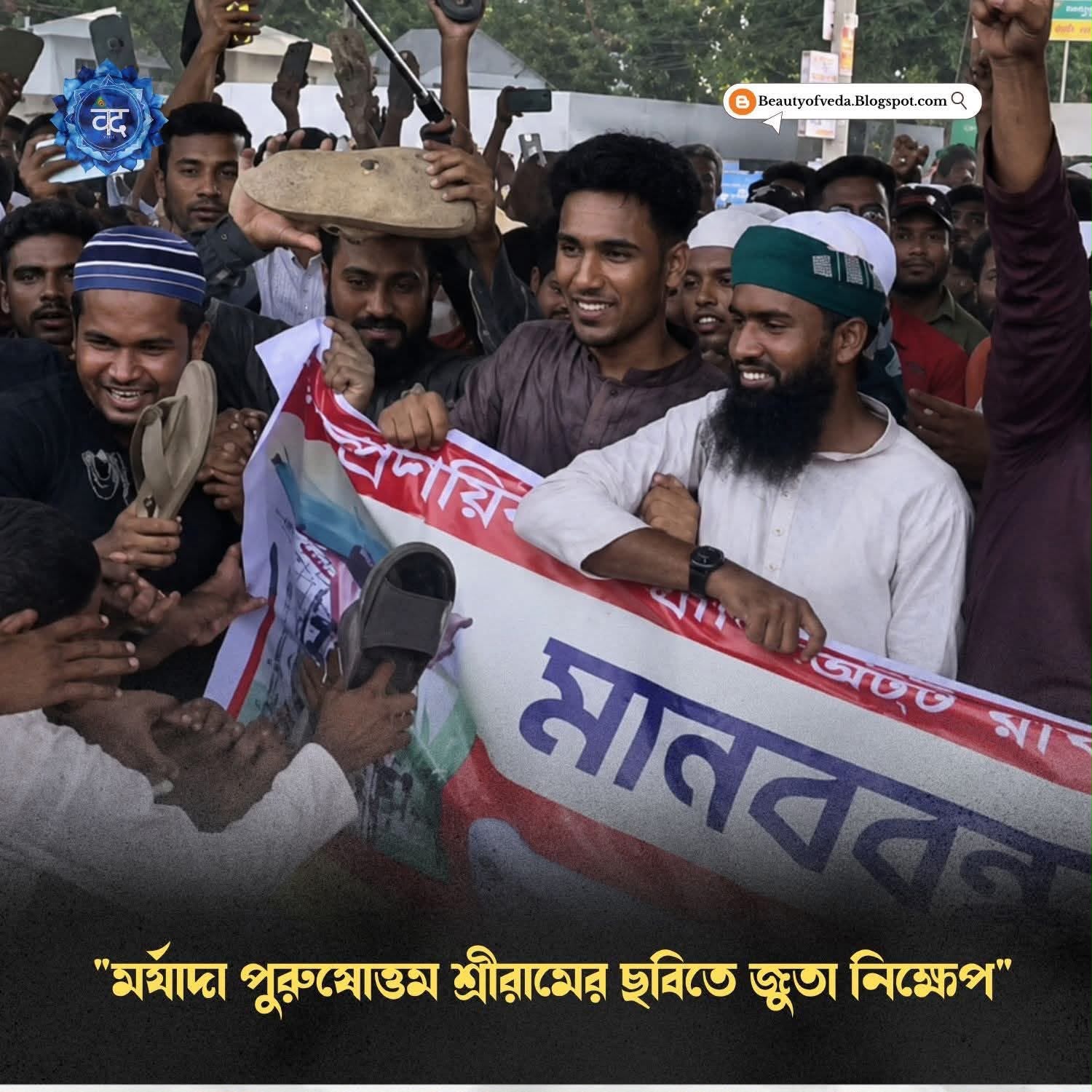
According to multiple Hindu organisations and local observers, including representatives of Bangladesh Agniveer and the Bangladesh Shammilito Sanatani Jagaran Jot, activists associated with Islami Chhatra Shibir and Hefajot-e-Islam played leading roles in the demonstrations. In Gaibandha, several associated protests were conducted under the broader banner of “Gaibandha-Palashbari’s General Public” to avoid overt links with Jamaat-e-Islami or Hefajot-e-Islam.
The sequence of events is clear. A project that had proceeded for nearly two years without significant controversy became the subject of intense opposition only after organised actors began portraying it as a religious, political, and national-security issue. It was in this atmosphere that construction was ultimately suspended.
The suspension of construction did not end the controversy.
By the time the temple authorities announced their decision, the dispute surrounding the Shri Ram murti had already outgrown the question of whether a statue should be built. What began as opposition to a construction project had evolved into a far broader debate touching on identity, demography, security, sovereignty and the place of Bangladesh’s Hindu minority within the national landscape.
On 12 June, the local Hindu organisation Ram Sevak organised a rally in Gaibandha to protest against what participants described as a sustained campaign of hostility directed not only at the proposed murti, but at the wider Hindu community itself.
For many Hindu activists, the central question had shifted. The issue was no longer why a religious monument had become controversial. The more pressing question was why the project had suddenly become the focus of intense mobilisation after nearly two years of construction had passed without significant public opposition.
Advocate and human-rights activist Sumon Kumar Roy, alongside representatives of organisations including Bangladesh Agniveer and the Bangladesh Shammilito Sanatani Jagaran Jot, argued that the controversy could not be understood in isolation. In their view, the agitation formed part of a broader effort to manufacture communal tension and create conditions that could place local Hindu communities under sustained pressure.
Their concerns were shaped not only by events, but by geography.
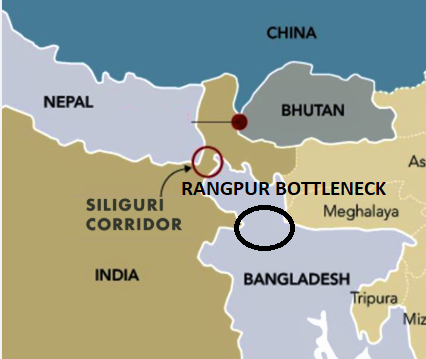
Gaibandha lies within one of the most sensitive regions of the Indian Subcontinent, near the critical Siliguri Corridor and the Rangpur bottleneck.
Often referred to as the “Chicken’s Neck,” the Siliguri Corridor links India’s northeastern states to the mainland through a narrow strip of territory barely twenty-two kilometres wide at its narrowest point. For decades, the corridor and its surrounding borderlands have occupied a central place in the strategic calculations of policymakers, military planners, and political actors across the region.
The Rangpur region forms part of this wider geopolitical landscape. Here too, the frontier narrows dramatically between India’s Dakshin Dinajpur district and Meghalaya’s South West Garo Hills, creating another sensitive 80-kilometre-wide bottleneck.
It was against this backdrop that several leading voices in the anti-murti campaign sought to recast the temple project not as a local religious initiative, but as a matter of national security and foreign influence. Repeated references to alleged foreign funding and purported Indian involvement reflected a deliberate effort to move the debate away from the temple grounds and into the realm of geopolitics.
For Hindu organisations, that shift was deeply revealing.
The project under dispute was a murti being erected within the precincts of an existing Hindu temple complex. Yet the language increasingly deployed by its opponents revolved around strategic corridors, foreign conspiracies, demographic anxieties and threats to national sovereignty. What was ostensibly a debate about a religious monument had become a debate about borders, identity and national security.
Within Bangladesh’s Hindu community, the consequences have been profound.
Fear and distrust have deepened sharply. Hindu organisations and minority-focused media outlets, including Hindu News, have repeatedly accused the BNP Government of failing to take visible and decisive steps to defuse rising communal tensions. They have all claimed that the state has appeared content to watch from the sidelines while insecurity spread through a vulnerable minority community.
More serious still is the allegation that repeated requests for enhanced security at the temple complex went unanswered. For many Hindus, the issue has therefore ceased to be solely about a murti, a temple or a construction dispute. It has become a test of the willingness of the state to protect all of its citizens equally when they feel most vulnerable.
The story of the suspended Shri Ram murti in Gaibandha is not ultimately a story about a statue.
Statues do not fear. Statues do not organise press conferences. Statues do not halt their own construction.
People do.
For nearly two years, the project advanced without becoming a matter of national concern. Only when organised campaigns portrayed it as a threat to religion, security, sovereignty and communal harmony did the pressure become sufficient to force its suspension. That fact alone makes this episode about far more than architecture or temple renovation.
The deeper issue is whether a community that traces its presence in this land back centuries, indeed millennia, can publicly express its faith without being compelled to justify its existence. Whether the descendants of those who preserved these traditions through empires, partitions, wars and political upheavals can commemorate their heritage without seeing it recast as provocation.
Gaibandha is not an empty patch of earth. It is a landscape layered with memory. It carries the echoes of Virata’s kingdom, the legends of the Mahabharata, the legacy of Bhabani Pathak, and the history of a civilisation that long predates the borders of modern states. To many, the proposed murti was intended to become part of that continuum. Its suspension therefore represents more than the postponement of a monument. It represents a moment in which a community concluded that retreat was safer than persistence.
Every nation must eventually answer a fundamental question: are minorities free to practise their traditions only when nobody objects, or are they free because they possess rights that do not depend upon the approval of others?
That question remains unanswered in Gaibandha.
The concrete can wait. The scaffolding can stand idle. The unfinished murti can remain covered.
History, however, is already recording the answer.
If you love our work, you can help us by contributing a small amount of your choice. It’ll help us to continue.