What TV doesn't, print can't; we deliver.
What TV doesn't, print can't; we deliver.
What TV doesn't, print can't; we deliver.
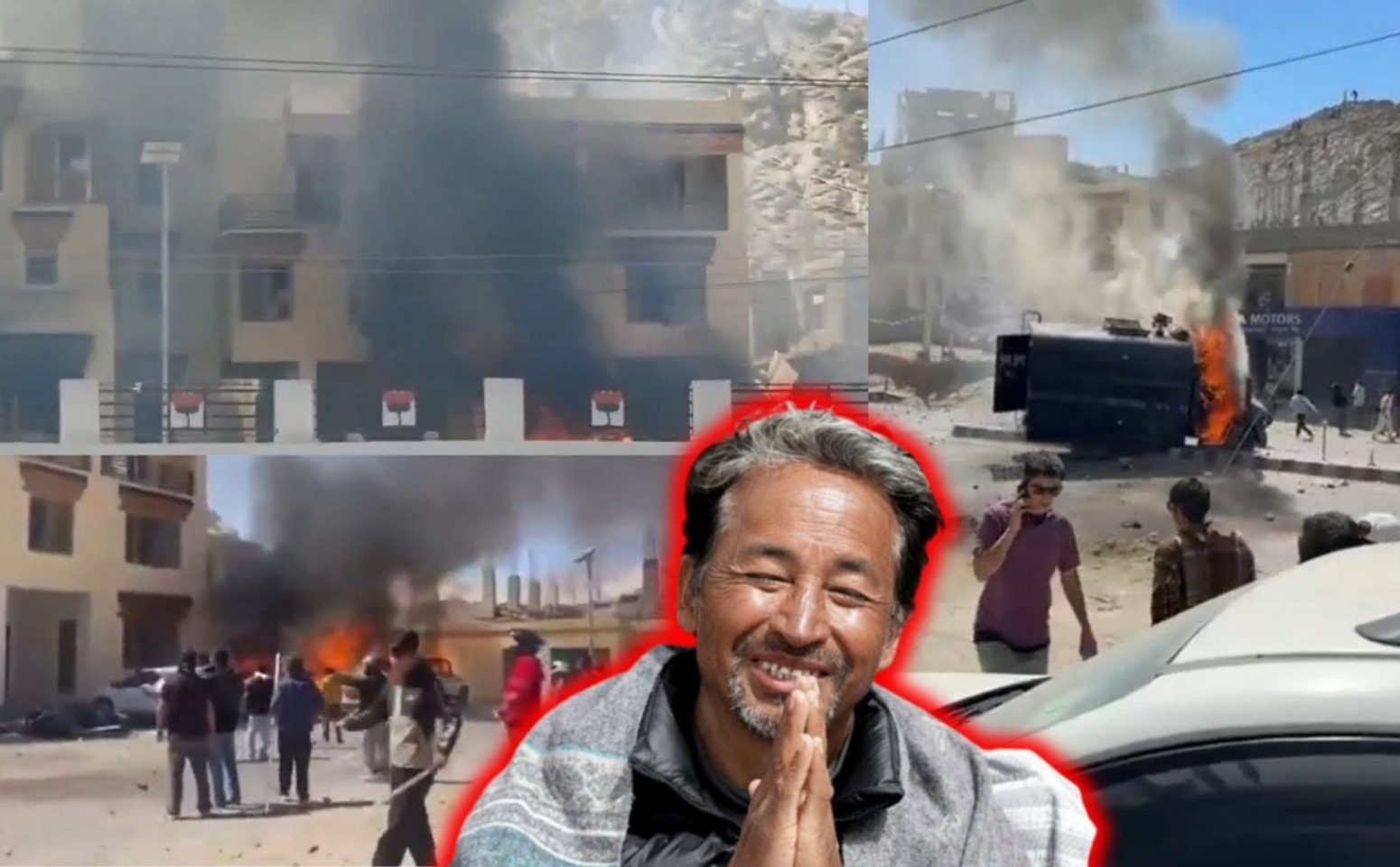
Hindu Voice Team: The Government of India has issued a strongly worded statement holding Ladakhi climate activist Sonam Wangchuk responsible for inciting the violent outbreak in Leh that left scores injured and government property destroyed. The violence erupted on Tuesday during Wangchuk’s ongoing agitation demanding Sixth Schedule status and statehood for Ladakh.
According to the Ministry of Home Affairs, the situation spiraled out of control after Wangchuk, who had been on a hunger strike since September 10, allegedly provoked his supporters with speeches comparing the Ladakhi struggle to the Arab Spring and political upheavals in Nepal. Officials said such rhetoric misled the public, heightened tensions, and emboldened the crowd to take the law into its own hands.
The ministry reported that around 11:30 AM a large mob moved from the hunger strike site and launched attacks on government and political offices in Leh. Protesters ransacked the office of the Chief Executive Councillor and a prominent political party headquarters, before setting them ablaze. A police vehicle was also torched during the rampage. Security forces, including the CRPF, were pelted with stones, leaving more than 30 personnel injured.
The authorities admitted that force, including the use of firearms, was deployed to regain control when the mob turned violent and threatened lives. By late afternoon, the administration claimed the situation had been stabilized, though reports of civilian casualties remain unclear, with neither the government nor local bodies providing confirmed figures.
The government also accused Wangchuk of abandoning his followers at the height of the crisis, stating that he broke his fast and left the protest site in an ambulance while violence continued. Officials argued that his failure to restrain the crowd amounted to deliberate abdication of responsibility.
In its statement, the Home Ministry emphasized that many of Wangchuk’s demands were already under serious consideration through an official High-Powered Committee that included the Apex Body Leh and the Kargil Democratic Alliance. It highlighted steps taken to address Ladakhi concerns, including a sharp increase in tribal reservations from 45 to 84 percent, new provisions for women’s representation in local councils, and the recognition of Bhoti and Purgi languages as official. The ministry asserted that these initiatives demonstrated the Centre’s commitment to safeguarding Ladakh’s constitutional rights, making the violent turn of events “unwarranted and engineered.”
The government further appealed to the public and the media to refrain from circulating old or provocative videos on social media, claiming that such content could inflame passions further. It reiterated that dialogue with Ladakhi representatives would continue, with meetings scheduled in the coming days, and assured that the High-Powered Committee would reconvene in early October to carry forward discussions.
While the Centre has placed the blame squarely on Wangchuk, critics are already questioning the proportionality of force used against civilians and the lack of clarity regarding fatalities and injuries among protesters. Opposition voices argue that dismissing the unrest as incitement overlooks deeper mistrust and grievances within Ladakh, where demands for full statehood and constitutional protections have been festering since the region’s separation from Jammu and Kashmir in 2019.
For now, the government’s narrative paints Wangchuk as the prime instigator of Tuesday’s violence. However, calls are growing for an independent investigation to establish accountability, verify casualty figures, and assess whether both sides crossed lines that led Leh into one of its most volatile episodes in recent years.
(The above piece has been written based on a report published by The Commune. You can read the original report HERE)