What TV doesn't, print can't; we deliver.
What TV doesn't, print can't; we deliver.
What TV doesn't, print can't; we deliver.
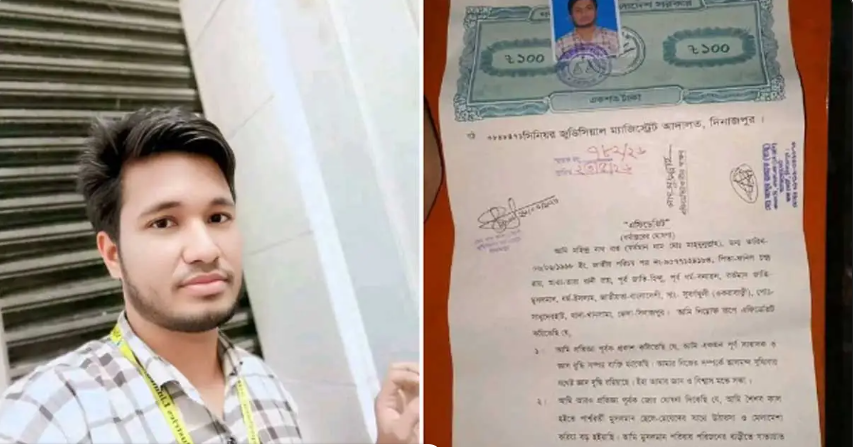
Dinajpur, Bangladesh — A troubling case from northern Bangladesh has reignited concerns over the treatment of religious minorities after a Hindu man was allegedly compelled to convert to Islam in order to retain his job.
According to local sources, Mahendra Nath Roy, a resident of Dinajpur District, was presented with a stark ultimatum by his employer: embrace Islam or lose his employment. Faced with the prospect of unemployment, financial hardship, and the responsibility of supporting his family, Roy reportedly chose conversion. He is now known as Mahmudullah.
The incident is said to have occurred at a private business establishment in Dinajpur, where Roy had been employed for several years. Community members claim that he was summoned by management and informed that retaining a Hindu employee had become “problematic” for the organization. As a result, he was allegedly told that conversion was necessary if he wished to continue working.
For many observers, the case raises profound questions about religious freedom, workplace discrimination, and the vulnerability of minority communities facing economic pressure.
Family members say Roy remains deeply distressed by the circumstances surrounding his conversion. While he is publicly known by his new Muslim name, relatives reportedly continue to address him by his birth name within the family. According to those close to him, the change was not the result of personal conviction but rather a decision made under severe economic duress.
News of the incident has sparked anger and anxiety among members of the local Hindu community. Community leaders warn that such allegations, if true, contribute to a climate of fear among religious minorities, many of whom already face social and economic insecurity.
The case also emerges against the backdrop of longstanding concerns regarding the condition of Bangladesh’s Hindu minority. Over the years, various reports have documented allegations of land seizures, attacks on temples, intimidation, and pressure on minority communities in different parts of the country, including districts across the northern region.
Human rights advocates argue that incidents of this nature should not be viewed in isolation. They contend that economic coercion can be as powerful as physical intimidation, particularly when individuals are forced to choose between their livelihood and their religious identity.
Hindu Voice has documented more than 100 cases involving Hindu government and non-government employees who were forced to resign from white-collar positions on what the organization describes as fabricated or politically motivated charges since 5 August 2024. These claims have fueled broader debate about the security, representation, and professional opportunities available to minority communities.
Local residents and community representatives have reportedly submitted complaints to the authorities regarding the Dinajpur case. However, according to community sources, no clear official action has yet been publicly announced.
“We want to live in peace,” one local Hindu leader said. “But when incidents like these continue to occur, fear inevitably grows within the community. The authorities must conduct a thorough investigation and take appropriate action against anyone found responsible.