What TV doesn't, print can't; we deliver.
What TV doesn't, print can't; we deliver.
What TV doesn't, print can't; we deliver.
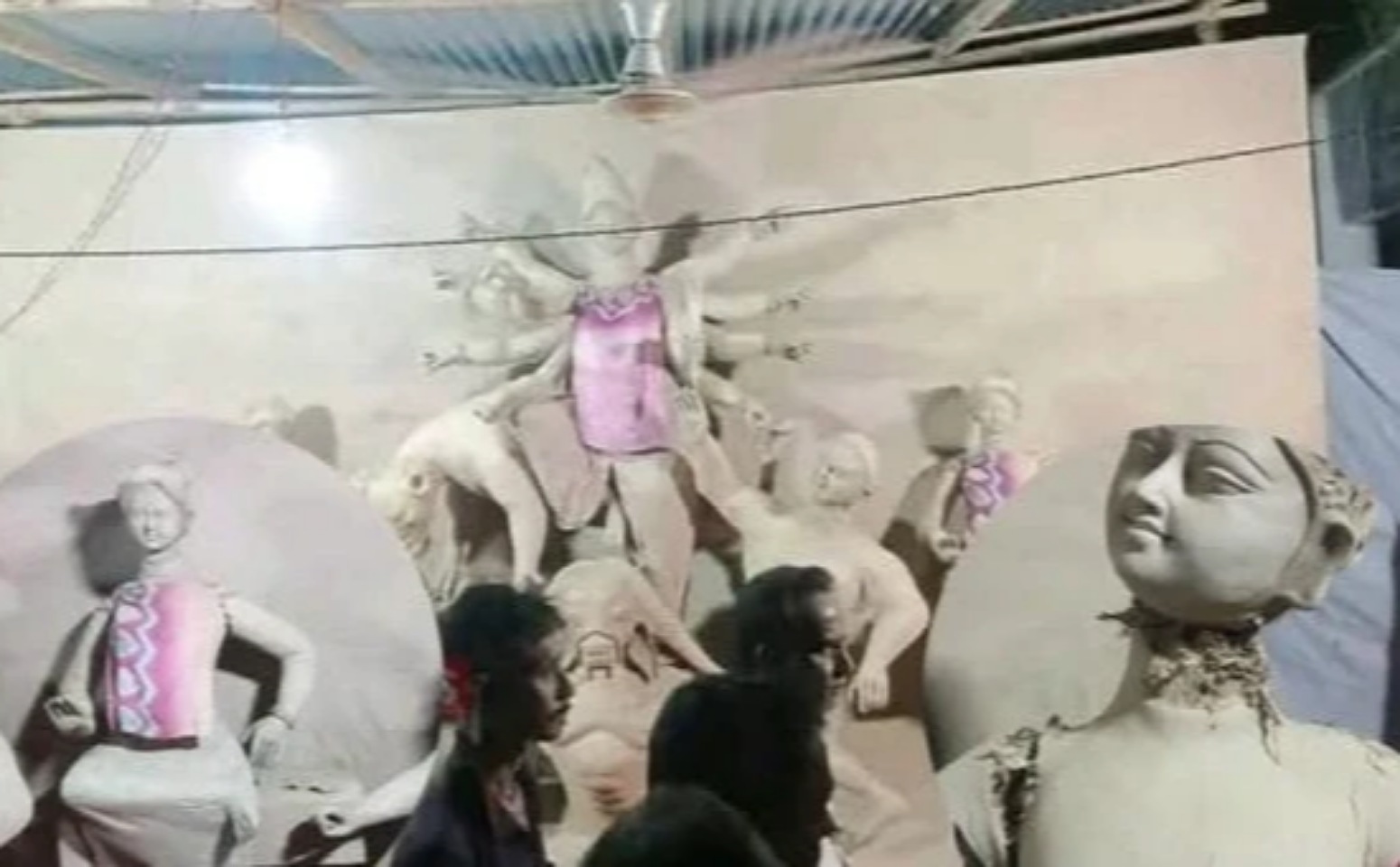
Hindu Voice Team: As Bangladesh’s streets begin to light up with the colors of Durga Puja, the nation’s biggest Hindu festival, a chilling shadow has once again fallen over the celebrations. In several districts, Durga idols have been desecrated—shattering both the physical artistry of the clay sculptures and the spiritual faith of a community that already lives with deep-seated insecurity.
Recurring Nightmare for Bangladesh’s Hindus
Durga Puja, observed by more than 12 million Hindus in Bangladesh—roughly 8% of the country’s population—symbolizes joy, devotion, and cultural pride. Yet for years, the days leading up to the festival have been marred by targeted violence. From Khulna to Rangpur, reports of idols being smashed or temples attacked have become an all-too-familiar reality.
In 2021, violence erupted in Cumilla after rumors spread on social media, leading to nationwide riots that left more than a dozen people dead, hundreds injured, and scores of temples destroyed. Similar incidents flared in 2022, 2023, and 2024, despite repeated assurances of safety from the government. The repetition of attacks in 2025 has reignited fears that Bangladesh’s minorities remain chronically vulnerable.
A Blow to Faith and Identity
“The destruction of an idol is not just vandalism—it is a strike at the soul of our community,” said Anil Chatterjee, a Hindu rights activist in Dhaka. “We live in fear every year, wondering not if, but when the attacks will come.”
For artisans who spend months crafting the intricate clay figures of Goddess Durga, the vandalism is devastating both emotionally and financially. “Each idol carries the devotion of hundreds of families. To see it smashed before worship even begins is unbearable,” said one idol-maker from Narail.
Silence and Inaction
The Bangladeshi government has condemned the incidents and deployed additional police forces in vulnerable districts. However, rights groups argue that the measures are too little, too late. “This has become a recurring cycle—attacks happen, officials promise justice, but impunity continues,” said Meenakshi Ganguly, South Asia Director at Human Rights Watch.
The U.S. State Department, in its annual International Religious Freedom Report, has repeatedly highlighted Bangladesh’s failure to adequately protect minority communities during major festivals. Amnesty International has also urged Dhaka to take “concrete steps beyond symbolic gestures” to end the climate of fear.
Global and Regional Repercussions
Beyond Bangladesh, the attacks resonate across South Asia. West Bengal in India, which shares cultural and religious ties with Bangladesh’s Hindus, often witnesses protests and solidarity rallies following such incidents. Political leaders in Assam and Tripura—both states that host large numbers of Bengali Hindus—have expressed concern that continued attacks could fuel cross-border tensions.
Internationally, diaspora communities in the United States, Canada, and the United Kingdom have condemned the vandalism, calling it a “human rights emergency” that undermines Bangladesh’s global image as a secular democracy.
Historical Echoes
Bangladesh was founded in 1971 on principles of secularism and inclusivity. Yet, in practice, minorities have repeatedly faced waves of persecution. The post-1971 years saw the exodus of millions of Hindus, and between 1971 and 2011, watchdog groups estimate that the Hindu population declined by almost 50%—driven by fear, violence, and systematic discrimination.
Durga Puja, once celebrated as a symbol of shared Bengali culture, now increasingly exposes the fragility of Bangladesh’s social fabric.
A Call for Protection and Justice
The vandalism of Durga idols is not merely an attack on religious symbols; it is an assault on Bangladesh’s promise of equality. Unless authorities move decisively—with speedy investigations, strict punishments, and proactive protection of minority rights—the cycle of hatred will persist.
For Bangladesh’s Hindu community, Durga Puja is more than a festival—it is their declaration of survival, resilience, and faith. Yet, instead of joy, it has become a season clouded with apprehension. As one devotee in Chattogram lamented: “We pray to the Goddess for protection, but will our own country ever protect us?”