What TV doesn't, print can't; we deliver.
What TV doesn't, print can't; we deliver.
What TV doesn't, print can't; we deliver.
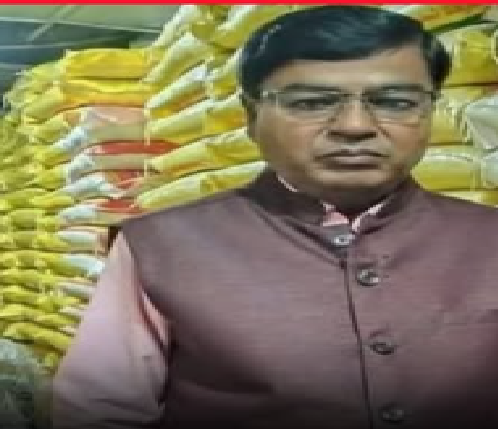
On the night of 9 February, in Trishal upazila of Bangladesh’s Mymensingh district, a man was not merely killed, but erased with calculated brutality. Sushen Chandra Sarkar, a rice trader from a minority Hindu family, was hacked to death inside his own godown. After ensuring he was beyond survival, the assailants looted nearly 15 lakh taka in cash and disappeared into the night.
Sarkar, the son of the late Rasbihari Sarkar from Saudkanda village, had been running his rice business in the area for years—known, visible, predictable. That visibility likely became his vulnerability.
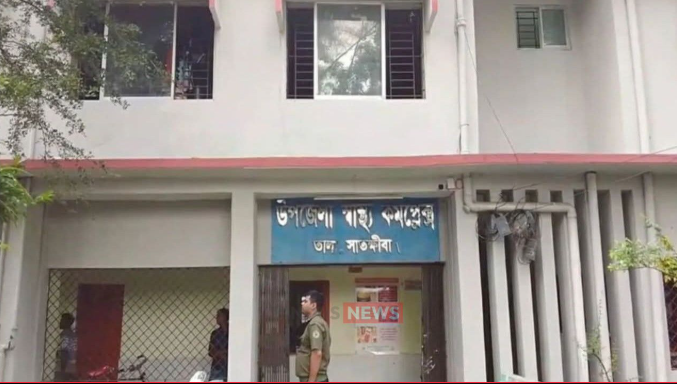
Preliminary findings indicate that the attackers used sharp weapons, delivering fatal blows to his head before carrying out the robbery. Locals alerted the police after discovering the body. Trishal police arrived, recovered the corpse, and sent it to Mymensingh Medical College Hospital for post-mortem examination. CCTV footage from the surrounding area is reportedly being reviewed, and a case has been initiated.
Procedurally, everything is “under process.”
Socially, however, everything is already broken.
This killing has sent shockwaves through the local business community, but the tremors run far deeper among minority families. For them, this was not just another violent crime—it was a confirmation. A confirmation that economic success does not guarantee safety. That permanence is conditional. That even routine life can be punctured, fatally, without warning.
This fear is not abstract. It is cumulative.
According to documentation by the Human Rights Congress for Bangladesh Minorities (HRCBM), 115 Hindus were murdered between July and December 2025 alone. At least 14 more were killed in January 2026. These are not rumours or extrapolations, but compiled cases with identifiable victims—numbers that already understate the scale due to chronic underreporting.
Placed against that backdrop, the killing of Sushen Chandra Sarkar ceases to look random. It begins to look patterned.
When a minority businessman is murdered at his workplace and robbed of a substantial sum, the message travels faster than any police notice: you can be targeted, your success can be marked, and protection may arrive only after the body is found.
Such incidents are routinely flattened into neutral language—“robbery,” “murder,” “investigation underway.” What disappears in that flattening is context: repeated vulnerability, selective fear, and the slow normalization of violence against those who lack numbers, leverage, or political insulation.
Police assurances that “efforts are underway” follow nearly every such killing. What rarely follows is visible resolution. Arrests are delayed or unnamed. Investigations lose urgency. Trials, if they begin at all, stretch into quiet abandonment.
Justice, in these cases, has become ceremonial rather than corrective.
Until swift arrests, transparent investigations, and credible convictions become the norm, each unresolved murder functions as a referendum on the state’s willingness to protect all citizens equally—or to quietly rank them.
Sushen Chandra Sarkar was not a statistic awaiting aggregation. He was a known figure in his locality, a working trader, a life embedded in routine and responsibility. If his murder dissolves into administrative language and fades after a few news cycles, then the failure will not end with his death.
The demand from local traders and minority communities is clear and unambiguous: identify the killers, arrest them without delay, and prosecute them to conviction. Anything less will be read not as incapacity, but as consent.
And consent, in such climates, does not remain theoretical.
It multiplies.
References :