What TV doesn't, print can't; we deliver.
What TV doesn't, print can't; we deliver.
What TV doesn't, print can't; we deliver.
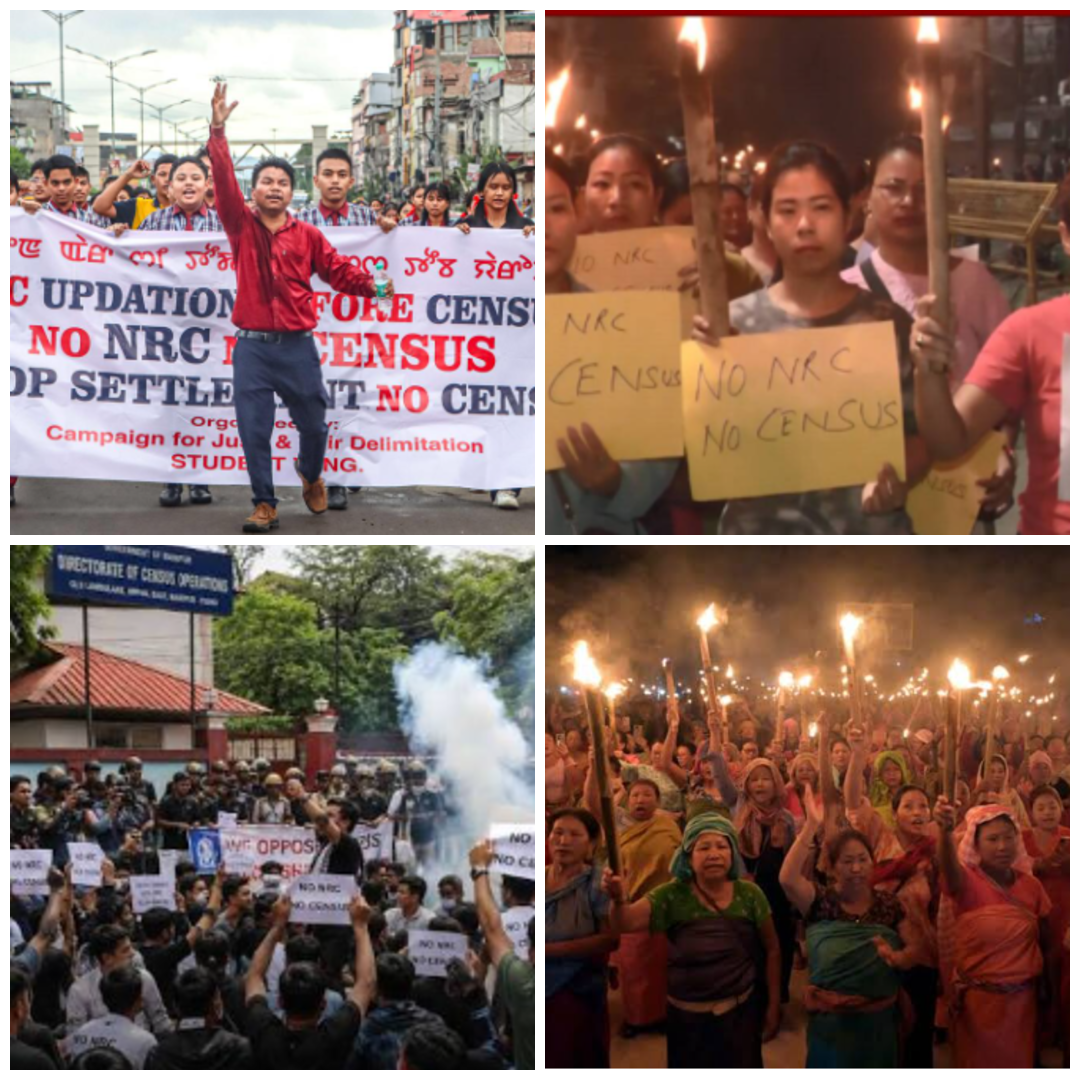
The proposed National Register of Citizens (NRC) in Manipur is being presented as a means of identifying citizens and addressing concerns over undocumented migration. But identifying citizens is only one part of the challenge.
The greater question is whether the government can create a register that is legally defensible, administratively credible and trusted by communities already divided by conflict.
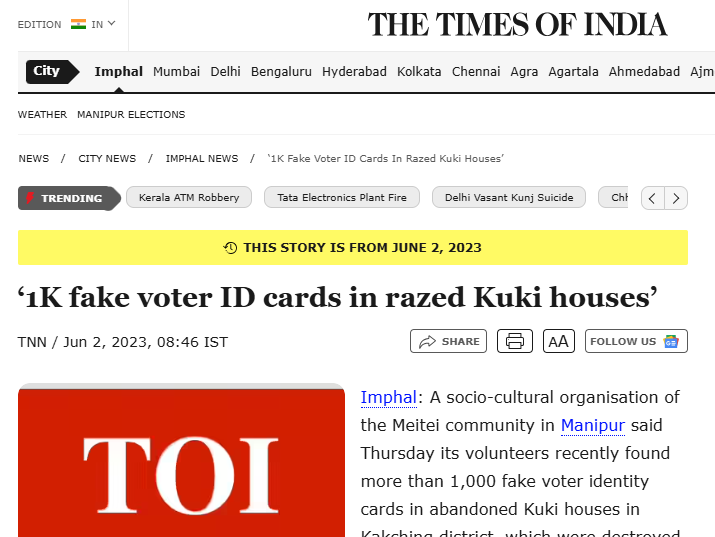
Manipur’s history includes princely administration, constitutional changes, migration, displacement and uneven record-keeping. Documents may be unavailable, inconsistent or concentrated among communities with better access to government institutions, local politicians and village chiefs (for communities identifying themselves under the umbrella term Kuki-Zo). Allegations of large-scale manipulation and fabrication of documents like AADHAR cards, EPIC cards and residential certificates issued by village chiefs under threat or greed have further complicated the situation.
The Government must clarify :
a) Which documents would be accepted ?
b) How will contradictory records be assessed?
c) What happens when birth, land or electoral records are missing?
d) Who bears the burden of proving citizenship?
e) How will appeals be handled?
Without clear answers, the process risks turning administrative uncertainty into permanent insecurity.
Citizenship verification must not be influenced by ethnicity, language, religion, appearance or place of residence. This is especially important after the displacement caused by the 2023 violence. Many people have lost homes, land documents and other records. Thousands are still unable to return to their original locations or access the offices where their documents were issued.
Conducting verification without accounting for displacement could produce exclusions that reflect the consequences of conflict rather than the citizenship status of individuals.
The experience of Assam demonstrates that an NRC is not merely a question of political intent. It is also a question of financial control, software governance and administrative accountability.
An audit of Assam’s NRC project identified major concerns, including substantial cost escalation, alleged undue financial benefit to contractors, wage-related irregularities and weaknesses in software management. The audit also raised concerns about the absence of adequate audit trails and the risks associated with data handling.
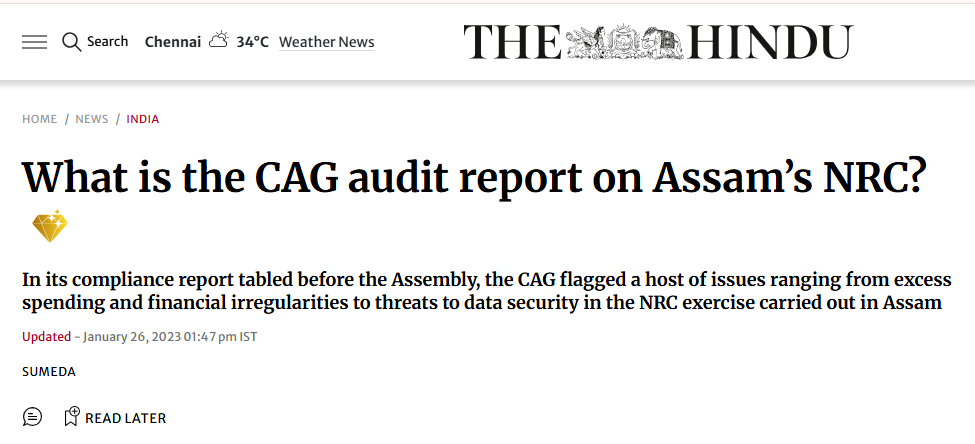
These findings do not establish that corruption will occur in Manipur. But a government cannot demand unquestionable documentary proof from citizens while failing to make the machinery examining those documents fully accountable.
Any Manipur NRC would require independent financial audits, transparent procurement, secure data systems, traceable decision-making and effective mechanisms for reporting bribery, manipulation or discrimination.
Officials must also be held accountable for both wrongful inclusion and wrongful exclusion.
The government must establish the legal authority, institutional structure and operational timetable before beginning a mass verification exercise.
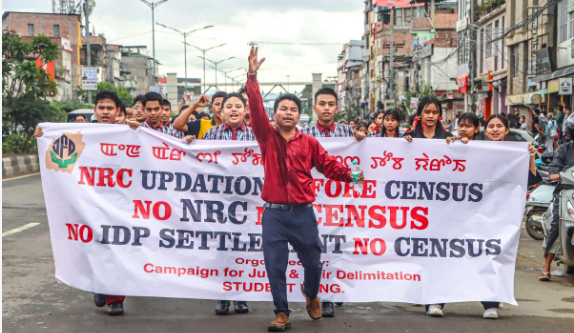
This includes determining how the NRC will interact with existing citizenship law, court procedures, electoral records and other official registers. The relationship between the NRC and the Census must also be clearly explained.
The process should provide:
a) Written and publicly accessible rules.
b) Adequate time for document submission.
c) Assistance for displaced, elderly and vulnerable residents.
d) Independent review and appeals.
e) Protection against arbitrary or discriminatory decisions.
f) Strong privacy and data-security safeguards.
g) Regular public disclosure of costs, progress and complaints.
The burden of proof must not become a mechanism through which ordinary residents are trapped in endless administrative proceedings.
Manipur’s geography, conflict-related displacement, uneven documentation and strained relations between communities make a rapid NRC exercise exceptionally difficult.
A register prepared without reliable records, trained personnel, independent oversight and sufficient appeal mechanisms could deepen distrust rather than resolve it. An NRC can only command legitimacy if its procedures are more trustworthy than the suspicions surrounding it.
In Manipur, the success of any register will not be measured merely by the number of names included or excluded. The legitimacy of the exercise will depend on the percentage of citizens believing that decisions were made lawfully, consistently and without political or ethnic discrimination.