What TV doesn't, print can't; we deliver.
What TV doesn't, print can't; we deliver.
What TV doesn't, print can't; we deliver.
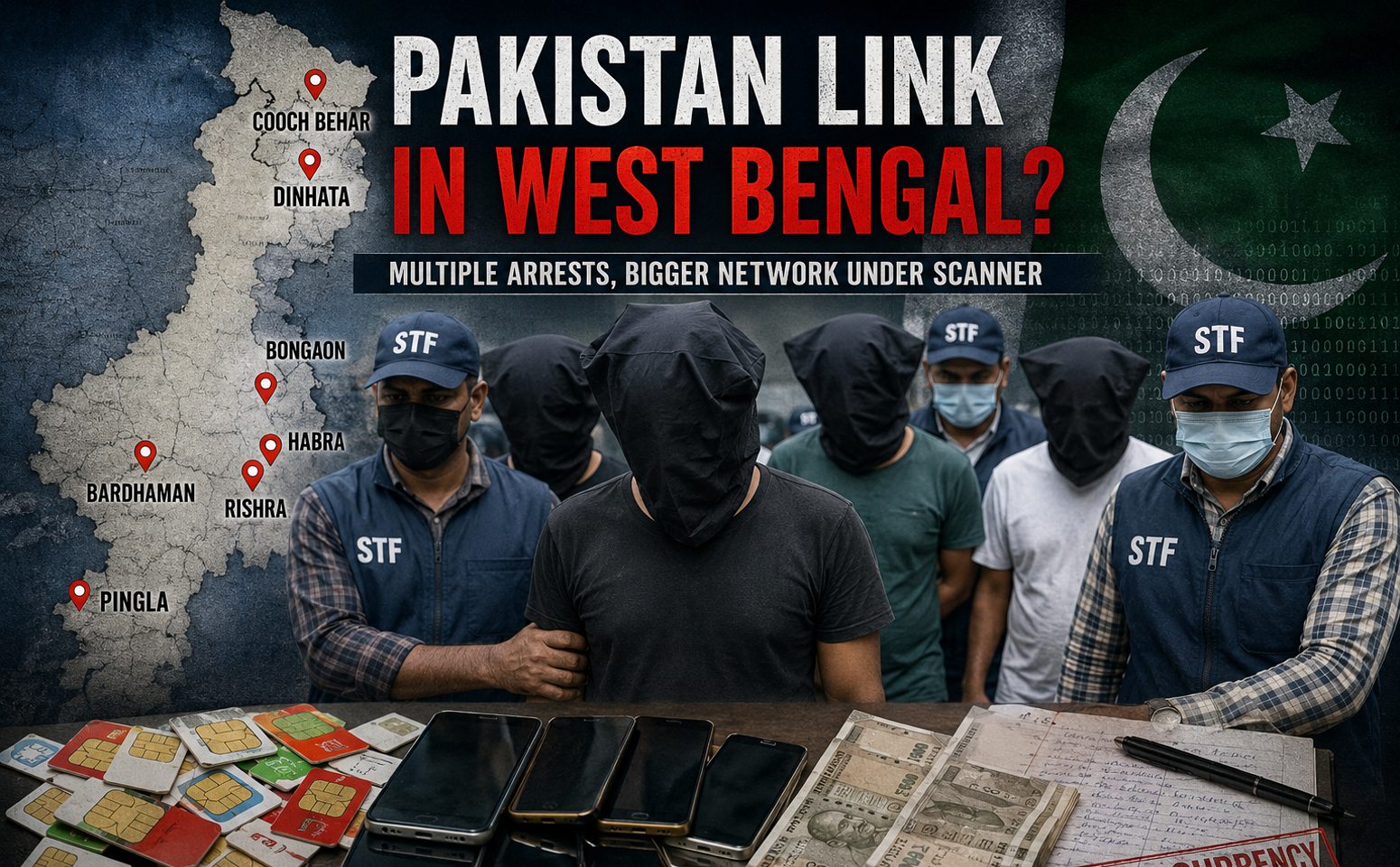
Hindu Voice Team: A series of arrests across West Bengal has raised concerns over a suspected espionage network allegedly linked to Pakistan’s Inter-Services Intelligence (ISI), with the state police’s Special Task Force (STF) intensifying its investigation into possible cross-border connections.
In the most recent development, investigators arrested Zafar Shams, also known as Sunny, from Rishra in Hooghly district. According to investigators, he was allegedly in contact with Pakistani national Rana Rauf, alias Wahab Alam, who was arrested from the Habra area of North 24 Parganas on August 12.
Rana Rauf allegedly possessed forged Indian identity documents. Investigators are examining whether he had been living in India under a false identity and whether he was involved in collecting sensitive information.
According to the allegations being investigated, Rauf had been gathering information relating to strategic establishments, including the Indian Army, Navy and railway infrastructure, and allegedly transmitting it to handlers across the border.
The investigation subsequently expanded to Kolkata, where an individual identified as Imran was arrested from Topsia. The STF suspects that he may have assisted Rauf in obtaining forged documents and facilitating his Indian identity.
Meanwhile, the investigation also spread to north Bengal. On August 15, the STF arrested three people from the Sahebganj area of Cooch Behar on suspicion of maintaining links with Pakistan’s ISI.
Investigators are examining allegations that the suspects were involved in a network through which Indian SIM cards and other information could have been routed through Bangladesh and subsequently passed on to handlers in Pakistan. Authorities are also probing possible links with fake currency operations.
The Cooch Behar investigation has reportedly brought the role of Bangladesh-based contacts under scrutiny. Investigators are examining whether the India-Bangladesh border was being used as a transit route for communications and other material.
On August 17, another man from Dinhata was arrested over alleged links with the ISI. Investigators reportedly found WhatsApp communications with numbers suspected to be associated with Pakistani handlers. He is also suspected of facilitating communication between other arrested individuals and contacts across the border.
So far, the Police arrested several individuals. Details are:
Investigators say the alleged networks maintained contact with Pakistan through SIM-card trafficking, honey-trap operations and counterfeit currency. In most cases, courts have reportedly granted 14-day police custody, while the NIA and Bengal STF are investigating the wider network.
The successive arrests have prompted investigators to examine the wider structure of the alleged network, including its recruitment methods, forged identity documents, digital communications and possible cross-border channels.
Authorities are now trying to determine whether the arrested individuals were operating independently or were part of a larger organised espionage network.