What TV doesn't, print can't; we deliver.
What TV doesn't, print can't; we deliver.
What TV doesn't, print can't; we deliver.
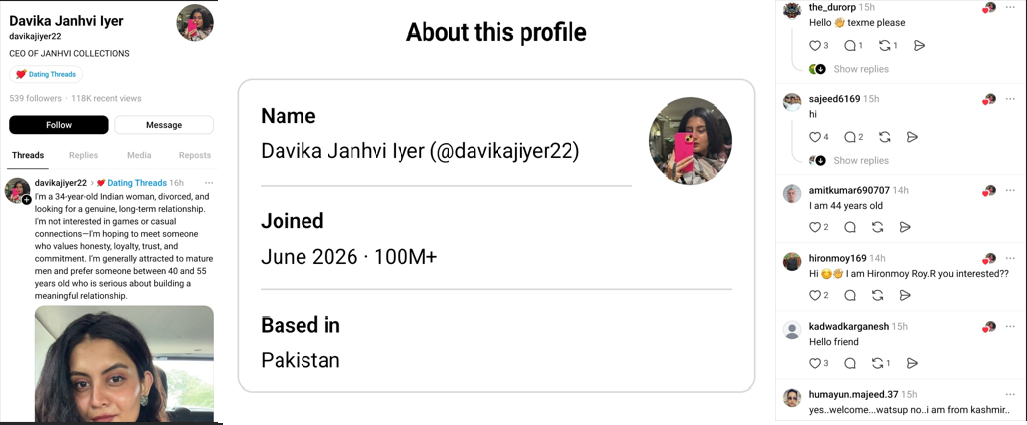
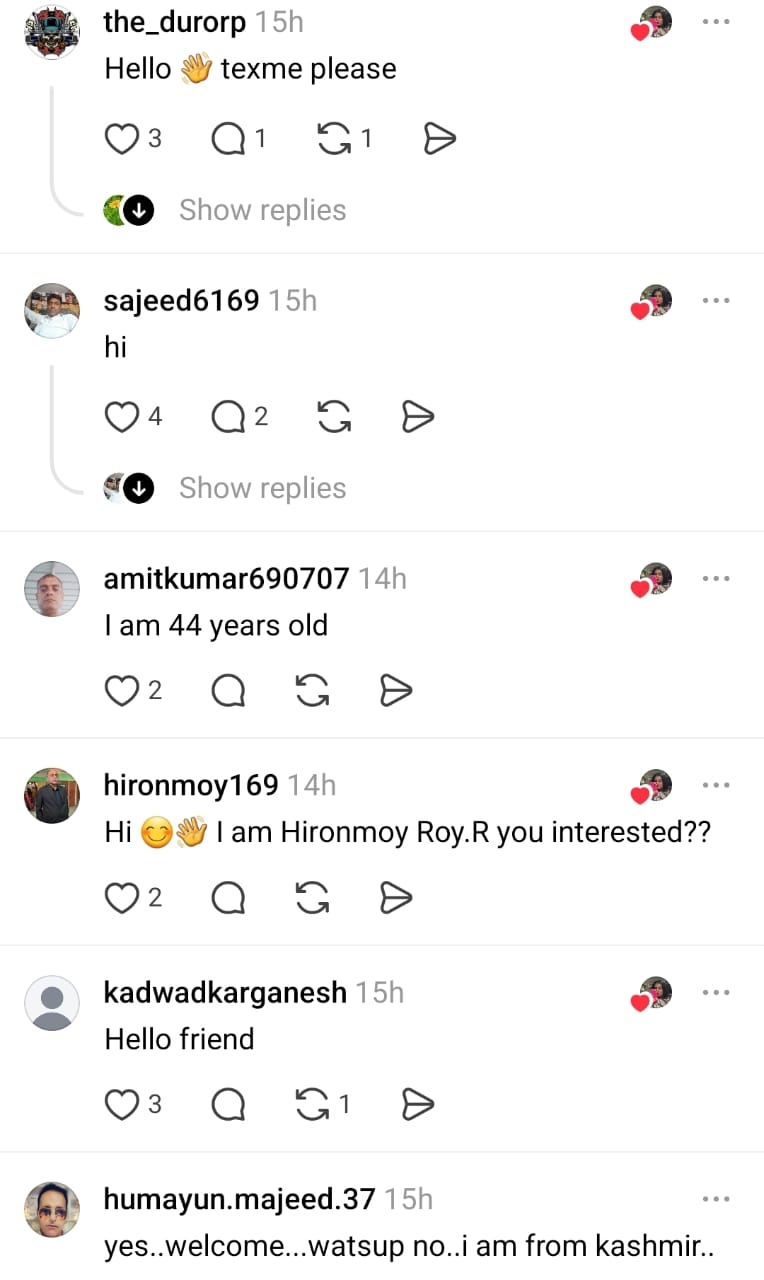
More than 200 Indian men publicly declared themselves ready for “a serious relationship” with a complete stranger on social media.
They did not know who she really was or whether the photographs were genuine.
Yet many were willing to establish a personal relationship with her.
That should concern every Indian.
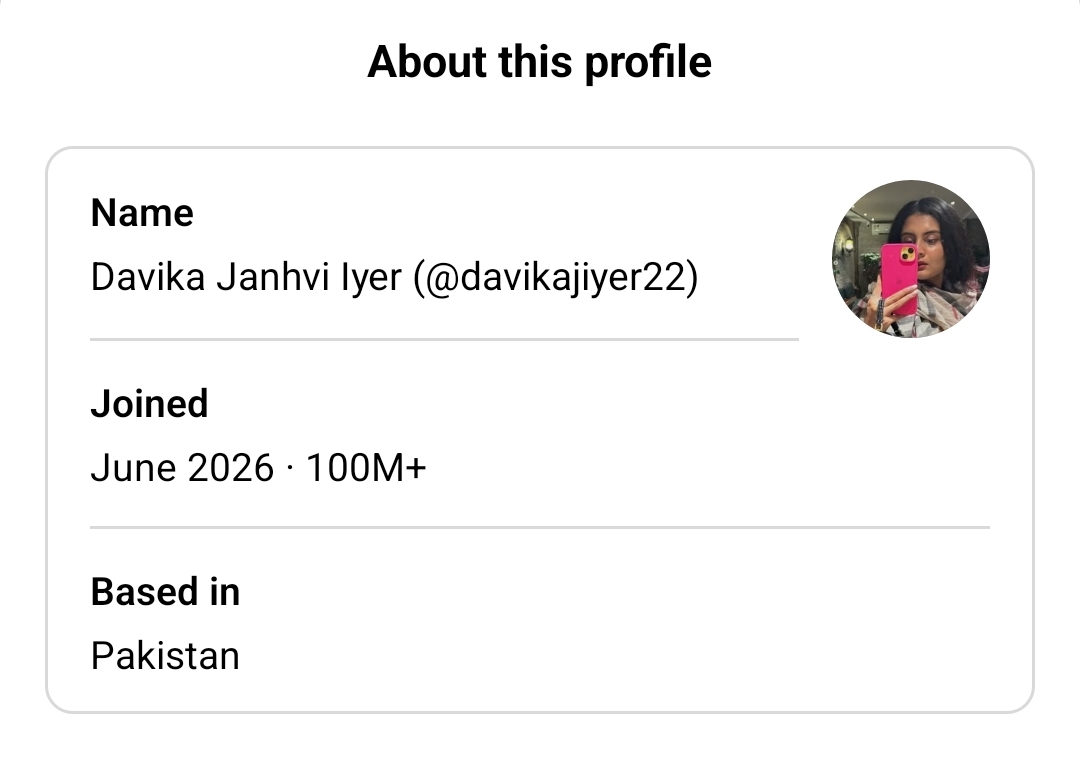
A profile operating under the name “Davika Janhvi Iyer”, claiming to be the CEO of “Janhvi Collections”, joined the social media platform Threads in June 2026. On 24 June, the account published a post claiming to be a 34-year-old divorced Indian woman seeking a genuine long-term relationship. She stated that she valued honesty, loyalty, trust, and commitment, and was interested in mature men between the ages of 40 and 55 who were serious about building a meaningful relationship.
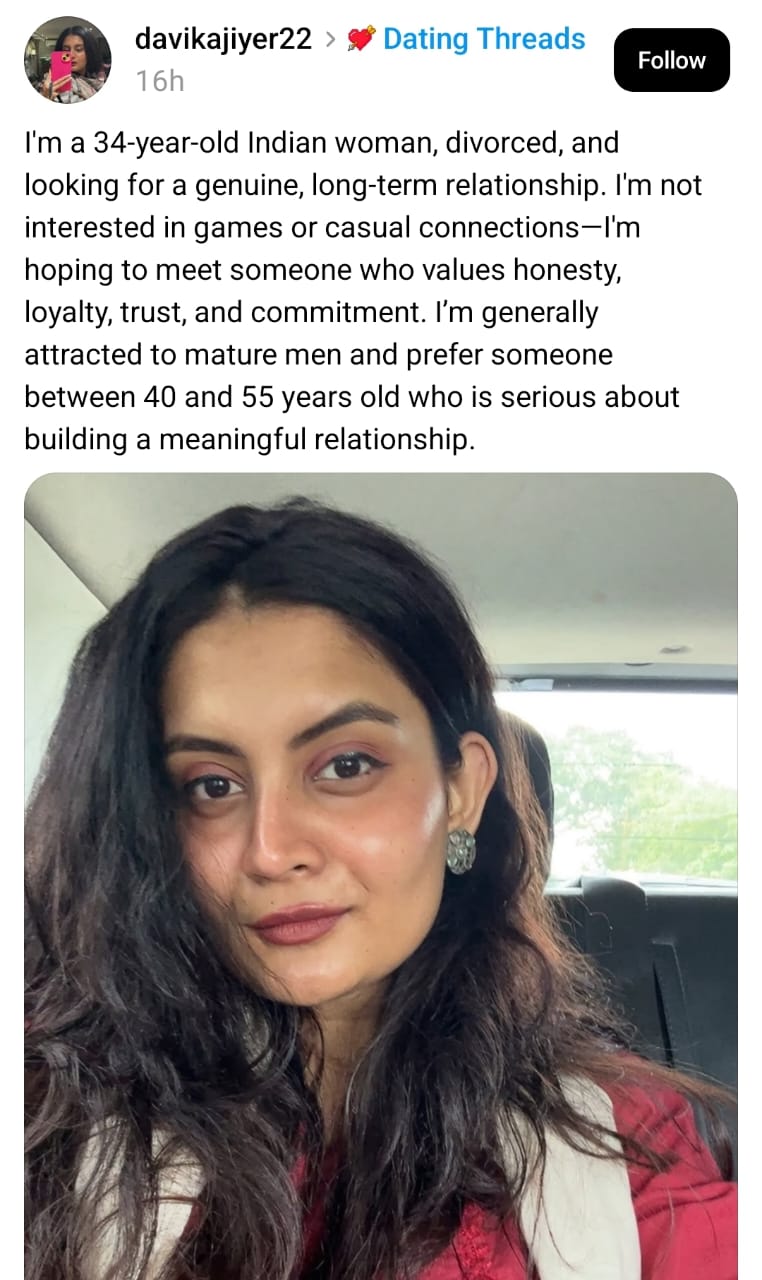
A review of publicly visible profile information indicated that the account appeared to be based in Pakistan. At the time of writing, the post had accumulated more than 120,000 views, with men from across India openly expressing interest in pursuing a relationship with the individual behind the profile.
The biggest question is : Why are so many people still convinced that honey traps are somebody else’s problem?
For decades, honey traps were associated with politicians, diplomats, military officers, scientists and intelligence personnel. It was assumed that if you did not possess classified information, you were of little interest to hostile actors.
That assumption is obsolete.
In the age of social media, ordinary citizens can become information sources, influence targets or unwitting participants in intelligence-gathering operations without ever realizing it.
The modern spy does not need to steal a classified document. He can build one. One citizen shares a photograph.
Another shares a location. A third confirms a routine. A fourth uploads a video.
Individually, the information appears harmless. Combined, it becomes intelligence.
Intelligence professionals often refer to this as “mosaic building”, the process by which small, seemingly insignificant fragments of information become valuable when assembled into a complete picture.
The process is rarely dramatic but starts through compliments, conversations, shared interests and promises of love or friendship.
The questions come after trust is built.
“Can you send me a picture of where you work?”
“What does the area around the installation look like?”
“Can you take a quick video while travelling?”
“What time do security personnel usually change shifts?”
This is not a theoretical threat, but is already happening.
In recent years, multiple investigations in India have alleged that individuals were approached through fabricated online identities and persuaded to share photographs, documents, locations, and operational information. Not all the targets were connected to military establishments. Many were ordinary civilians whose information allegedly helped build a broader intelligence picture.
The lesson is uncomfortable.
You no longer need access to secrets to become useful to an intelligence operation, you only need access to information. In the age of smartphones and social media, almost everyone has it.
That is the power of the modern honey trap.
The victim often does not realize he is being exploited because the operation does not look like an operation. It looks like a friendship, a romance or an ordinary conversation.
Nor is the threat confined to military matters.
Critical infrastructure, ports, transportation networks, communication systems, industrial facilities and energy installations all generate information of potential value.
Increasingly, ordinary citizens are being used to collect that information.
Not because they are traitors or ideologues, but because they often fail to recognize the significance of what they are sharing.
Every smartphone owner is now a potential source of intelligence.
Each social media platform is a potential collection platform.
Every manufactured relationship is a potential avenue of exploitation.
The next intelligence operation targeting Bharat may begin with a friend request, compliment or a stranger looking for love.
By the time the target realizes what is happening, the information may already have been collected.
For generations, honey traps were designed to penetrate the corridors of power.
Today, they are designed to exploit the connectivity of ordinary citizens.
National security is no longer the exclusive responsibility of soldiers, intelligence agencies and government officials.
It is also the responsibility of citizens who choose what to share, whom to trust and how much of their lives they place online.
The most dangerous honey traps are no longer ones targeting generals, but ones targeting an ordinary Indians who do not believe that they are targets.