What TV doesn't, print can't; we deliver.
What TV doesn't, print can't; we deliver.
What TV doesn't, print can't; we deliver.
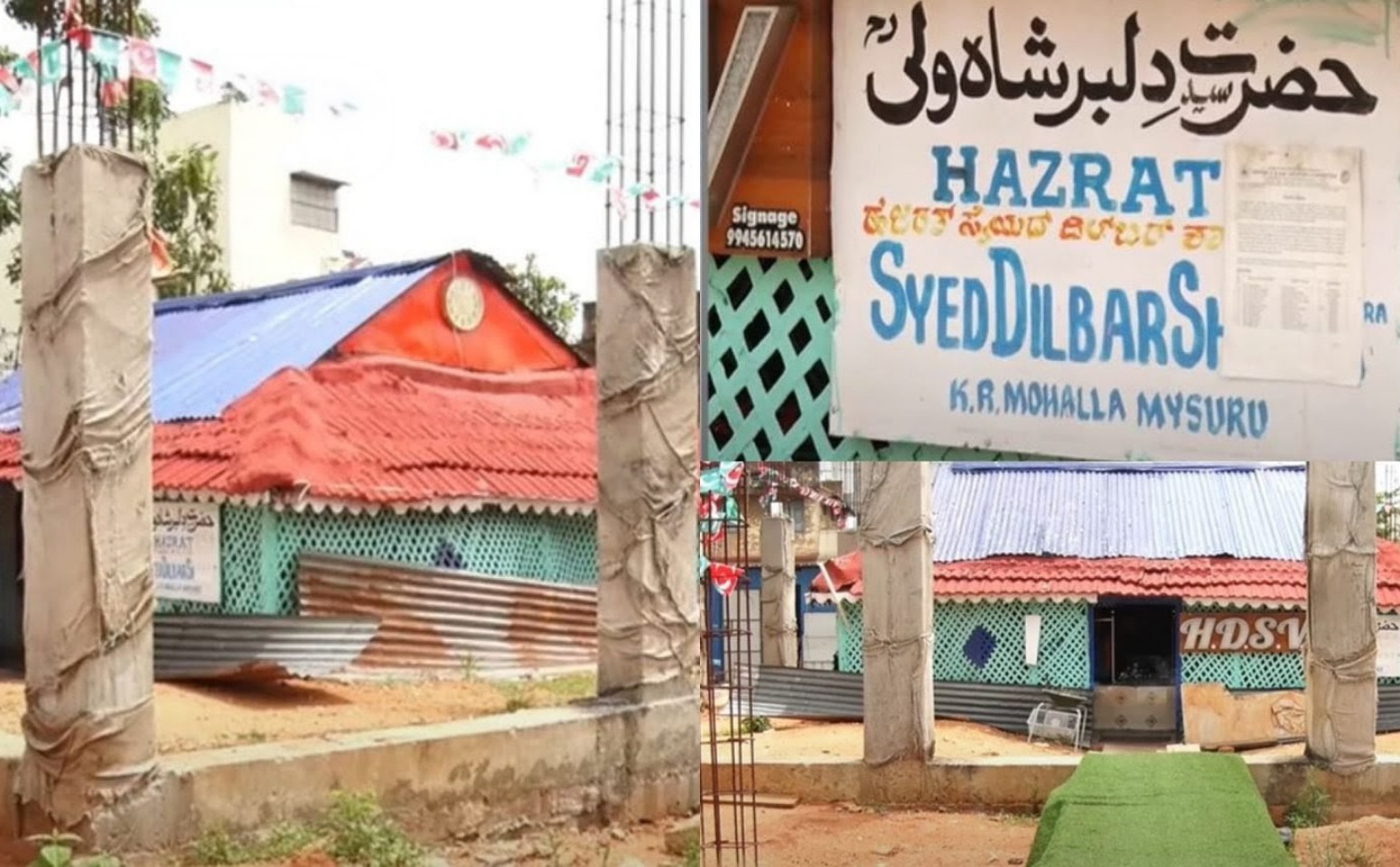
Hindu Voice Team: The Mysuru City Corporation (MCC) has recently issued a notice dated 8 September 2025 regarding the proposed construction of a new dargah at Gaadi Chowka, Madhwachar Road, Mysuru, near the historic 101 Ganapathy Temple in Agrahara. This move has triggered widespread opposition from Hindus in Mysuru and across Karnataka, who view the development as illegal, insensitive, and politically motivated.
From a Hindu standpoint, the decision is fraught with irregularities, violations of law, and risks to communal harmony. This report outlines the concerns of the Hindu community, backed by historical, legal, and procedural facts.
In 2009, the Karnataka government issued a clear directive prohibiting the construction of new religious structures, regardless of faith, to prevent communal disputes and misuse of public or disputed land.
Despite this, the MCC has entertained and published a notice for a new dargah, effectively bypassing the standing government order.
Hindus see this as a direct violation of state law and a dangerous precedent that could encourage further encroachments.
According to civic norms, any proposal for new construction must be publicly displayed at the site with a signboard inviting objections.
In this case, no such signboard was erected. Instead, the notice was quietly published in a local newspaper—at a time coinciding with the Dasara festival, when public attention was elsewhere.
Local residents, temple authorities, and even elected representatives allege they were kept in the dark about the proposal.
Hindu groups believe this stealth approach indicates an attempt to push the project through without public scrutiny.
The most serious concern is over the ownership and authenticity of the land in question:
The 1965 Government Gazette mentions 1.5 acres as Waqf property under “Mohammed Ghouse from Mohammedvadi Road in K.R. Mohalla.”
However, Hindus point out:
There is no official record of any “Mohammedvadi Road” or even “Madhwachar Road” at the time.
This raises suspicion about whether the land title was fabricated or wrongly attributed.
Revenue records add to the confusion:
Although the land size is claimed to be 4,500 sq ft, revenue was assessed only for 700 sq ft, suggesting tampering or misrepresentation.
These discrepancies fuel Hindu doubts about the legitimacy of the claim and demand a forensic re-examination of land records.
In 2002, a civil court declared the property as Waqf land in response to an ownership dispute.
The High Court later upheld that verdict.
However, Hindus argue that the matter is not settled, as a title suit is said to be pending in higher courts (either High Court Division Bench or Supreme Court).
Despite the unsettled legal status, the MCC moved ahead with khata issuance and construction notices—an act viewed as blatant disregard of judicial process.
Hindu groups allege that the MCC issued a khata (property record) for the site, even though the land remained vacant for nearly 60 years.
Construction activity allegedly began on 15 March 2025, long before proper sanction.
Complaints were submitted to the MCC and police, but no effective action was taken, further eroding public trust.
The site is situated very close to the 101 Ganapathy Temple, a major place of Hindu worship in Agrahara.
Hindus fear that:
The sanctity of temple rituals could be disturbed by a new dargah nearby.
Festivals, processions, and temple gatherings may face restrictions in the future.
This could lead to unnecessary clashes or communal friction.
For Hindus, this proximity is not merely a spatial issue but a direct challenge to their religious space and traditions.
Local MLA T.S. Srivatsa (BJP) has publicly condemned the MCC, accusing the Commissioner of acting without consulting elected representatives.
BJP leaders see this as an example of appeasement politics by the ruling establishment.
Hindu groups allege that the timing of the notice during Dasara was calculated to avoid resistance.
There is growing suspicion that political pressure and minority appeasement are driving the project rather than genuine legal grounds.
From the Hindu perspective, the following demands are urgent and non-negotiable:
If Hindu concerns are ignored, the risks are grave:
Loss of trust in government institutions and MCC.
Mass protests and legal challenges.
Communal tensions in a historically sensitive region.
Political backlash against the ruling authorities.
Precedent for further encroachments under the guise of religious claims.
For Hindus in Mysuru, the issue is not merely about one dargah—it is about upholding the rule of law, protecting temple sanctity, and ensuring equal treatment of communities. The MCC’s notice has raised questions of legality, transparency, and fairness.
Until the land records are clarified, the 2009 ban on new religious structures is respected, and the judicial process is complete, Hindus strongly oppose any attempt to construct a dargah at Madhwachar Road.
( The above piece is written based on a report published by The Commune. You can read the original story HERE)