What TV doesn't, print can't; we deliver.
What TV doesn't, print can't; we deliver.
What TV doesn't, print can't; we deliver.
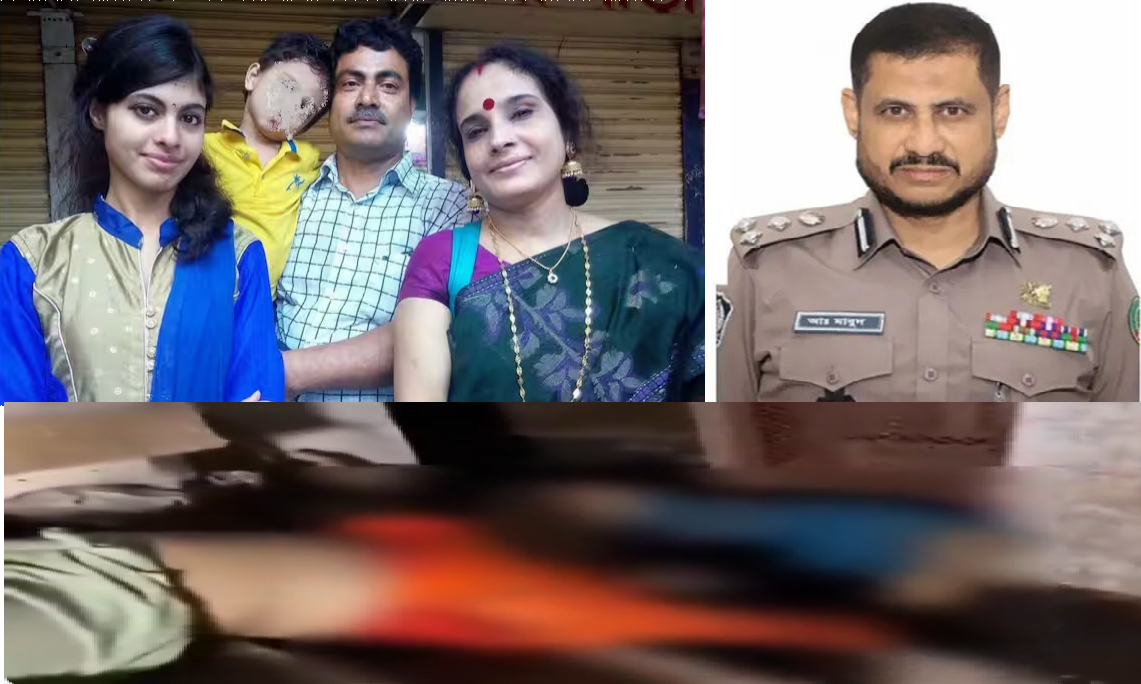
Ganapati Chakraborty, a 65-year-old retired teacher of Rangpur Zilla School who also practised homeopathy, was murdered alongside his 50-year-old wife Pritilata Chakraborty on 20th August, 2026. Their daughter Agami , who had recently completed her master’s degree in English and their young son Priyam Chakraborty were also murdered.
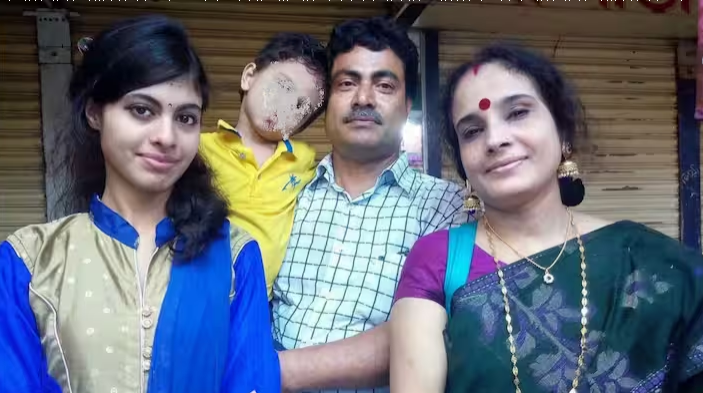
The alarm was raised only on the evening of 22nd August, when Ganapati’s sister-in-law, Puja Chakraborty, became seriously concerned after repeatedly failing to contact any member of the family. The family’s four mobile phones had remained switched off since Friday morning.
At approximately 8:45 p.m., Puja and her husband went to the Chakraborty residence at the edge of the Daspara locality in Rangpur Sadar. The main gate was securely locked from the inside. There was no response from within.
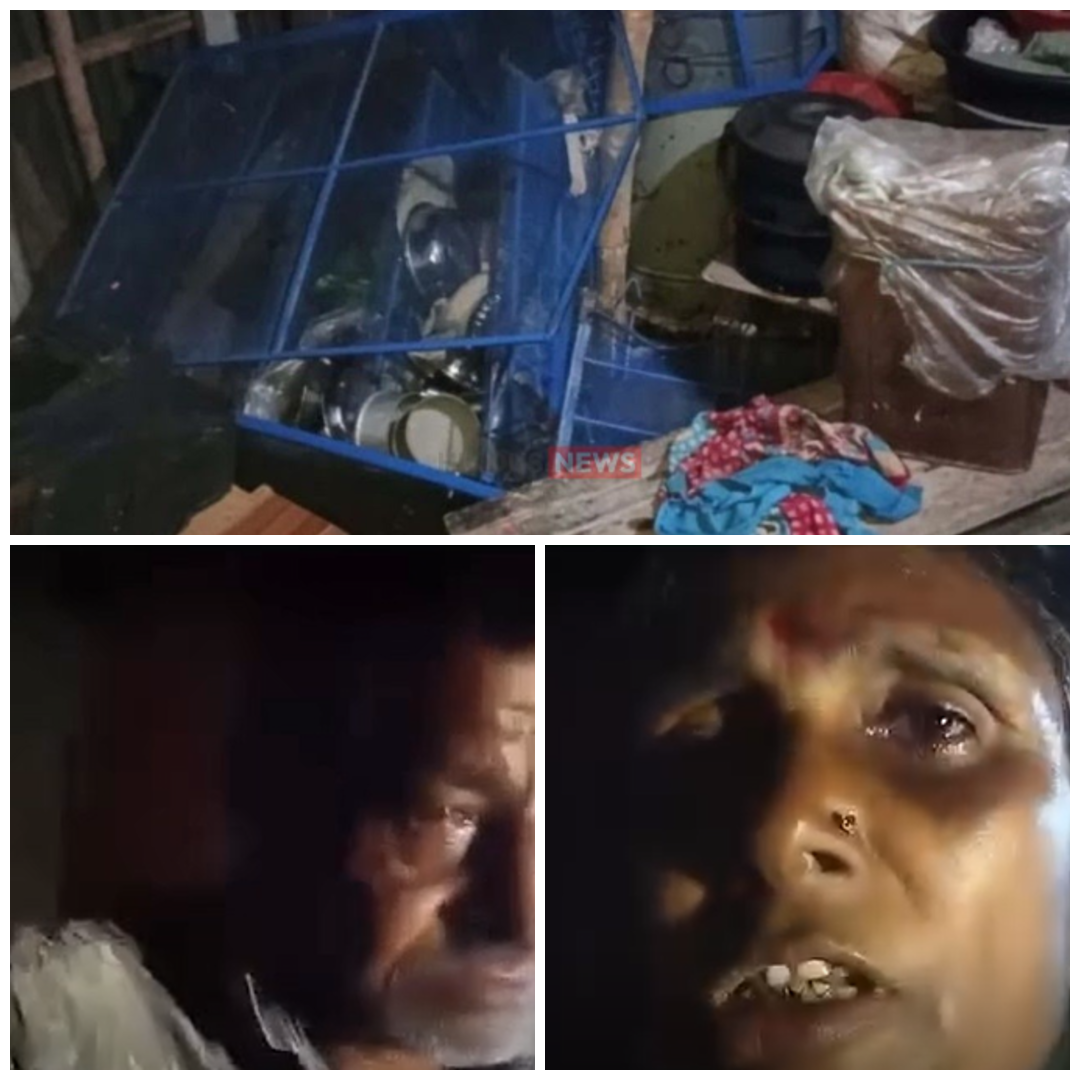
Puja then climbed onto an adjoining property to gain access to a window. After breaking the lock on the window’s glass panel and directing a light into the house, she saw what appeared to be a scene of complete disorder with possessions scattered across the room and belongings thrown across the interior.
Her cries, as she called repeatedly for her relatives, brought neighbours running. Among those who gathered was a young neighbour whom this investigation will identify as Saswati Biswas (name changed). Her family’s home stands immediately behind the Chakraborty residence.
Speaking to Hindu Voice, she stated:
“Our houses are so close to each other that even the sounds of utensils falling in the kitchen or Kakima (Pritilata) shouting for Agami Di could be heard. Thursday night we stayed awake till late, since the following day was a holiday. We did not hear any sound or anything suspicious till well after midnight. Every neighbouring house had electricity but there was no power only in the Chakraborty household since late evening.”
Police were informed at approximately 9:00 p.m. Yet the first policemen reportedly arrived only around one and a half hours later, by which time a substantial crowd had gathered outside the residence, along with two local journalists.
The accounts of Saswati, Chandan Das (name changed) and five other neighbours present at the scene describe hot and humid conditions in Rangpur throughout Thursday, Friday and Saturday. They further stated that, by the time police arrived, a strong odour of decomposition was already emanating from inside the locked residence.
Police subsequently broke into the house and recovered the remains of all four members of the Chakraborty family.

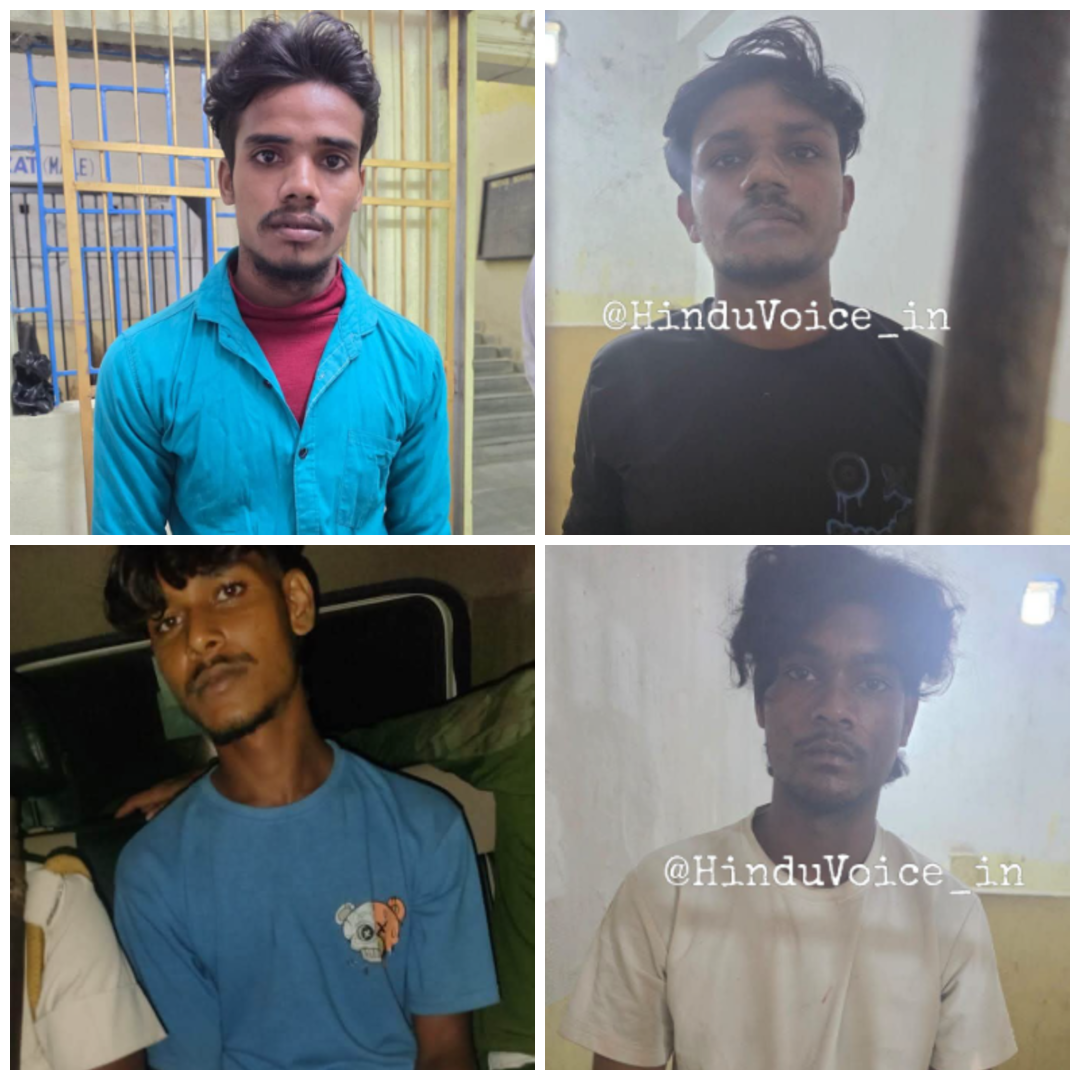
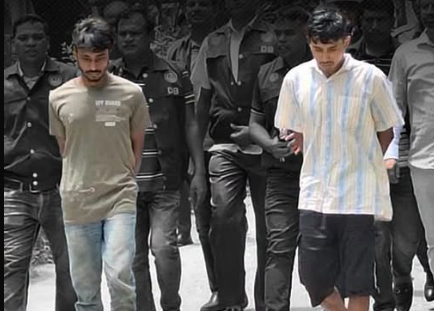
The Rangpur Metropolitan Police appeared to move with extraordinary speed. Barely hours after the bodies were discovered late on Saturday night, police arrested Siddhartha Das (19) and Mugdha Das (23).
According to the Deputy Commissioner of the DB Police, investigators had received information from local shopkeepers that, on the day after the murders, Siddhartha had suddenly begun making purchases around the neighbourhood using large-denomination 1,000-taka notes. The spending was reportedly considered unusual for him, prompting police to focus their attention on the young neighbour.
The police subsequently claimed that Siddhartha and Mugdha recorded confessional statements under Section 164 of the Code of Criminal Procedure later that Sunday night.
What followed was a narrative of the murders that appeared to be remarkably complete so soon after the discovery of the crime.
According to the police account, Siddhartha and Mugdha had climbed onto the terrace of the residence to consume Yaba, a methamphetamine-based drug. The police said Ganapati had discovered them, after which the two allegedly killed him. The account then attributed the deaths of Pritilata, Agami and Priyam to the two accused, describing a sequence in which the remaining three family members were allegedly strangled one after another.
It was at this point that the case ceased to be merely a horrific murder investigation and became the subject of a nationwide controversy.
The Rangpur investigation became the object of public disbelief, anger and ridicule across Bangladesh, with questions also being raised beyond the country over the credibility of the official account.
At the centre of the controversy was the police narrative itself.
One of the earliest and most striking claims concerned the alleged reason Siddhartha Das and Mugdha Das were on the Chakraborty family’s terrace. According to the police version, the two had climbed onto the terrace to consume Yaba, a methamphetamine-based drug, before being discovered by Ganapati Chakraborty. The suggestion that the two young men had been openly consuming a drug on an exposed rooftop, where wind and surrounding visibility made the inhalation of heated vapours almost impossible, became an early symbol of what critics described as an investigation increasingly dependent upon a narrative that appeared to fit the suspects rather than the physical circumstances of the crime.
Hindu Voice members subsequently spoke with 35 residents of Daspara and the neighbouring Bairagipara and Tantipara localities. According to those interviews, the overwhelming sentiment among those residents was one of profound scepticism toward the official reconstruction of events.
Gopinath Chakraborty, Ganapati’s elder brother, told a Hindu Voice representative:
“A large gang may be involved. It was a planned murder. We want the actual culprits to receive maximum punishment. Only then will we have peace.”
Even more emotionally charged was the reaction of Binoy Chandra Das, the father of accused Siddhartha Das. Speaking to Hindu Voice, he said:
“I have already told many times that it is not possible for two lean boys like Siddhartha and Mugdha to commit four murders with such precision in such a densely populated neighbourhood without creating a huge hue and cry. He did not even flee and was sleeping at home when he was picked up. I myself handed him over believing it to be a routine enquiry.”
He broke down in tears while recounting the events.
Police reportedly claimed that Siddhartha and Mugdha deliberately disconnected the electricity to the Chakraborty residence in order to isolate the family and facilitate the murders. At one point, the police narrative reportedly included the claim that Siddhartha had sustained a burn to his hand while cutting an electrical wire near the meter.
Ujjal Kumar Barman, a local electrician who was brought to the residence to restore the electricity after the bodies were discovered, contradicted the police account. He has repeatedly stated that the electrical connection had not been severed at the meter inside the house. It had instead been cut from the main electric pole outside the residence, on the street.
Agami Chakraborty sent a message to a friend at approximately 5:50 a.m. on Friday, stating that the house had been without electricity and that the family had been unable to sleep because of the heat. Her message contradicted the official timeline proposed by the police.
The Chakraborty family possessed four mobile phones and Agami also had a laptop. Yet police reportedly acknowledged recovering only two mobile phones and according to the residents interviewed by Hindu Voice, provided no satisfactory public explanation concerning the whereabouts of the remaining devices or the laptop.
According to Saswati Biswas (name changed) the concern among residents went beyond the devices simply being missing.
She told Hindu Voice:
“Police is not just quiet about the location or status of the remaining devices and Agami Di’s laptop but also refusing to acknowledge that those devices exist.”
Perhaps no element of the police narrative generated greater public disbelief than the claim that Siddhartha and Mugdha remained inside the Chakraborty residence for six to seven hours after the murders, during which they allegedly bathed, ate food and consumed additional Yaba.
For many residents of Daspara and Bairagipara, the account appeared almost impossible to reconcile with the realities of the neighbourhood.
The two accused were young local workers, Siddhartha reportedly employed at a jewellery shop and Mugdha at a fish shop. Critics questioned whether two inexperienced young men, having supposedly committed a quadruple homicide in a densely populated neighbourhood, could then remain inside the victims’ home for hours with sufficient composure to bathe, eat, consume drugs and engage in the deliberate destruction or wiping of digital evidence, as police personnel have claimed.
Hindu Voice members spoke with Jatin Roy, a mortuary attendant at Rangpur Medical College who assisted medical personnel during the post-mortem examinations. Jatin claimed that he observed thick, white material that he believed resembled semen on the bodies of Pritilata Chakraborty and her daughter while assisting during the autopsies.
When asked specifically about the forensic findings concluding that there was no evidence of rape, Jatin declined to engage further with the question. According to our members present, he avoided eye contact and quietly asked to be excused.
Another disturbing episode unfolded on the night of 26 August, when neighbours witnessed what they believed was an attempt by police personnel to remove or destroy potential evidence from the Chakraborty residence.
According to eyewitness Parthiba (name changed), two men entered the house during the night. “Two people came, one of them wearing a red T-shirt, and took away a lot of things from the house,” he told us.
Other residents stated that police personnel switched on the residence’s water pump and left it running for an extended period. They claim that the resulting overflow spread across the rooftop and down the staircase, flooding portions of the property and potentially compromising large sections of the crime scene.
Police have acknowledged that the pump was left running, but have characterised the incident as a mistake.
Taken together, these were not minor inconsistencies or peripheral concerns. They struck at the very foundation of the investigation, undermining the credibility of the official narrative and raising the deeply troubling possibility that significant elements of the case had been constructed rather than established through evidence.
The Rangpur controversy cannot be examined in isolation from the environment in which the Chakraborty family lived.
Beyond the police narrative surrounding the four murders lies a darker and far less examined history, one described by local Hindu residents as a pattern of intimidation, religious harassment, targeted violence and displacement.
Hindu Voice members interviewed five Hindu girls and several long-term residents from Daspara, Tantipara and neighbouring areas. The accounts we received were remarkably consistent in one respect: a persistent sense of insecurity.
The young women interviewed described repeated exposure to religious slurs, harassment and intimidation, and said they increasingly felt unsafe in areas they had inhabited for years.
One resident of Tantipara, identified here as Sraboni (name changed), described what she regarded as a growing atmosphere of religious radicalisation:
“Carmichael College and Rangpur Government College have become hubs of Islamist extremism. The Tantipara Madrassa region has effectively become a no-go zone for us. Shibir activists dominate proceedings, and hateful comments and slurs have become part and parcel of our daily life.”
Long-time Daspara residents Prashanta Naskar and Sushanta Naskar recalled what they described as targeted attacks against Hindu residents in April 2026.
According to their account, large crowds descended upon the locality following what they described as a false or fabricated allegation that a Muslim boy had been assaulted by Hindus. They said Hindu homes were attacked, property was looted and houses were vandalised.
They estimated that at least 30 Hindu homes were vandalised.
“Large mobs mobilised by Jamaat front groups came and started assaulting us, looting our belongings and vandalising our properties. The fabricated account of a Muslim boy being assaulted by Hindus had triggered the violence. At least 30 Hindu houses were vandalised.”
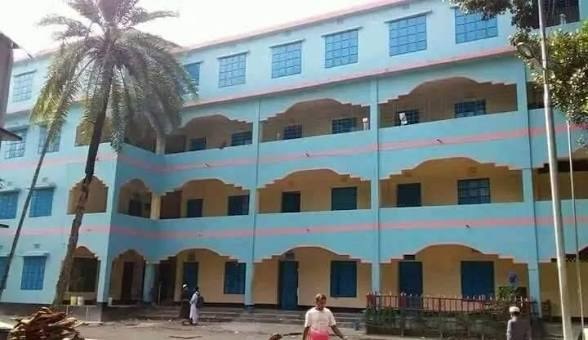
Hindu Voice representatives also spoke with Aparajita, Anindita and Lalita (names changed), three middle-aged Hindu women living near the সুন্দর বতলাপাড়া হাফেজিয়া মাদ্রাসা ও এতিমখানা in Tantipara.
Aparajita told Hindu Voice:
“We are being repeatedly told that Hindus cannot be allowed to stay here. Community leaders talk of harmony, but we face discrimination and harassment regularly. The সুন্দর বতলাপাড়া হাফেজিয়া মাদ্রাসা ও এতিমখানা is systematically propagating hate against us Hindus in public, claiming that our existence itself is a mistake to be corrected.”
Anindita offered another disturbing account:
“At least five Hindu families residing adjacent to the madrassa have been forcibly driven out of their homes during the last two years alone. It starts with hate and harassment and then escalates. It always does.”
The Rangpur story did not begin with the discovery of four bodies on a Saturday night. It began with the sustained persecution of a community long before anyone came to investigate.
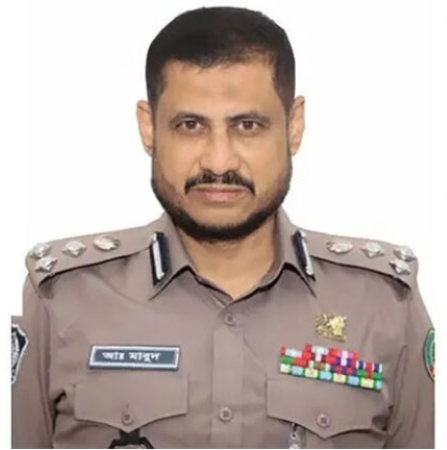
The most explosive lead emerging from our investigation concerns Abdul Mabud, Commissioner of the Rangpur Police.
Based on evidence and testimonies examined by Hindu Voice, Mabud’s conduct, his prior disciplinary history, his alleged connections and his reported interactions with the Chakraborty family warrant an immediate, independent investigation into whether he had any involvement in the circumstances surrounding the quadruple homicide.
While serving as Additional Superintendent of Police in Brahmanbaria in 2012, Mabud became embroiled in a serious personal controversy involving a woman. According to accounts examined by Hindu Voice, he was caught in a compromising situation on two occasions by the then Superintendent of Police, Anisur Rahman, and on at least one occasion had to be rescued by police personnel from an angry local crowd. Anisur Rahman has confirmed that disciplinary action was taken against Mabud in connection with the incident.
Independent investigations conducted by Hindu Voice and journalist Toufik Maruf have further examined what they describe as an aggressive effort to rehabilitate Mabud’s public and institutional standing during the Yunus administration.
Mabud was subsequently promoted to the rank of Superintendent of Police during that period. The political transition that followed brought another remarkable development. On 12 August, the BNP government promoted Mabud to Deputy Inspector General. Yet, according to information examined by Hindu Voice, he did not immediately vacate his previous position and reportedly remained in place for approximately another week despite the promotion.
Mabud’s record is further complicated by allegations concerning his supposed links to Jama’atul Mujahideen Bangladesh (JMB).
According to material examined by Hindu Voice, Mabud has previously faced allegations of links with the banned terrorist organisation, allegations serious enough to trigger internal departmental inquiries. More significantly, police personnel within his own department had raised concerns regarding purported terrorist connections.
Mabud also attracted severe criticism following his reported statement that he had “joined the July revolutionaries” while remaining a serving police officer.
In April 2026, a close friend of Pritilata Chakraborty, who lived in the surrounding locality, approached Ganapati and Pritilata regarding an alleged illegal occupation of their land. Ganapati had contacted local police and the dispute was considered sufficiently serious that it was ultimately referred to Commissioner Mabud.
According to information obtained by Hindu Voice, Mabud intervened and helped the parties reach an understanding.
Our investigation found that, after becoming involved in the land dispute, Mabud began visiting the woman’s home.
Journalist Toufik Maruf, whose independent investigation has examined the matter, made a grave allegation concerning those visits.
He stated on record:
“Abdul Mabud had attempted to physically force himself and rape Pritilata’s friend twice during the first week inside her own house. She communicated this matter to Pritilata.”
According to the findings of the Hindu Voice investigation, Pritilata Chakraborty did not keep the allegation to herself.
Our sources state that she disclosed the matter to OC Milan Chakraborty and to several other people in the locality.
More significantly, our investigation has obtained information indicating that Mabud visited the Chakraborty residence twice between 14 and 17 August 2026.
According to the sources interviewed by Hindu Voice, those visits were accompanied by threats directed at the Chakraborty family.
Pritilata, our investigation indicates, subsequently told her friend about these visits as well.
The family was murdered only days later.
Bangladesh has faced such questions before.
The Nidarabad Massacre, also referred to as the Nidarabad murder case, is remembered as one of the darkest episodes involving the killing of an entire Hindu family. The murders of a pregnant Birajabala Debnath by an Islamist mob of 15-20 people and her 5 children, reported to have taken place on the night of 6 September 1989, and the subsequent discovery of the victims’ bodies concealed in drums, remain part of the historical record invoked by those who argue that violence against Hindu families has too often been followed by inadequate accountability.
In a functioning democracy governed by the rule of law, allegations of this magnitude would trigger immediate institutional scrutiny. The government would be expected to answer for the conduct of its police machinery.
Tragically, demands for such accountability have always been rare in Bangladesh.
If domestic institutions fail to establish the truth, international scrutiny becomes not interference, but an essential safeguard against impunity.
Governments, international human-rights institutions, foreign diplomatic missions, independent investigators and global civil-society organisations must demand answers where credible allegations of mass violence, communal persecution or investigative obstruction arise.