What TV doesn't, print can't; we deliver.
What TV doesn't, print can't; we deliver.
What TV doesn't, print can't; we deliver.
The Tangkhul Aze Katamnao Long (TAKL), also known as the Southern Tangkhul Students’ Union, held a press conference in Imphal warning that vulnerable indigenous Naga communities along Manipur’s international border could seek assistance from neighbouring countries, including China, if the Centre and Manipur government failed to protect them on 29th September.
The statement provoked understandable outrage. Invoking a foreign power, particularly China, in an Indian internal security dispute crosses an important political line. Yet it also exposes a much older phenomenon in the Northeast of internationalising domestic ethnic and political grievances.
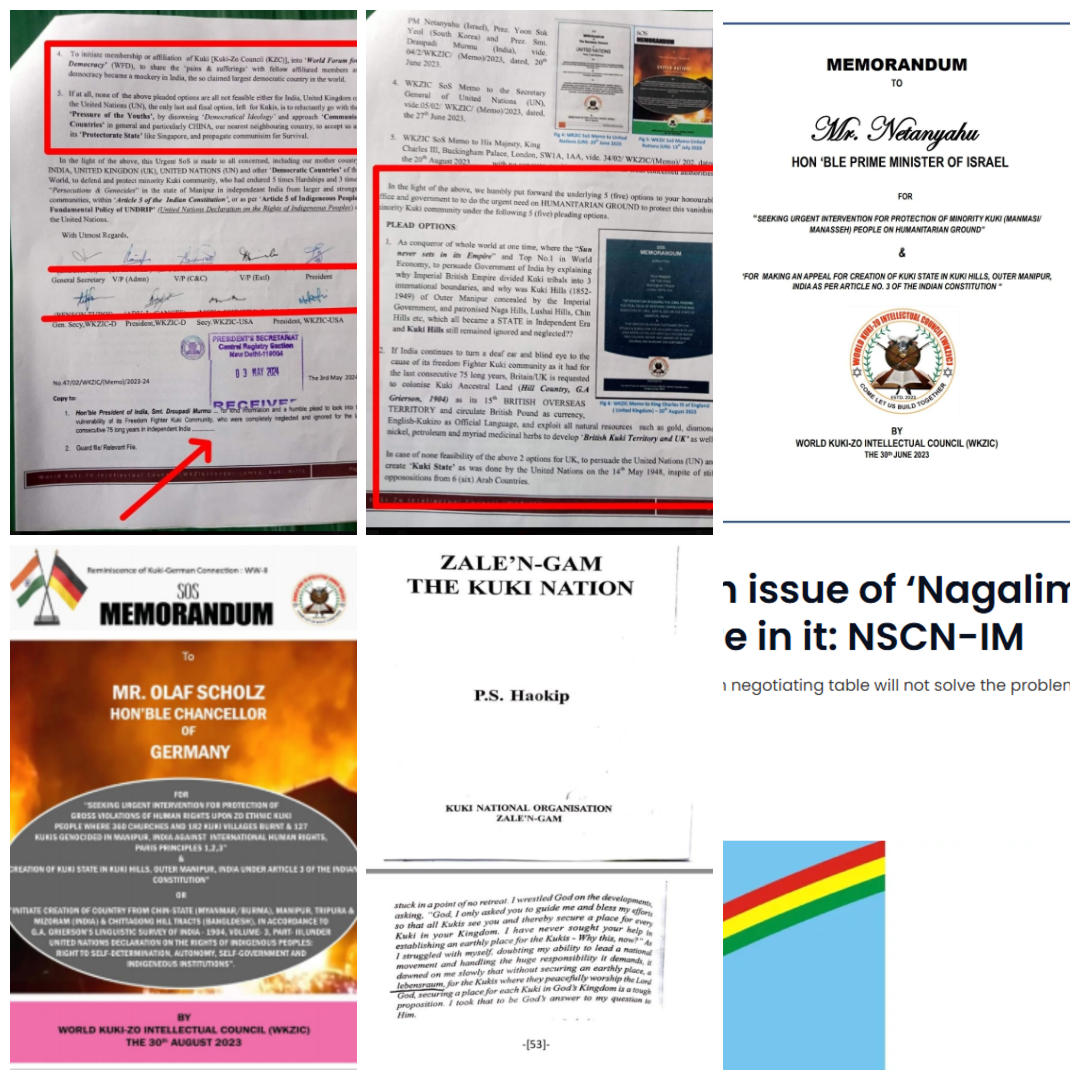
Kuki organisations also appealed repeatedly to foreign governments and international institutions during the ongoing tragedy and violence in Manipur. The World Kuki-Zo Intellectual Council (WKZIC) petitioned Israeli Prime Minister Benjamin Netanyahu for intervention and advanced demands for a separate Kuki State on 30th June, 2023.
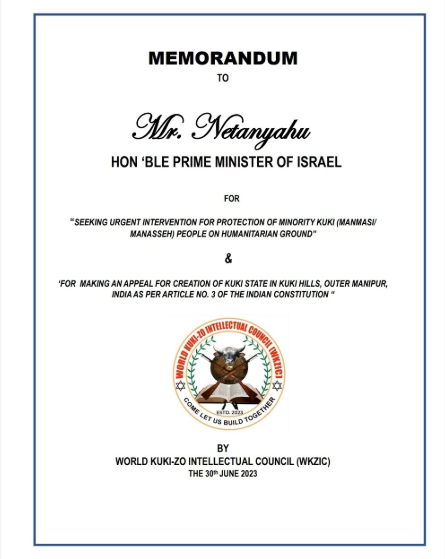
WKZIC submitted another memorandum to German Chancellor Olaf Scholz seeking intervention and raising demands involving a Kuki state and a transnational Kuki-Chin political entity on 30th August, 2023. The memorandum demanded that Germany facilitate the creation of a “Kuki Nation” including Chin State of Myanmar and large parts of Manipur, Assam, Tripura, Mizoram and the Chattogram Hill Tracts(CHT) of Bangladesh.
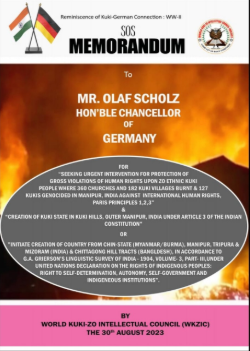
More controversially, a memorandum submitted to the British Government on 20.08.2023 requested Britain to “colonise the Kuki ancestral lands as its 15th Overseas Territory.”
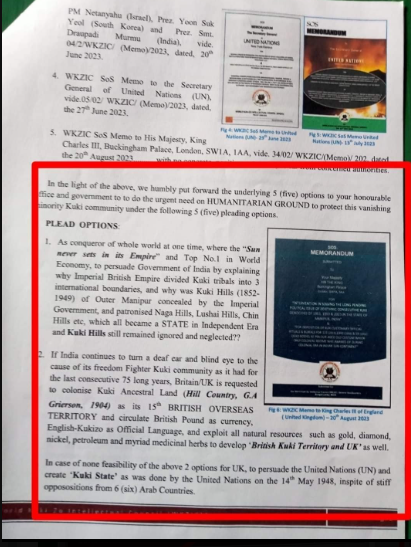
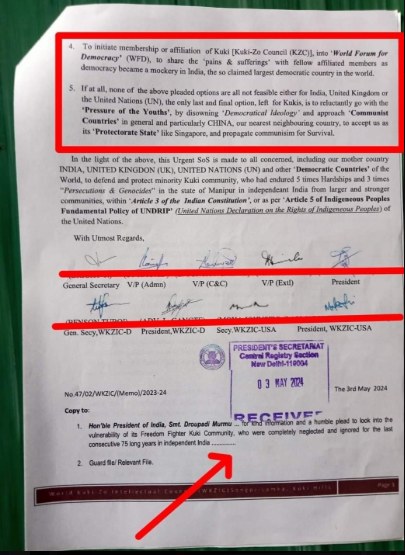
Other Kuki-Zo diaspora organisations subsequently distanced themselves from the demand for an independent “Kuki Country,” demonstrating that these positions were not universally accepted even within the wider Kuki-Zo diaspora.
The broader tactic, however, is considerably older. Naga separatists were approaching international audiences and the United Nations from the late 1940s onward, to place the Naga question before Western governments and international opinion.
Internationalisation changes the arena. A group that possesses limited leverage inside India can attempt to transform a domestic dispute into an international human-rights, indigenous-rights or self-determination question. Foreign governments, churches, diaspora organisations, universities, NGOs and international media then become additional audiences and potential sources of pressure.
The Northeast possesses unusually dense transnational networks. Christianity became deeply embedded among several hill communities, while churches and diaspora organisations developed extensive connections abroad. Those networks can rapidly transmit local grievances into international advocacy structures.
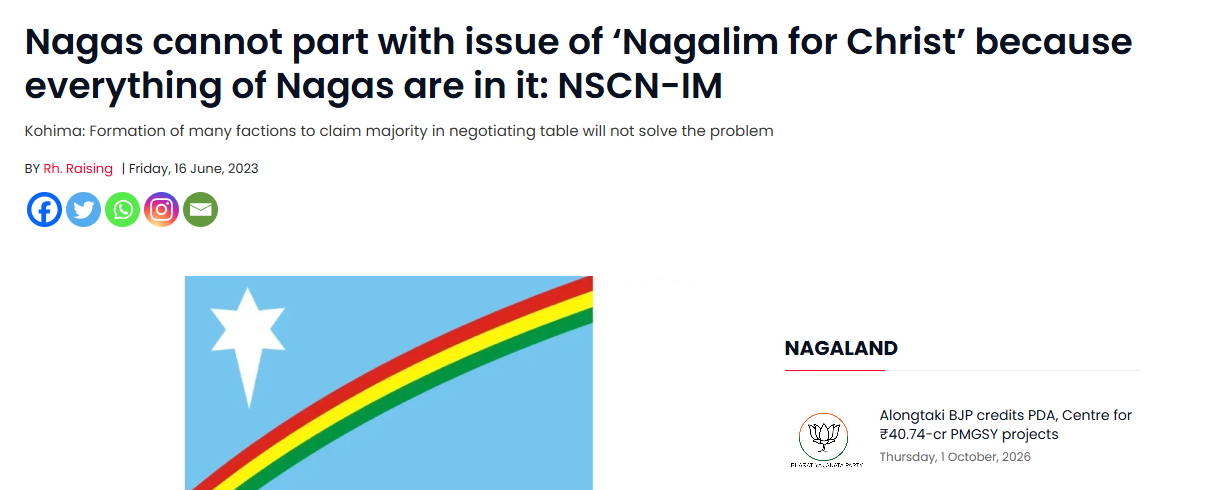
Cold War history demonstrated that foreign powers could exploit India’s internal fault lines. Naga insurgents historically obtained external assistance, while China subsequently provided training and support to sections of the Naga insurgency. Communist insurgencies elsewhere in the Northeast likewise operated within wider transnational ideological networks.
Internationalisation can produce disproportionate political attention. A memorandum to Delhi may disappear into the bureaucracy. A memorandum to Washington, London, Berlin, Jerusalem or the United Nations can generate headlines, diplomatic questions and international advocacy.
The mindset among many institutions internationalising domestic issues is that foreign attention may compensate for weak leverage at home. A statement can simultaneously be unpopular with much of Indian public opinion while still being useful as an instrument of external advocacy.
India’s response has consequently tended to distinguish between rhetoric and operational threats. Governments can tolerate extraordinarily provocative political language while drawing a much harder line when foreign actors become involved in weapons, financing, military assistance, intelligence or organised violence.
That distinction is strategically understandable. However, if international appeals repeatedly produce attention without meaningful domestic consequences, organisations may conclude that the tactic works.
The answer is therefore not indiscriminate repression of political advocacy. It is stronger state capacity, better border security, faster political grievance-resolution, transparent investigation of violence, and sustained engagement with legitimate community institution, combined with a clear distinction between lawful international advocacy and actual foreign interference.
Indian citizens have every right to demand protection from the Indian State. They do not need to invite foreign powers into India’s internal conflicts to make that demand.