What TV doesn't, print can't; we deliver.
What TV doesn't, print can't; we deliver.
What TV doesn't, print can't; we deliver.

Terrorism no longer needs a safe house, a border crossing or a clandestine meeting in a darkened room. It can begin with a smartphone, an encrypted messaging platform and a steady stream of ideological propaganda. The latest National Investigation Agency (NIA) crackdown across is another stark reminder of how militant networks are attempting to exploit that vulnerability.
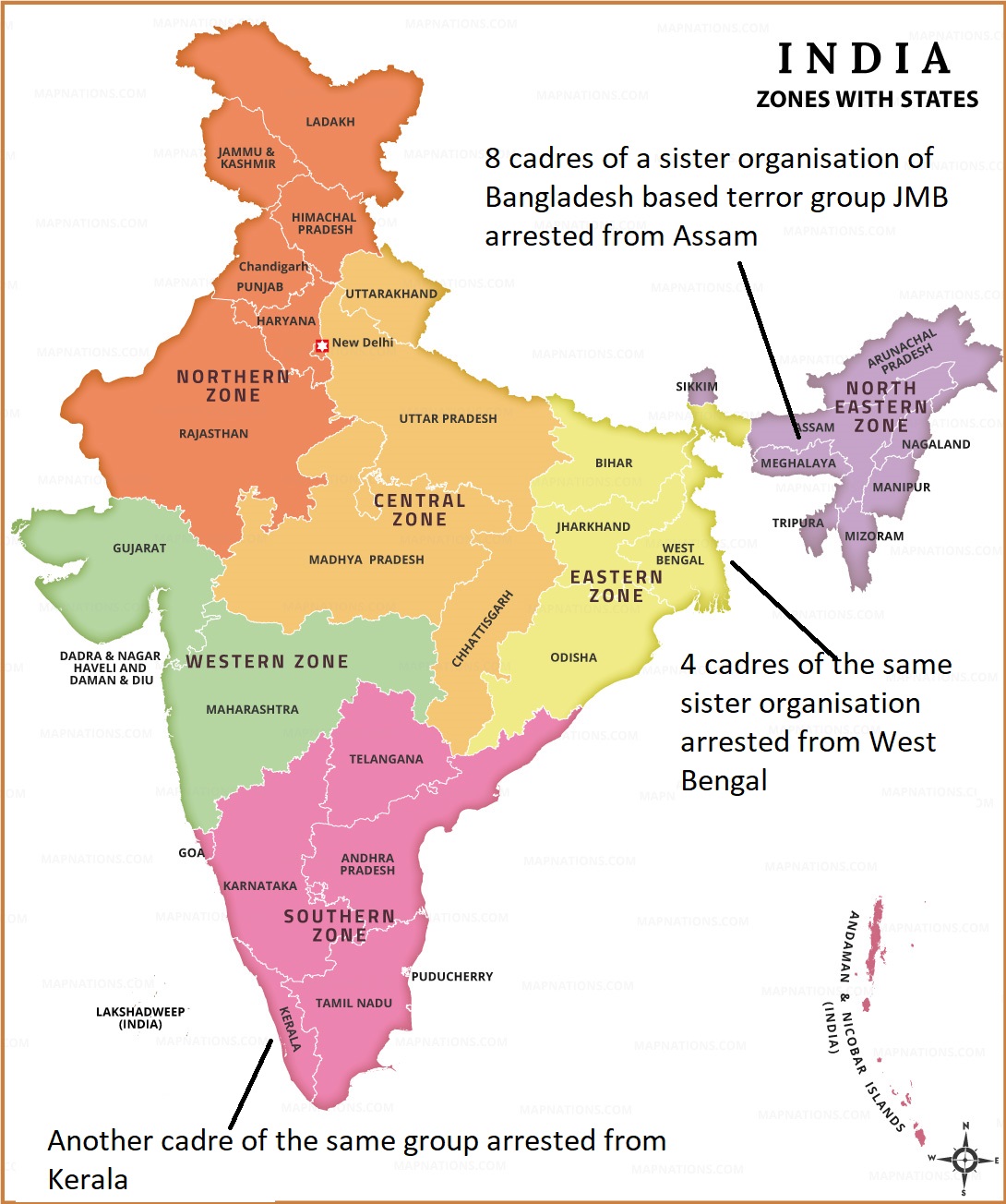
The NIA arrested 13 people allegedly linked to Imam Mahmoud’s Kafilah (IMK), described by investigators as a branch organisation of Jamaat-ul-Mujahideen Bangladesh (JMB), after coordinated raids at 16 locations on 29th September. Eight arrests were made in Assam, four in West Bengal and one in Kerala.
At the centre of the investigation is a Telegram group called “Purba Akash” (Eastern Sky). According to the NIA, the group was being operated from Bangladesh and used to disseminate ideological material, influence young people towards jihad and expand the organisation’s network across eastern and southern India.
The investigation reportedly began after Assam Police arrested 11 people in December 2025 over suspected links to IMK. The case was subsequently taken over by the NIA. Investigators now state that IMK members were instructed to increase membership of the Telegram group and strengthen the organisation’s presence in different parts of India. Some suspects are also accused of travelling to Bangladesh, attending religious gatherings there and maintaining contact with individuals associated with JMB.

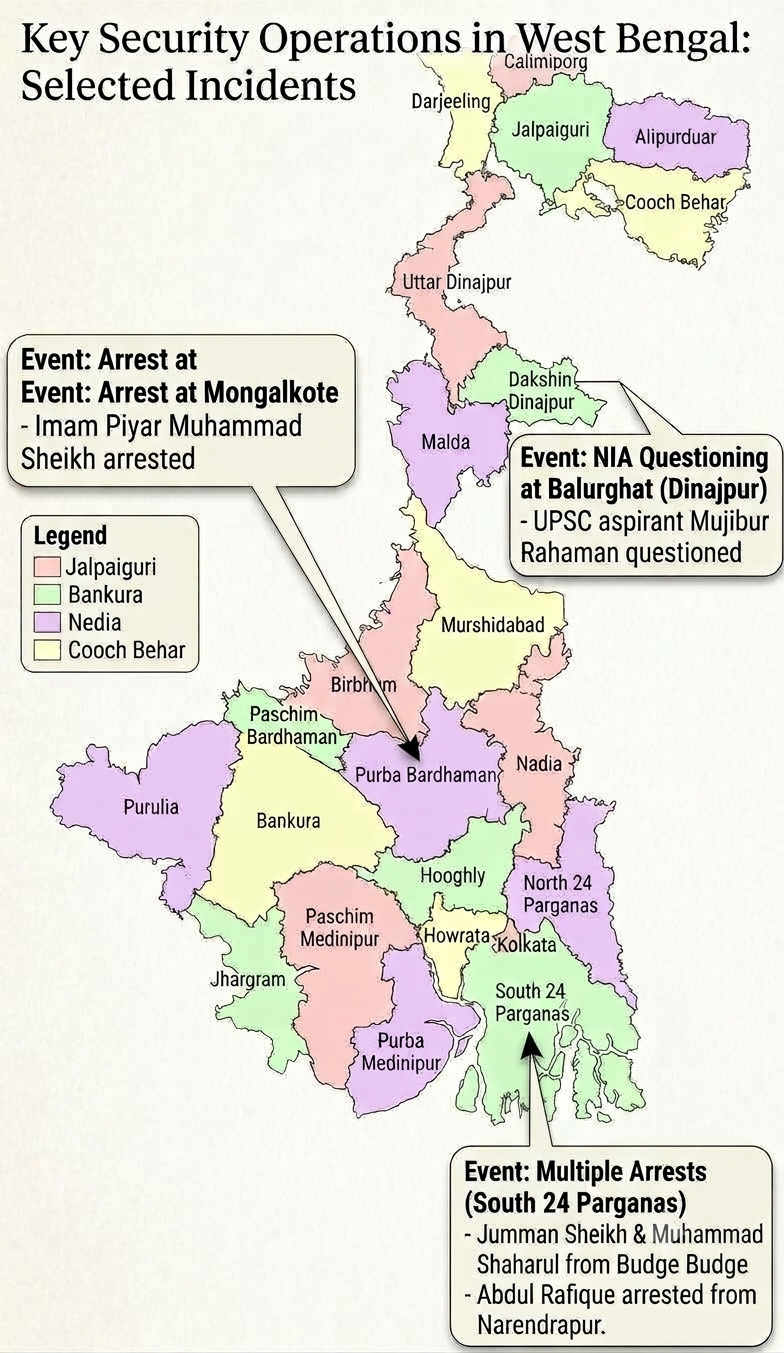
The West Bengal arrests illustrate why such investigations are often complicated by the apparently ordinary lives of suspects. Pir Mohammad Sheikh is an imam and Jumman Sheikh worked as a tailor. Muhammad Shaharul Purkait initially worked at a medicine shop and later became an app-based motorcycle rider. Their families have publicly expressed disbelief and maintained that they knew them as ordinary, peaceful people. NIA personnel have also questioned UPSC aspirant Mujibur Rahaman from South Dinajpur of West Bengal.
India has previously witnessed how extremist organisations exploit seemingly ordinary environments for recruitment, logistics and ideological propagation. The 2014 Khagragarh blast investigation, for example, exposed a JMB-linked network operating in West Bengal. A decade later, the alleged use of Telegram to coordinate recruitment demonstrates how the technological battlefield has evolved.
Traditional counter-terrorism has often focused on weapons, explosives, financiers and physical networks. Digital radicalisation demands another layer of intelligence concerned with identifying propaganda ecosystems, recruitment patterns, cross-border communication and the movement of individuals between online and physical networks while preserving due process.
That is precisely why counter-terrorism today is increasingly a battle over information, recruitment and networks, as much as over physical weapons. The challenge for investigators is to dismantle genuine extremist infrastructure without allowing suspicion to become a substitute for evidence.