What TV doesn't, print can't; we deliver.
What TV doesn't, print can't; we deliver.
What TV doesn't, print can't; we deliver.
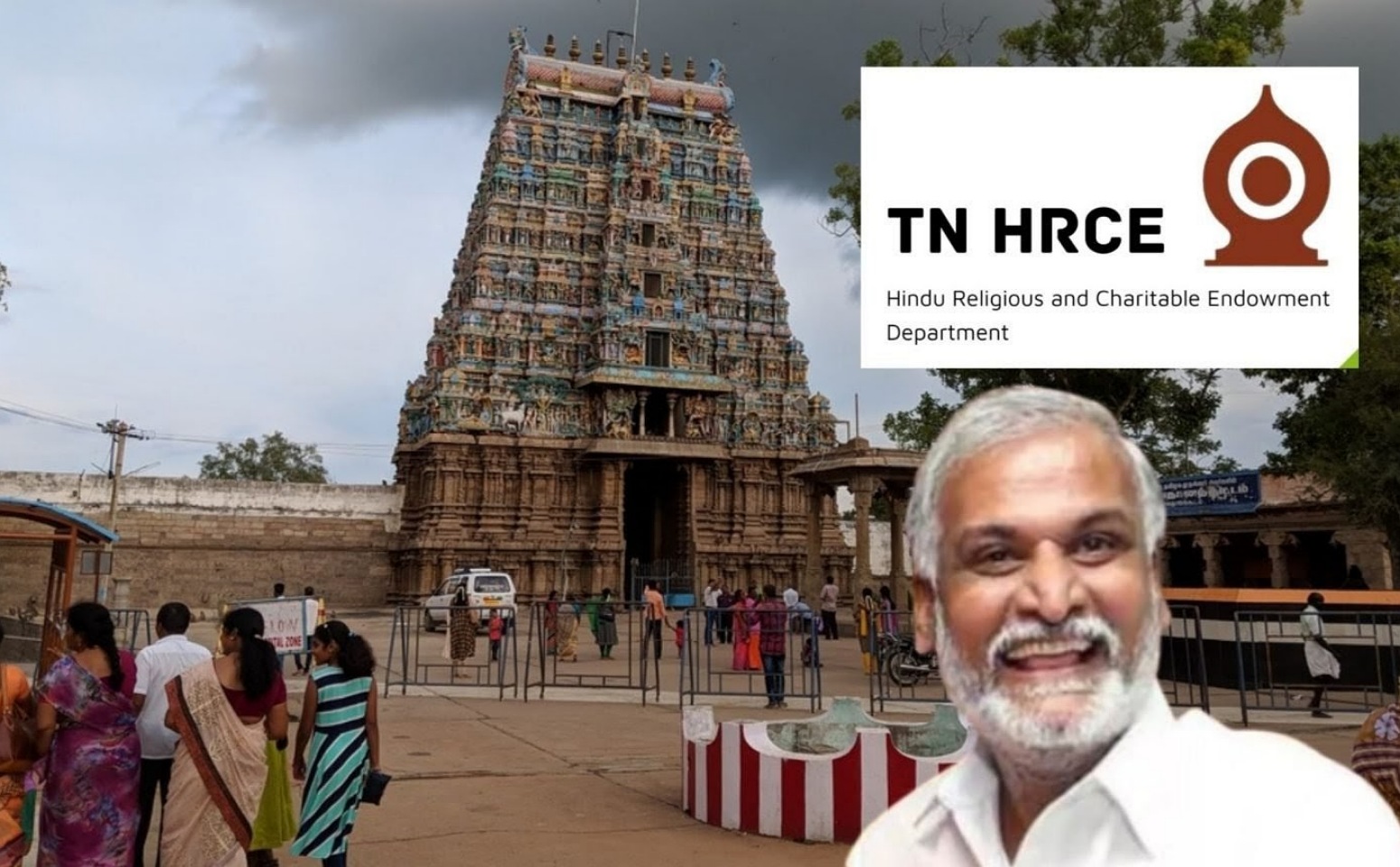
Hindu Voice Team: In a landmark and strongly worded judgment, the Madurai Bench of the Madras High Court has sharply criticised the Tamil Nadu government and the Hindu Religious and Charitable Endowments (HR&CE) Department for illegally diverting funds from the historic Sri Kallazhagar Temple. The court declared that the State has no authority to unilaterally deploy temple funds and termed such actions a violation of constitutional and legal principles.
A division bench comprising Justice Anita Sumanth and Justice C. Kumarappan struck down a government order issued in March 2024, along with subsequent administrative decisions, holding that the State had overstepped its powers. The court ruled that temples cannot be treated as government projects and that their funds cannot be used for large-scale infrastructure development without lawful approval.
The case centred on the government’s decision to include the Kallazhagar Temple in an “iconic project,” involving construction of facilities such as guest houses, parking areas, shops, and sewage treatment plants using temple surplus funds. The court rejected this approach, stating that the sanctity and autonomy of religious institutions cannot be subordinated to administrative ambitions.
The judges emphasised that only a duly constituted Board of Trustees has the legal authority to approve projects involving temple property or finances. They also criticised the HR&CE Department for failing to appoint trustees for more than a decade, calling it a serious violation of statutory provisions.
The court further highlighted grave financial irregularities, noting that the temple’s accumulated funds reportedly declined by nearly ₹45 crore within a year, without proper budgeting or statutory approval. Such unauthorised expenditure, the court observed, raised serious concerns about accountability and transparency.
In one of the most striking observations, the High Court stated that temple funds belong to the deity, not the government or administrators, and described the illegal diversion of such funds as a “crime against the deity.”
As part of its ruling, the court quashed the government order, halted further construction work, and issued directions to ensure strict compliance with constitutional and legal limits in the future. Legal experts believe the judgment could have far-reaching implications for the administration of temples across Tamil Nadu.
The verdict draws a clear constitutional line against state interference in religious institutions and reaffirms the principle that regulation does not mean control or appropriation of religious assets.
(The above piece is written based on a report published by The Commune. You can read the original report HERE )