What TV doesn't, print can't; we deliver.
What TV doesn't, print can't; we deliver.
What TV doesn't, print can't; we deliver.
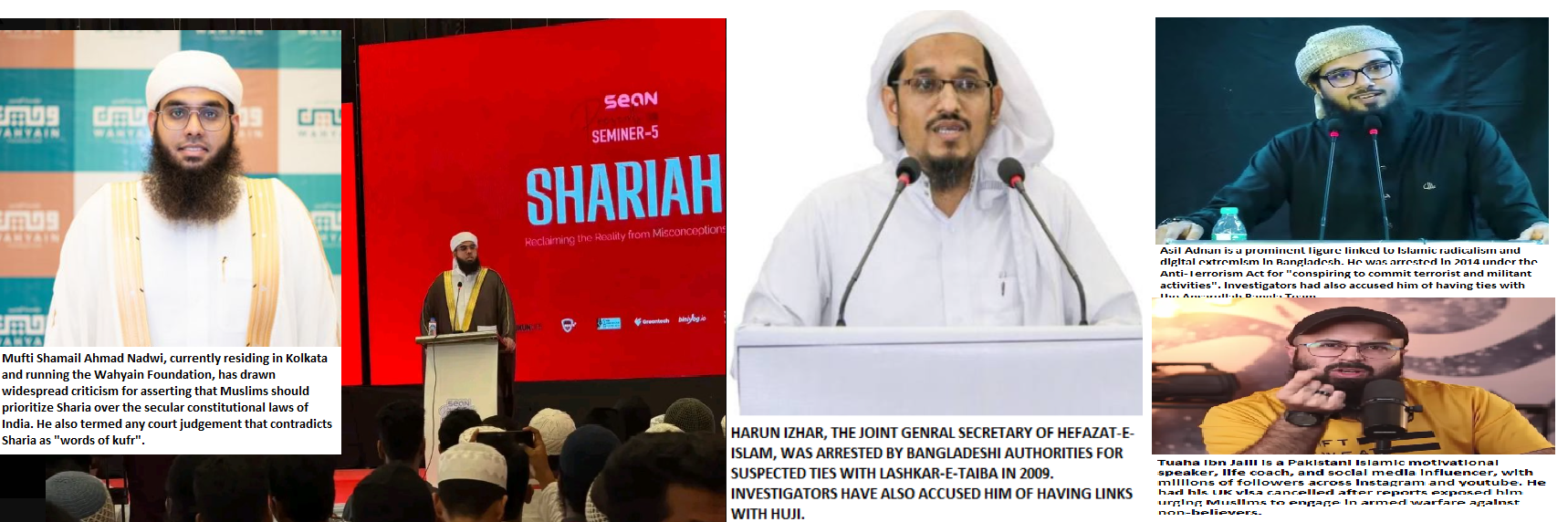
Two conferences organised by SEAN Publications in Chattogram and Dhaka brought together an unsettling mix of international preachers and Bangladeshi Islamist hardliners on 21st and 22nd August.
SEAN Publication itself describes its seminar programme as part of an effort to build a “well-structured society” and a “welfare-oriented Islamic nation.” Its official programme lists Seminar 5 in Chattogram on 21st August under the title “Shariah: Reclaiming Reality from Misconceptions”, followed by Seminar 6 in Dhaka, “Reclaiming Generations: Faith, Character, and Action” on the very next day.
The Chattogram event was held at the International Convention Centre in Kazir Dewri. The Dhaka event followed at the Police Convention Center in Mirpur.
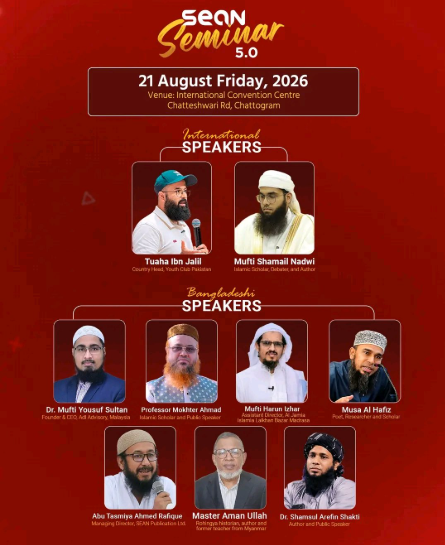
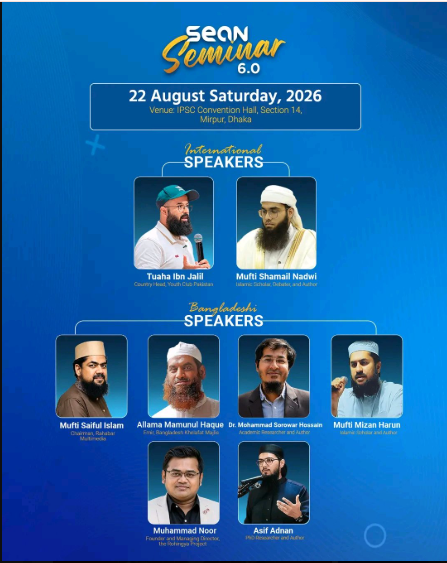
Among the international speakers was Indian Islamic scholar Mufti Shamail Nadwi, founder of Markaz Al-Wahyain and the Wahyain Foundation, whose own website identifies his Kolkata base.
The other international speaker was Pakistani preacher and social-media personality Tuaha Ibn Jalil, a figure with a massive online following. His presence is particularly significant because the United Kingdom cancelled his visa in 2025 after The Times reported statements in which he discussed jihad and expressed frustration that he could not travel to Israel to fight. The cancellation followed scrutiny of his planned UK speaking tour.
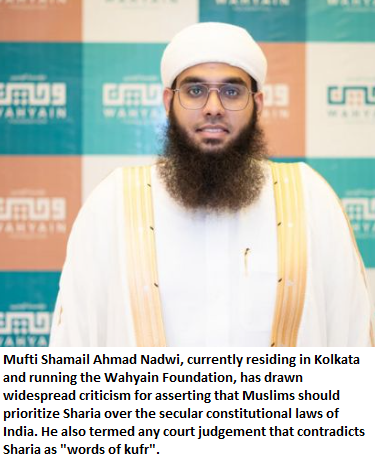
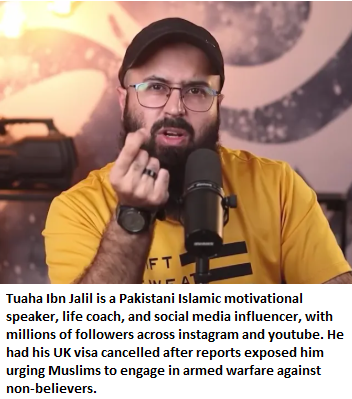
The title of Seminar 5 is revealing.
It was not simply a conference on theology, spirituality or personal religious practice. Its advertised scope explicitly connected Shariah with elections, the Constitution and women’s clothing. SEAN’s own description says that Shariah repeatedly emerges in discussions ranging from “elections” and “the Constitution” to “women’s clothing.”
The presence of Dr. Shamsul Arefin Shakti is particularly significant.
Shakti has publicly rejected the proposition that Muslims should regard democracy as a system to which they owe ideological allegiance. In a January 2025 article, he wrote that Muslims cannot be believers in democracy in the theological sense and explicitly described the Rashidun Caliphate as the superior form of government.
His broader writings are even more explicit. He has described secularism as a collective sin and argued that Islam must not be excluded from the state, society, market or justice system. He has also attacked pluralism as something that must be eliminated.
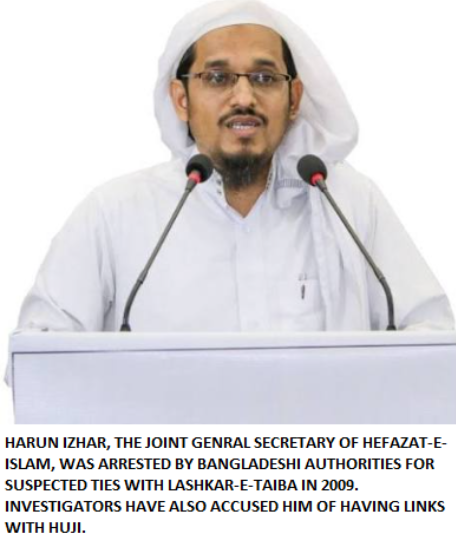
Another prominent speaker Harun Izhar has held senior positions within Hefazat-e-Islam.
Bangladeshi investigators arrested him in connection with a case involving suspected Lashkar-e-Taiba operatives and a reported plot targeting the U.S. Embassy in Dhaka in 2009. In 2013, he was again arrested following an explosion at the Lalkhan Bazar madrasa in Chittagong. The blast killed students and injured others
In 2021, Bangladesh’s Rapid Action Battalion arrested him again in connection with violence surrounding protests during Indian Prime Minister Narendra Modi’s visit. The Daily Star reported that authorities described him as a former organiser of banned Harkat-ul-Jihad-al-Islami Bangladesh and noted his earlier arrest in connection with the LeT and madrasa-blast cases.
The following day, the focus shifted to youth.
The title was “Reclaiming Generations: Faith, Character, and Action.” SEAN’s own description presents the conference as an effort to shape young people and reconnect them with an Islamic social and intellectual framework.
The Dhaka programme included discussions of Islamic theology, rational argument, professional development and mobilising the youth.
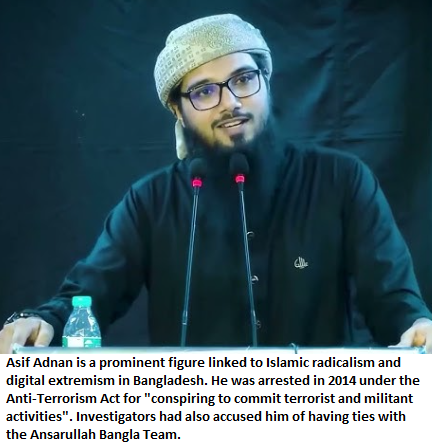
One of the names associated with the event was Asif Adnan. In September 2014, Bangladeshi authorities arrested Adnan in a terrorism-related investigation concerning plans to travel for jihad. Contemporary counterterrorism reporting linked him to Ansarullah Bangla Team and described contacts involving jihadist recruitment and travel to Syria.
Then there is Mamunul Haque, one of Bangladesh’s most prominent hardline Islamist leaders and a senior figure in Hefazat-e-Islam.
His politics have repeatedly collided with questions of constitutional secularism, women’s rights and the role of Shariah in the state.
In the post-Hasina political environment, Haque has called for fundamental constitutional and institutional changes and has argued that laws and policies should not conflict with the Qur’an and Sunnah. He has also attacked the existing constitutional framework and argued for a political order reflecting Islamic principles.
His opposition to proposed women’s-rights reforms has been particularly forceful. In 2025, Hefazat mobilised thousands against reforms concerning women’s equality and property rights, arguing that the proposals conflicted with Shariah.
India and Bangladesh share a long border, enormous commercial links, family connections, linguistic ties and dense people-to-people movement.
The two countries also share a history of Islamist militancy crossing borders.
Bangladesh has previously confronted organisations and networks connected to al-Qaeda, HuJI, Ansarullah Bangla Team and other extremist formations. India’s own security establishment has repeatedly had to deal with the regional dimensions of Islamist terrorism.
The danger therefore is not simply ideological influence, but network multiplication. But when political Islamism, extremist rhetoric, militant histories, transnational mobilisation and youth recruitment begin intersecting, the state has both the right and the responsibility to investigate all involved, especially Mufti Shamil Nadwi.
========================================
If you love our work, you can help us by contributing a small amount of your choice.