What TV doesn't, print can't; we deliver.
What TV doesn't, print can't; we deliver.
What TV doesn't, print can't; we deliver.
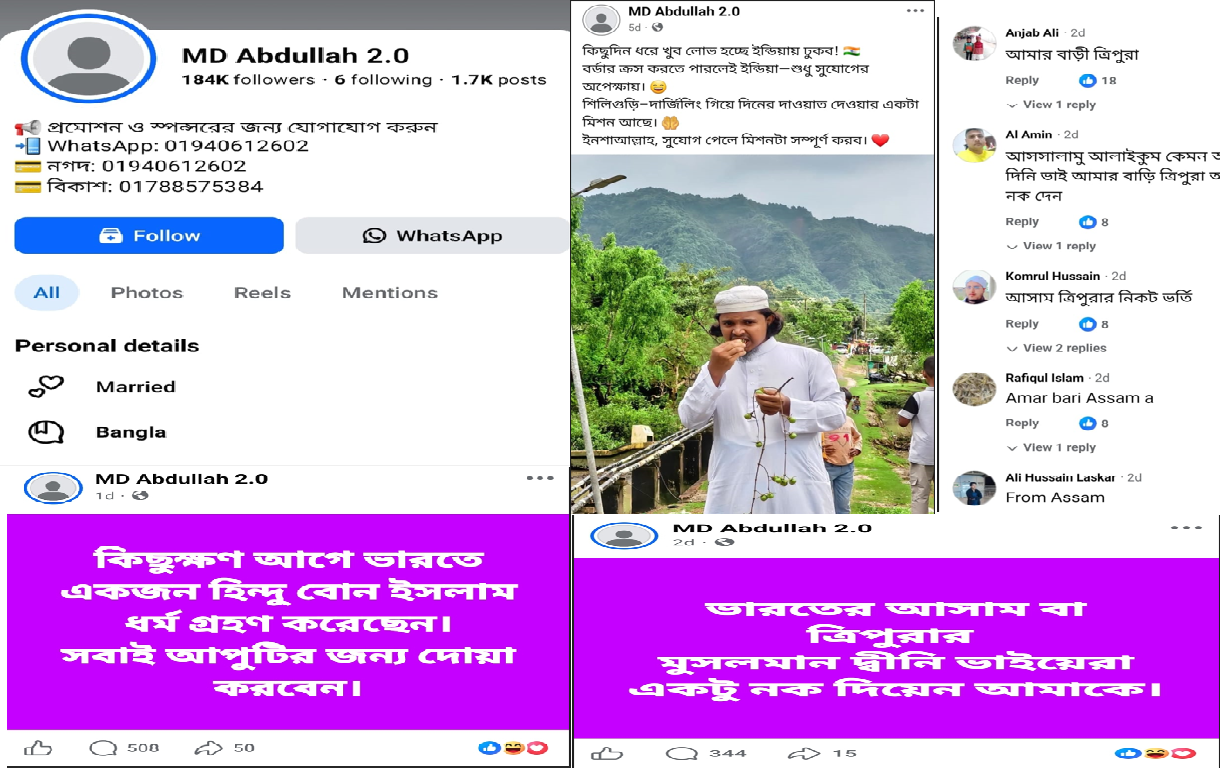
Muslim Preacher Md Abdullah of Mymensingh, Bangladesh, who has a following of over 1,84,000 on Facebook alone, has repeatedly used social media to express his intention to enter India, pursue large-scale conversion of Hindus in the Siliguri-Darjeeling region and establish well-entrenched networks with Muslims in Assam and Tripura.
His profile : https://www.facebook.com/people/MD-Abdullah-20/61556257768571/


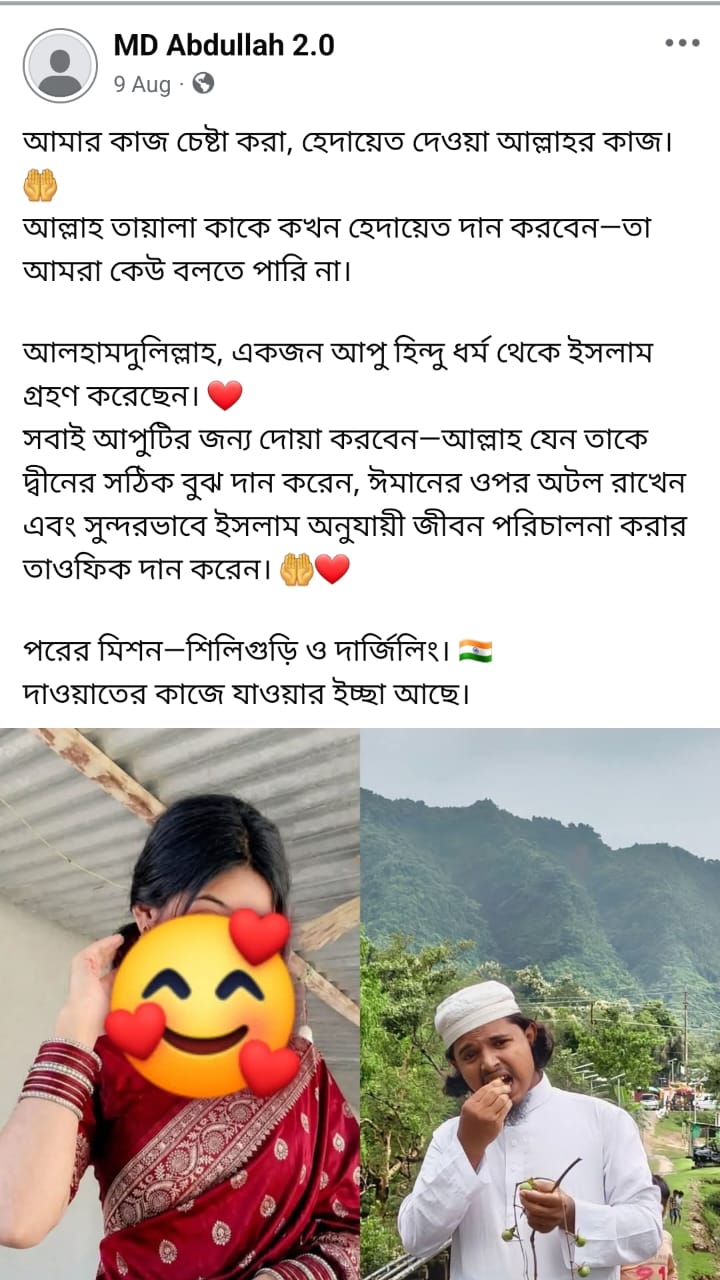
In a social media post dated 9th August, Abdullah put his photo alongside a Hindu woman, claiming that he had facilitated her conversion to Islam. He allegedly declared that his next mission was to propagate Islam among Hindus in Darjeeling and Siliguri.
The following day, he uploaded another social media post asking where he could find beef in India. The post featured the provocative song Beef by Nazimul Haque in the background. He also stated that he intended to visit India and described beef as his favourite food.

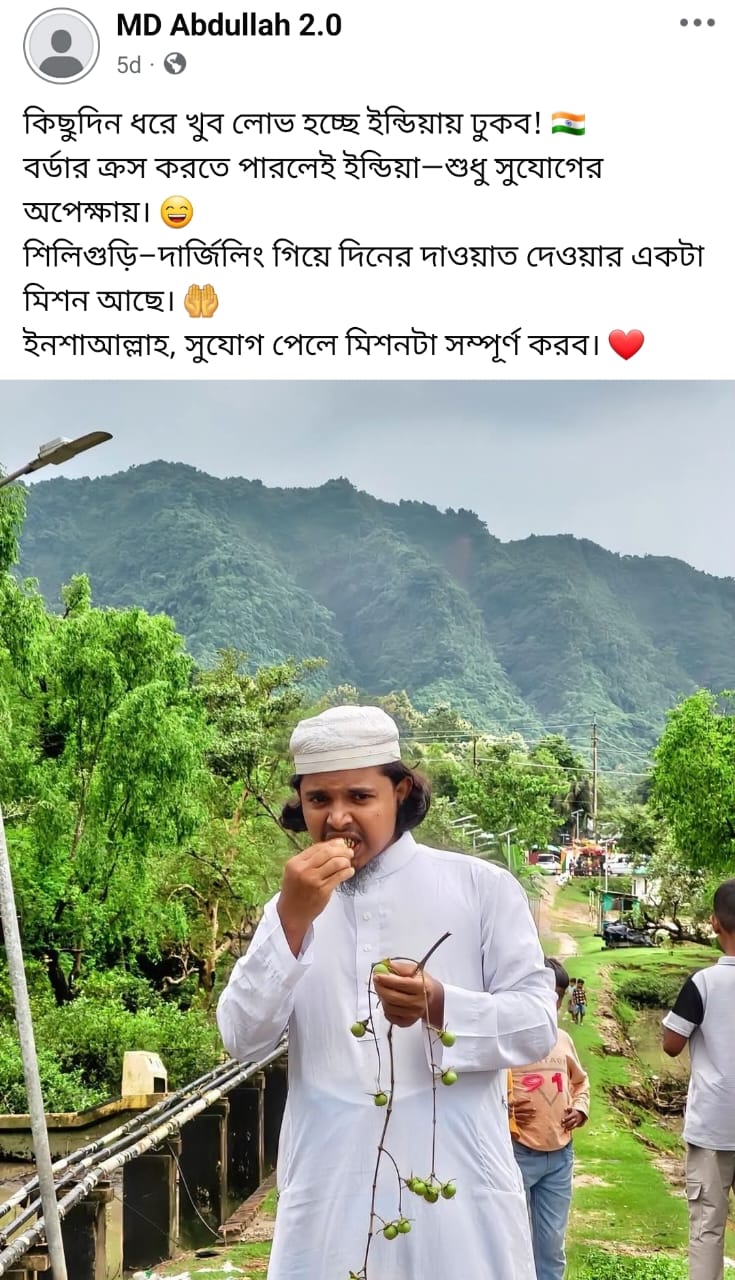
On 11th August, he stated that he had been waiting for an opportunity to enter India and cross the international border, while explicitly reiterating his intention to pursue conversions in the Siliguri-Darjeeling region.
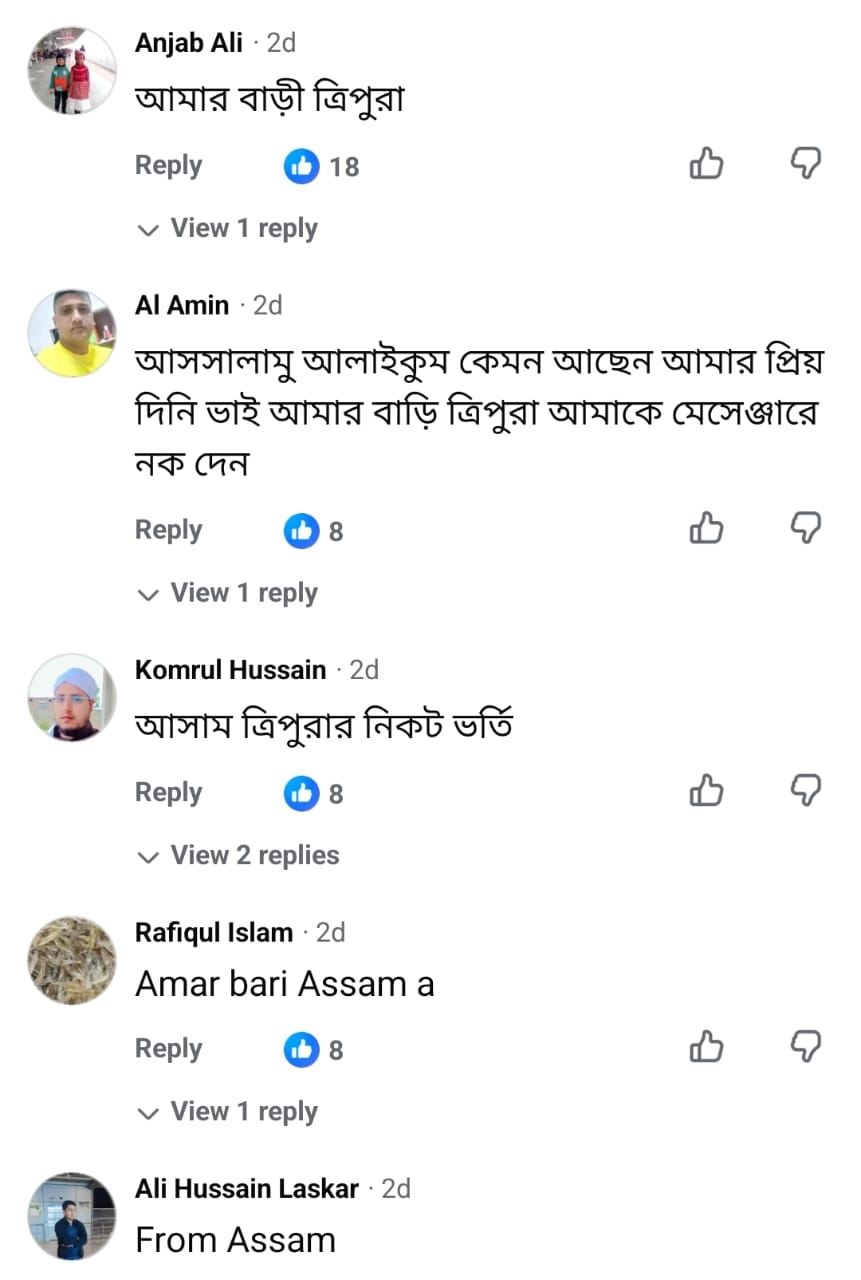
Abdullah appealed to Muslims residing in Assam and Tripura to contact him on 13th August. The post attracted enthusiastic responses, including dozens of invitations from individuals claiming to be from Tripura and Assam.

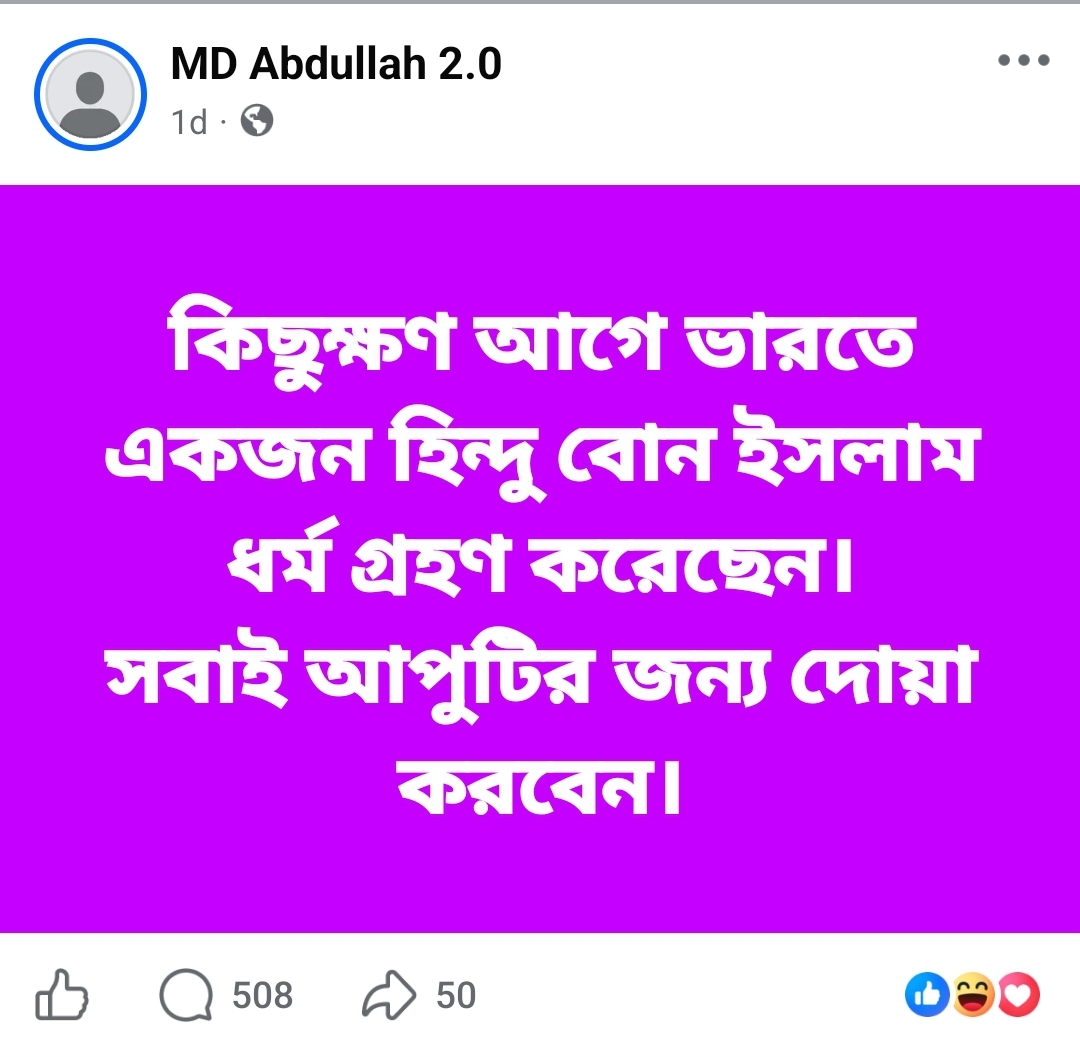
On 14th August, he announced the conversion of an Indian woman to Islam and called upon his followers to pray for her.
Taken individually, these may appear to be religious-social-media posts. Taken together, they present a pattern that Indian security agencies cannot afford to dismiss.
The geographical target is particularly significant.
The Siliguri Corridor, popularly known as India’s Chicken’s Neck, is the narrow strategic land bridge connecting mainland India with the Northeast.
It is one of India’s most strategically sensitive geographical areas.
A foreign national publicly declaring that his mission is to conduct religious conversion activities among Hindus in this precise region, while simultaneously seeking contacts in Assam and Tripura, therefore deserves serious scrutiny.
This becomes even more significant against the backdrop of provocative rhetoric from sections of Bangladesh’s political establishment concerning India’s Northeast, including statements by NCP leader Hasnat Abdullah regarding the “Seven Sisters.”
Modern cross-border influence does not require a person to physically cross a frontier.
A foreign social-media figure with a substantial following can cultivate contacts, identify sympathisers, establish networks and mobilise support inside India from thousands of kilometres away.
That is why India’s immigration and border-security architecture must increasingly incorporate open-source intelligence, social-media intelligence and cross-border network analysis.
The Government of India should urgently examine Md Abdullah’s statements, travel intentions, online network and contacts in India.
If the investigation establishes a credible security risk, there is no reason to wait until he reaches Indian soil before acting.
When a foreign national openly announces his mission, identifies India’s most sensitive border corridor as his target and begins cultivating contacts in Assam and Tripura, India cannot afford to look away.
The warning signs are already public. The responsibility now lies with the state to investigate them.