What TV doesn't, print can't; we deliver.
What TV doesn't, print can't; we deliver.
What TV doesn't, print can't; we deliver.
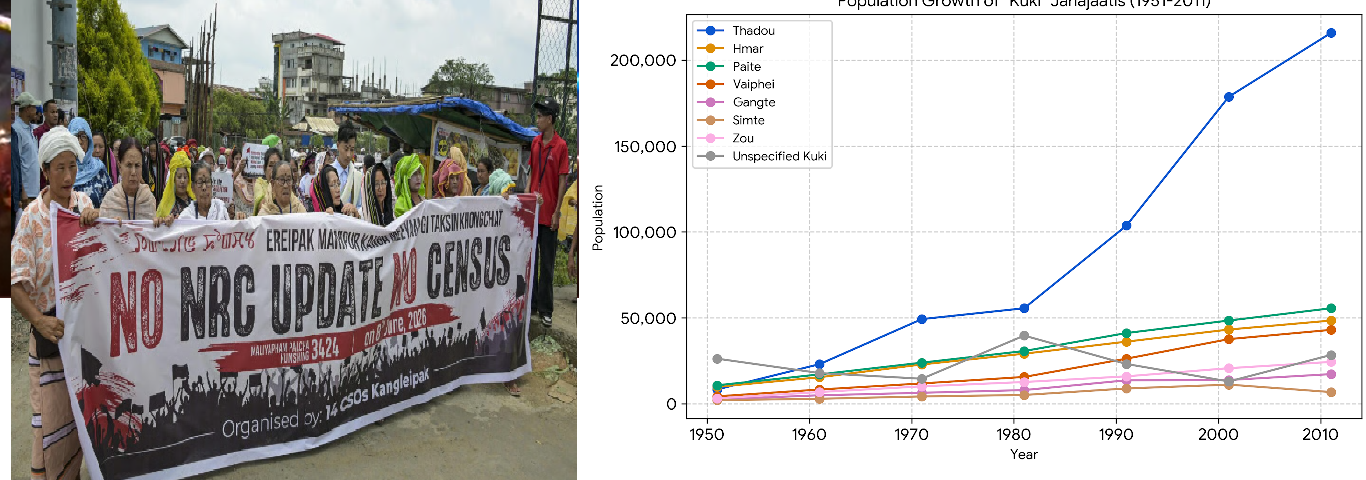
The Indian Government’s decision to defer the Census in Manipur creates an opportunity to confront a deeper and long-standing problem of producing a credible population record through a new demographic exercise when significant questions remain over the reliability of the historical data on which it is built. In a state fractured by conflicts, cross-border migration, displacement and competing claims over identity, counting people before verifying the integrity of the population register would have been a grave mistake.
The Census is meant to produce India’s most authoritative demographic record. Once published, its numbers shape parliamentary representation, delimitation, welfare allocation, reservation policy, district planning and the political narrative for decades. If those numbers themselves are under serious question, the Census ceases to be a neutral statistical exercise and becomes a source of permanent political contestation.
However, deferring the Census in Manipur is just the first step. The larger question of how to conduct a fresh census in Manipur when decades of census data themselves are riddled with anomalies that independent researchers, census officials and demographic studies have repeatedly questioned remain unanswered.
A comprehensive National Register of Citizens (NRC) is needed to establish who is legally entitled to be counted as a citizen before counting the actual number of Indian Citizens residing in Manipur.
The case for examining an NRC in Manipur does not rest solely on contemporary political suspicion. It is rooted in a much longer record of demographic anomalies, disputed classifications, documented migration and inconsistencies in population enumeration across several communities and districts.
Official Census data from 1951 to 2011 reveal strikingly uneven population trajectories among Manipur’s communities. While differences in fertility, mortality, migration and other demographic factors can produce substantial variations in population growth, some of the changes recorded in the state are sufficiently pronounced to warrant closer examination rather than unquestioning acceptance.
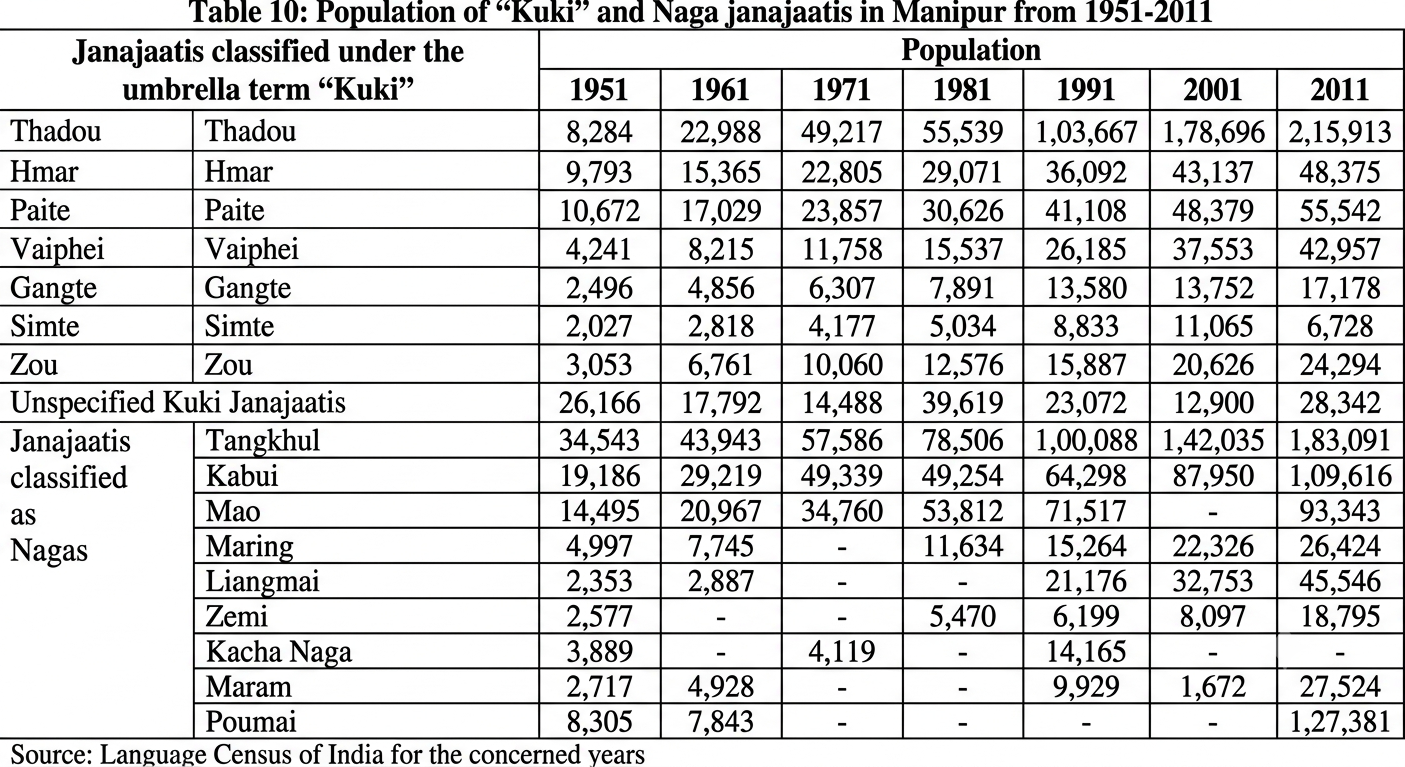
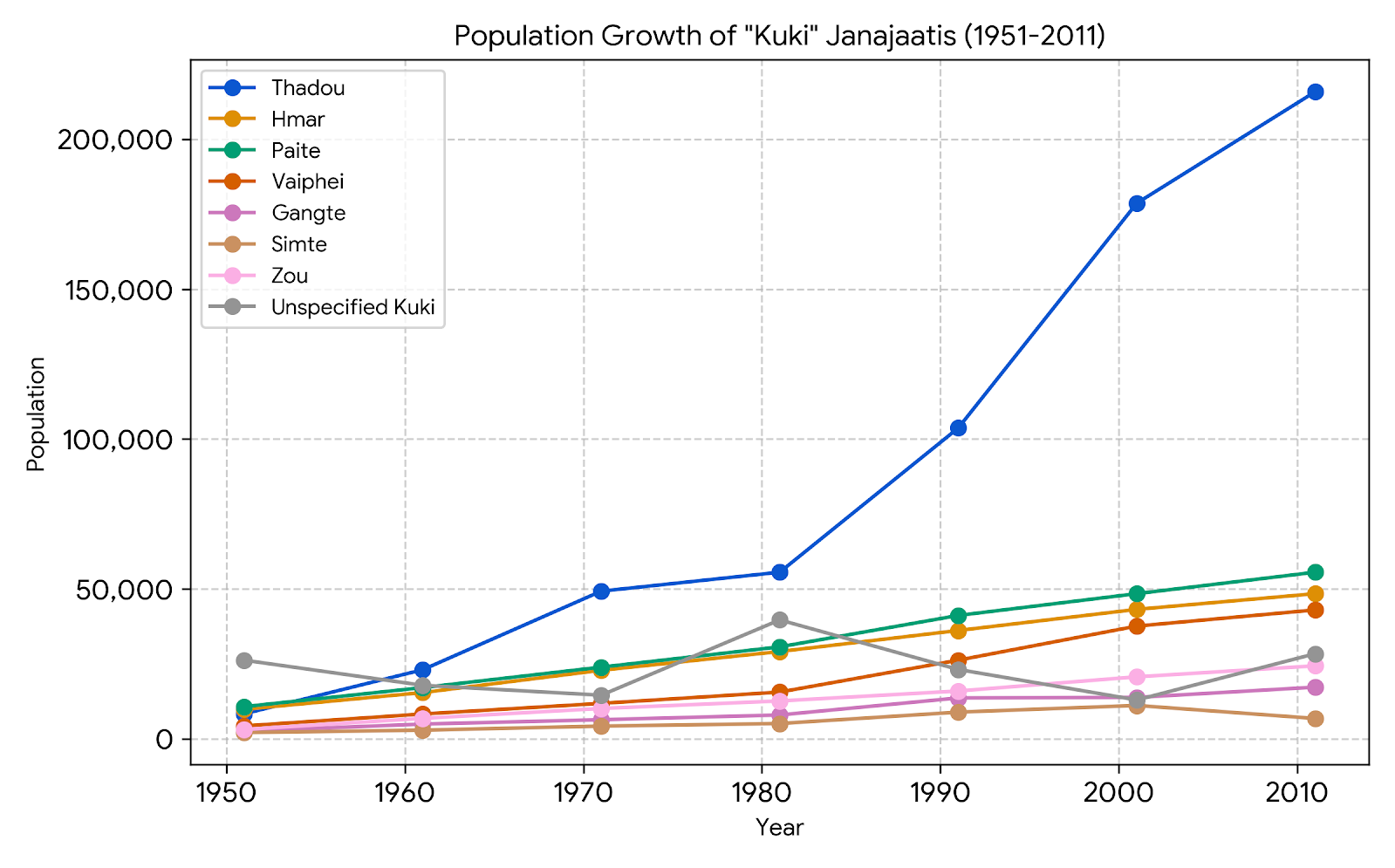
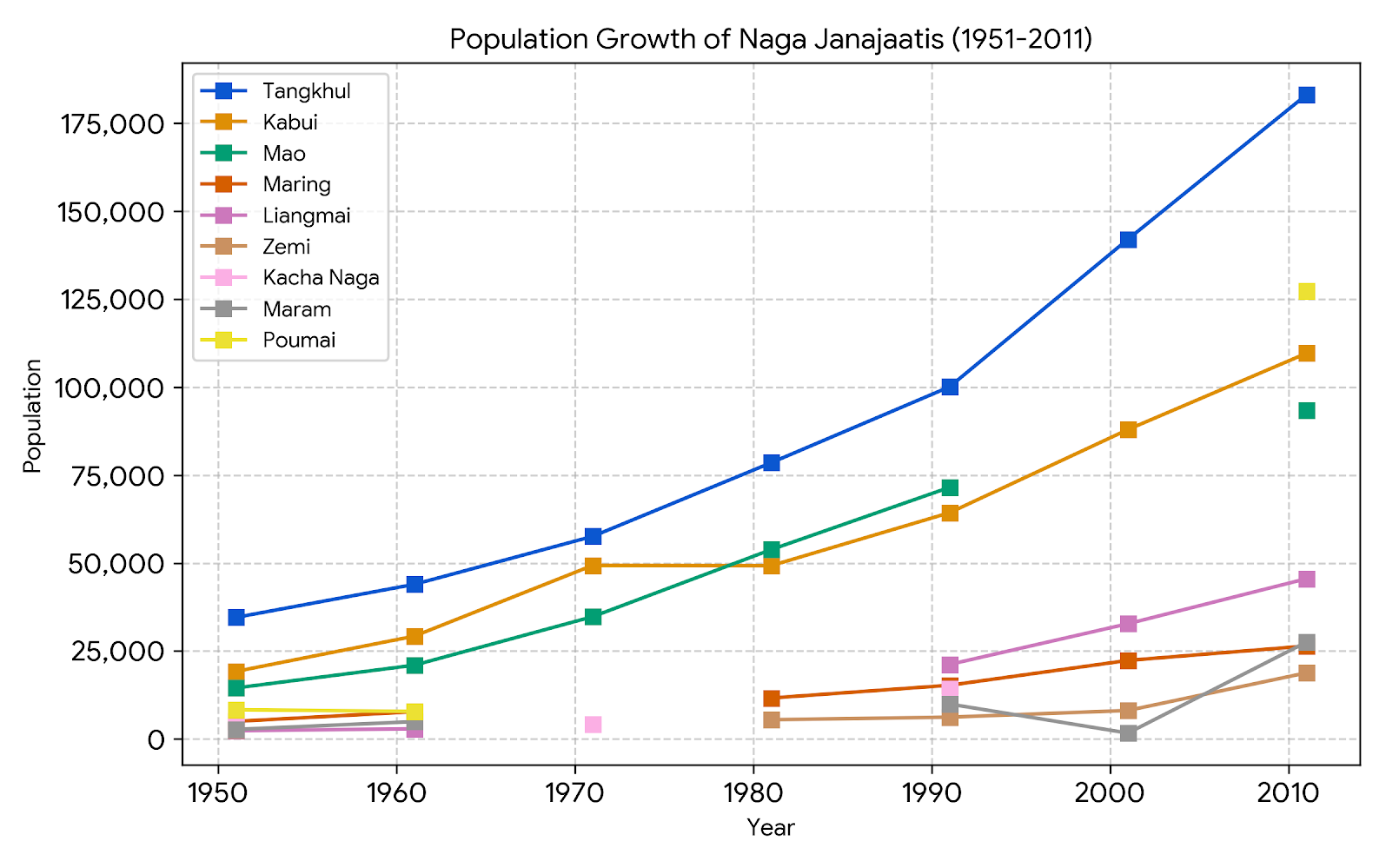
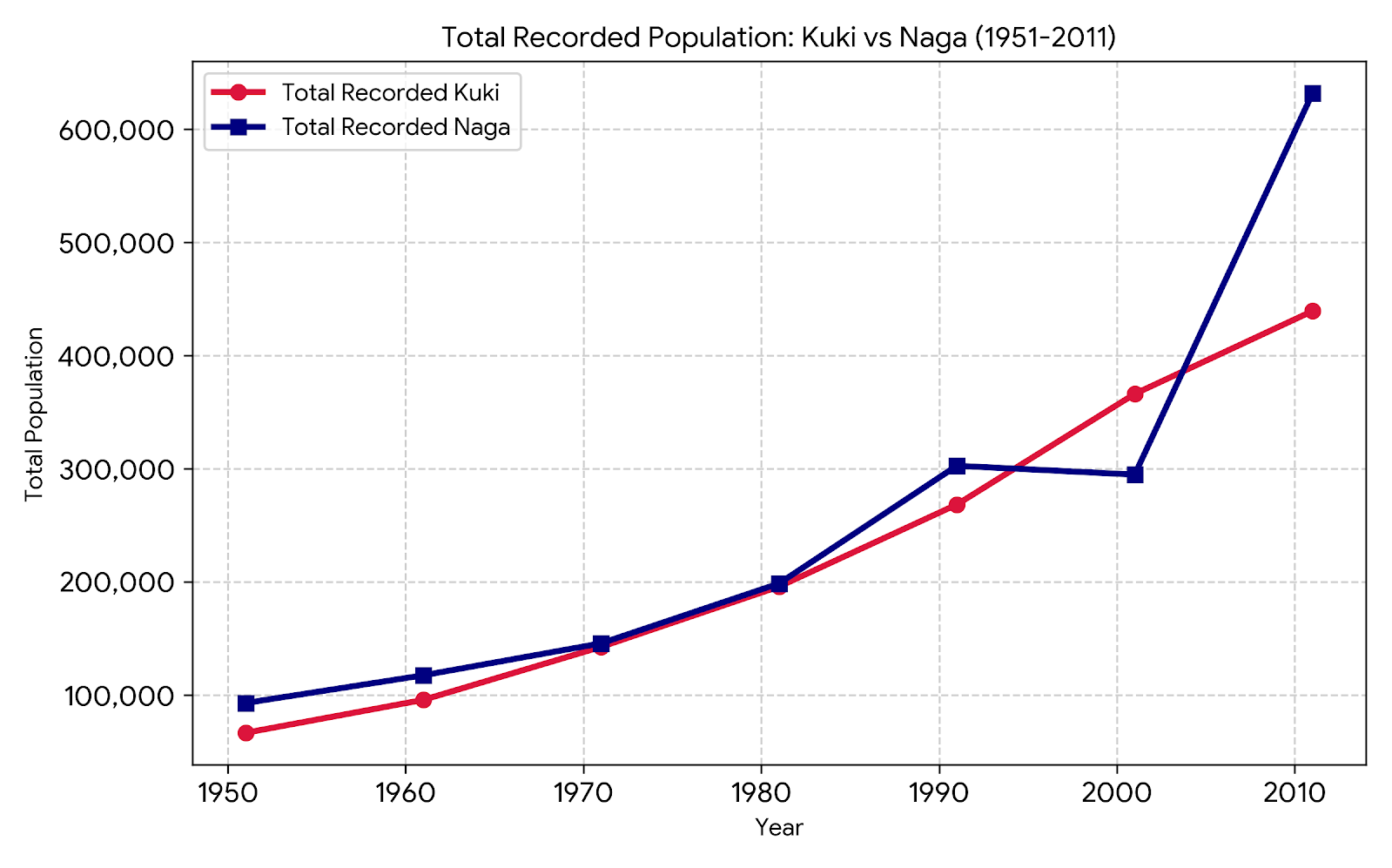
While the Meitei population grew by approximately 303.5% over sixty years, several communities protected under the scheduled tribe status have recorded increases many times higher. This is particularly striking among several communities included under the umbrella terms of “Kuki” and “Naga”.
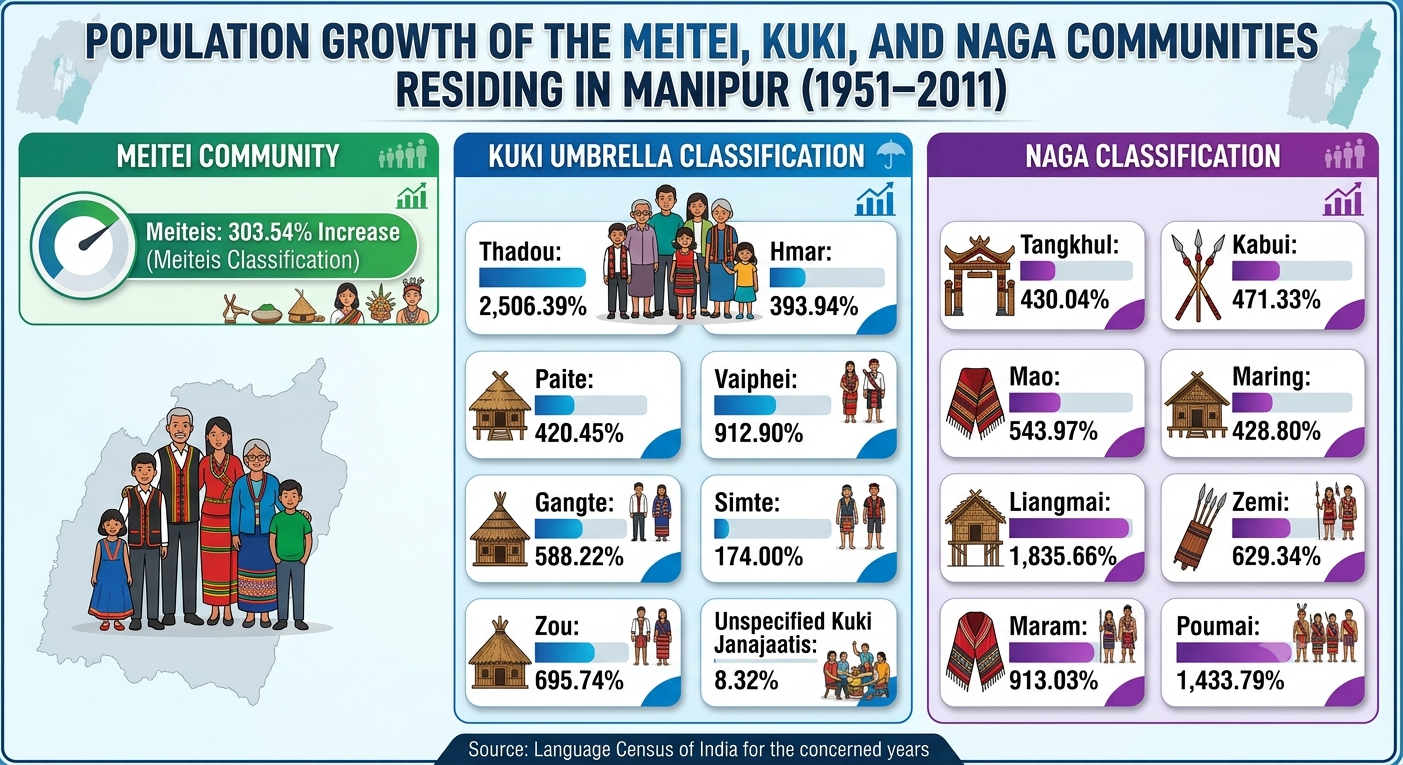
These figures do not prove illegal immigration by themselves. But they establish that Manipur’s census record contains demographic patterns that demand forensic scrutiny rather than blind acceptance.
Perhaps the most important evidence comes from researchers Ankush Agrawal and Vikas Kumar of Azim Premji University, whose detailed examination of Manipur’s census statistics for 1991–2011 found population growth in several hill subdivisions that could not be satisfactorily explained by conventional demographic factors. Their research points to striking anomalies in the hill districts of Senapati, Ukhrul and Chandel.
The most extraordinary episode concerns Mao-Maram, Paomata and Purul subdivisions. During the 2001 Census, the Office of the Registrar General and Census Commissioner of India (ORGI) initially received exceptionally high enumerated figures. The three subdivisions recorded reported decadal growth rates of roughly 123%, 143% and 169%, respectively. Following controversy and verification difficulties, ORGI replaced those enumerated figures with estimates, bringing the recorded growth rates down substantially.
Then came an extraordinary reversal.
In the 2011 Census, ORGI initially published estimated figures for these subdivisions, but later publications accepted the enumerated figures. As Agrawal and Kumar document, this produced another dramatic statistical jump: the growth rates associated with the three subdivisions rose to roughly 99–137%, rather than the much lower rates implied by the earlier estimates.
The demographic consequences were enormous. The three subdivisions’ combined share of Manipur’s population increased from approximately 4.97% in 1991 to 9.99% in 2011. The researchers argue that political and economic incentives may have contributed to manipulation of census statistics and warn that errors in fundamental population data can cascade into electoral representation, government resource allocation and other official statistics.
That finding deserves to be treated with the seriousness it warrants.
The wider Northeast provides an even more astonishing precedent.
Nagaland’s population grew by 56.08% between 1981 and 1991 and by 64.53% between 1991 and 2001—among the most extraordinary rates recorded anywhere in India. Yet in the very next decade, according to the 2011 Census, Nagaland’s population actually declined by 0.47%.
There was no war, famine, epidemic or natural catastrophe capable of plausibly explaining such a demographic reversal. Agrawal and Kumar therefore subjected Nagaland’s census figures to detailed scrutiny, comparing them with information from the Sample Registration System and National Family Health Surveys. Their study concluded that the Census estimates for 1981–2001 were internally inconsistent and raised serious questions about the reliability of the state’s historical population figures.
There was no war, famine, epidemic or natural catastrophe capable of plausibly explaining such a demographic reversal. Agrawal and Kumar therefore subjected Nagaland’s census figures to detailed scrutiny, comparing them with information from the Sample Registration System and National Family Health Surveys. Their study concluded that the Census estimates for 1981–2001 were internally inconsistent and raised serious questions about the reliability of the state’s historical population figures.
The episode became known as “Nagaland’s demographic somersault.
Manipur’s geography introduces a second layer of concern that no Census can ignore. The Indo-Myanmar border has witnessed repeated waves of migration for over half a century with at least 3 major periods of mass migration from Myanmar into India’s Northeast during the
a) 1960s after General Ne Win’s coup
b) 1988–1991 military crackdown following the pro-democracy uprising
c) The continuing civil war after the 2021 military coup in Myanmar.
One documented incident is particularly significant.
Former Member of Parliament Paokai Haokip recorded that approximately 1,500 Burmese Kuki families entered Manipur in December 1967. The document states that relief associations were formed, government financial assistance was sanctioned for rehabilitation and these refugee families later settled across Kuki-dominated regions of Manipur.
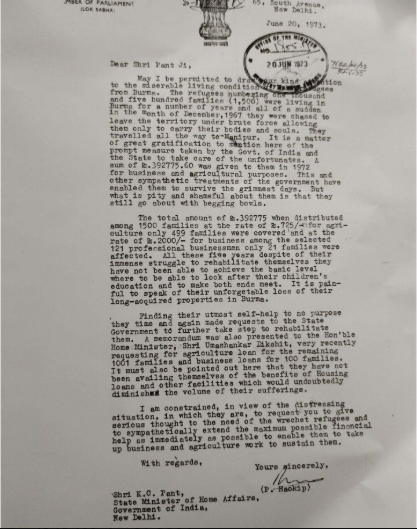
A letter dated 6 June 1968, written by the Deputy Commissioner of Manipur to the Under Secretary, Settlement Branch, documents complaints from local residents concerning the settlement of Burmese refuge seekers in the border areas of Ukhrul Sub-Division. The complaints alleged that newly arrived refuge seekers had occupied privately owned land belonging to local residents, prompting official correspondence over their settlement and land claims.
Whether every refuge seeker later became an Indian citizen through lawful legal processes is precisely the question that a Census cannot answer.
The February 2021 military coup in Myanmar, which brought the Tatmadaw under Senior General Min Aung Hlaing to power, triggered a prolonged political and armed conflict. The subsequent formation of the National Unity Government (NUG) and declaration of a “People’s Defensive War” in September 2021 intensified the conflict, resulting in widespread displacement and a large-scale humanitarian crisis. By early 2024, the conflict was estimated to have caused at least 50,000 deaths and tens of thousands of arrests and detentions.
The UNHCR Myanmar Situation database and the ACAPS assessment India: Myanmar Refugees, published on 28 July 2023, together indicate that approximately 60,700 displaced persons from Myanmar had entered Bharat between February 2021 and March 2024, with significant concentrations in Mizoram and Manipur.
This post-2021 influx intensified existing concerns regarding undocumented cross-border movement, border surveillance and demographic pressures in the Northeast. The problem was particularly evident in Manipur, where the State Government reported that 718 Myanmar nationals had entered Chandel district during 22–23 July 2023 and subsequently directed the concerned authorities to verify their identities, collect biometric data and photographs, and prevent further entry without valid travel documents.
This distinction is the heart of the debate. A Census records the population physically residing in Manipur. It is not designed to determine whether an individual’s presence is rooted in citizenship, illegal entry, internal migration or displacement.
An NRC serves a fundamentally different purpose: it creates a legally verifiable citizenship register based on documentary evidence and due process.
Manipur today faces two unresolved problems simultaneously.
First, there are credible allegations that portions of its historical census record contain manipulated or unreliable demographic data.
Second, there is documented evidence of multiple waves of cross-border migration from Myanmar over decades, particularly into vulnerable border districts.
Conducting a fresh Census before addressing either question would not settle Manipur’s demographic dispute.
It would merely produce a newer set of contested numbers.
That is why deferring the Census is welcome. But stopping there would be a historic mistake. The pause must now be used to complete what Manipur has demanded for decades: a transparent, legally robust NRC that investigates census anomalies, verifies citizenship, and separates demographic truth from demographic speculation before Manipur’s next official population record is written.